
The LPG illusion: Why India’s ‘22-day buffer’ system is failing in real time
ADVERTISEMENT
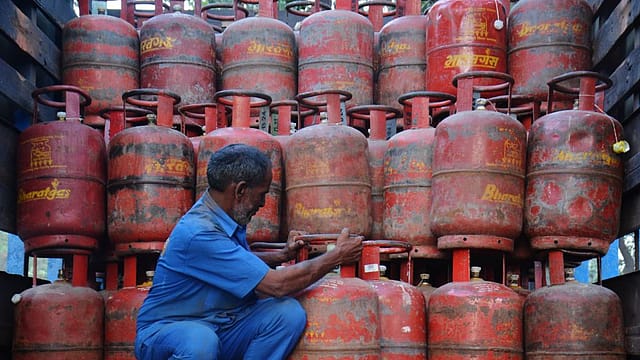
Even as LPG cargoes inch through the Strait of Hormuz, India’s cooking gas system is revealing a deeper problem — not of supply, but of resilience.
When two India-bound LPG tankers recently crossed the Strait of Hormuz with diplomatic clearance, it offered a brief sense of relief in an otherwise tightening supply situation.
Together, the cargoes carried roughly 90,000–95,000 tonnes of LPG — a major volume on paper. But in the context of India’s energy demand, the scale tells a different story.
India consumes over 30 million tonnes of LPG annually, translating to roughly 80,000–85,000 tonnes per day. In effect, the two cargoes together amount to just over a day’s national consumption.
India imports close to 60% of its LPG requirement, and the bulk of those imports originate in the Middle East. A large share passes through the Strait of Hormuz, one of the world’s most sensitive energy corridors.
That concentration risk has long been acknowledged. What the current disruption has exposed is how quickly it translates into stress across the system.
On paper, India maintains around two to three weeks of LPG inventory. But as the current situation shows, availability on paper does not necessarily translate into supply on the ground.
The shipments matter. But they do not solve the problem. In an exclusive conversation with Fortune India, Arya Roya Bardhan, junior fellow at Observer Research Foundation, explains why the real issue is not supply, but resilience — and how the crisis could spill into fertilisers, fiscal pressures, and food security.
“India has roughly 22 days of LPG storage on paper, but the crisis shows that inventory is not easily deployable,” says Arya Roy Bardhan. “The system doesn’t fail because stock doesn’t exist — it fails because stock cannot reach households fast enough.”
The bottleneck, in other words, is not just supply — it is movement.
From supply disruption to logistics stress
Even as limited cargoes continue to move through Hormuz, the flow is uneven. Tankers are facing delays, queues, and heightened security scrutiny. Insurance premiums have surged, and freight markets have tightened.
India is attempting to secure additional cargoes — including from non-Gulf sources — but these come with longer lead times and higher costs.
“What we are seeing is controlled inflows rather than normalised supply,” Bardhan says. “Shipping delays and vessel queues mean that inflows are uneven.”
The result is a system where supply exists, but access does not. This distinction is critical.
At the retail level, this manifests as:
delayed cylinder deliveries
distributor-level stock-outs
rising black-market premiums
Headline consumption data, therefore, becomes misleading.
“The evidence suggests supply distortion rather than demand destruction,” Bardhan notes. “Panic buying and delayed deliveries are distorting consumption data.”
Diversification isn’t a quick fix
India’s long-term response has been to diversify LPG sourcing. A key step in that direction is the 2.2 MTPA LPG import agreement with the United States, signed in late 2025.
But diversification does not operate on crisis timelines.
A typical LPG shipment from the US Gulf Coast to India takes 30 to 50 days one way, meaning any new procurement decision today translates into supply only weeks later.
“You cannot meaningfully front-load US supplies,” Bardhan says. “Any decision today yields supply only after several weeks.”
Moreover, diversification shifts — rather than eliminates — constraints.
Gulf cargoes typically take 10–15 days to reach India. US cargoes can take nearly two months round trip, placing pressure on shipping availability and logistics.
“With US supply, the bottleneck shifts to shipping,” Bardhan explains. “VLGC availability and long-haul voyage times become critical.”
To cushion the shock, the government has directed refineries to increase LPG output by diverting propane and butane streams.
While this provides short-term relief, it carries downstream consequences.
“Diverting propane and butane reduces feedstock for petrochemicals,” Bardhan says. “That can push up polymer prices and disrupt downstream industries.”
These second-order effects are slower to surface, but they ripple across manufacturing and supply chains.
The welfare fault line
The most immediate impact, however, is felt at the household level — particularly among beneficiaries of the Pradhan Mantri Ujjwala Yojana.
Over the past decade, millions of low-income households have transitioned from firewood and biomass to LPG. That transition is highly sensitive to both price and availability.
“Higher effective prices, delays in cylinder availability, and uncertainty in supply can push vulnerable households back toward traditional fuels,” Bardhan says.
This is where the crisis moves from an energy issue to a social and political one.
The government has announced subsidies to cushion the impact. But fiscal limits remain.
“If global prices remain elevated, the subsidy burden will rise sharply,” Bardhan notes. “In a prolonged crisis, quantity controls are more likely than unlimited fiscal expansion.”
A fragile substitution strategy
One of the policy responses under discussion is encouraging households with piped natural gas (PNG) connections to surrender LPG connections.
The logic is administrative efficiency. The impact, however, is limited.
India has only about 60–70 lakh PNG-connected households, compared to over 30 crore LPG connections. Even a full transition would reduce LPG demand by less than 2%.
“It’s symbolically important but quantitatively modest,” Bardhan says. More importantly, PNG itself depends on LNG imports, many of which are exposed to the same geopolitical risks.
“Households lose a backup fuel,” he adds. “PNG dependence introduces a different vulnerability.”
The next phase: LNG, fertilisers, and beyond
So far, the crisis has been visible in LPG. But the risks extend further.
India imports roughly half of its natural gas consumption, much of it in the form of LNG. A sustained disruption in Hormuz could tighten LNG supply, affecting:
industry
power generation
fertiliser production
The last of these carries broader implications.
“A gas shortage that begins as a cooking fuel issue can quietly become a food security issue,” Bardhan warns, “if it affects fertiliser production ahead of sowing cycles.”
This is where the crisis becomes nonlinear — moving from energy to agriculture and inflation.
Diplomacy buys time, not security
India has managed to secure passage for some shipments through diplomatic engagement. But such arrangements are inherently uncertain.
“Diplomacy helps in the short term, but it is informal and fragile,” Bardhan says. “Diversification is costlier, but it is more durable.”
For now, both strategies are being used in parallel.
The bottom line
The immediate crisis may yet ease if shipping flows stabilise. But the deeper question is whether this episode triggers lasting structural change.
Historically, energy crises tend to produce temporary adjustments — followed by a return to status quo.
“Some changes will persist — such as structured contracts and allocation mechanisms,” Bardhan says. “But larger investments, like storage expansion, often lose momentum once the crisis subsides.”
India’s LPG system is not running out of fuel. It is running up against the limits of its design.
Built for efficiency and steady throughput, it is now being tested by disruption and uncertainty. The result is a system where supply exists — but cannot always be delivered where and when it is needed.