
Budget 2026: 7 high-speed rail corridors and 20 new waterways planned, capex jumps 9% to ₹12.2 lakh cr
ADVERTISEMENT
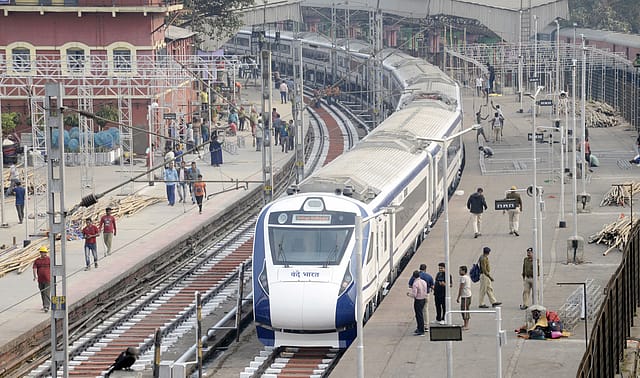
Capital expenditure saw a bigger push in the Budget 2026, with finance minister Nirmala Sitharaman proposing seven high-speed rail corridors across India and plans to operationalise 20 new national waterways over the next five years. The minister also announces a 9% increase in public capital expenditure to ₹12.2 lakh crore.
According to the finance minister, the seven high-speed rail corridors are part of efforts to boost connectivity and infrastructure in India. Key routes include: Mumbai to Pune; Pune to Hyderabad; Hyderabad to Bengaluru; Bengaluru to Chennai.
A new dedicated freight corridor stretching from Dankuni in the East to Surat in the West was also part of the announcements Sunday.
Additional corridors are planned under the Union Budget 2026–27 to further boost regional connectivity and drive economic growth across the country while new waterways are aimed at strengthening inland water transport and improving logistics efficiency.
“The roughly 9% increase in capital expenditure in this budget underlines the government’s sustained and consistent focus on infrastructure over the last decade, reinforcing continuity rather than signalling a one-off push,” said Raghav Madan, director, Deloitte.
Madan said the Budget outlined an encouraging and forward-looking vision for upgrading India’s logistics ecosystem. “Initiatives like the East–West Dedicated Freight Corridor have the potential to significantly improve freight movement across underdeveloped regions, while the planned operationalisation of 20 new national waterways over the next five years signals a long-term, integrated approach to multi-modal logistics development," he said.
In her Budget speech, Sitharaman stressed on infrastructure growth with focus on Tier II and III cities. “We will continue to develop infrastructure in cities with over 5 lakh population, that is, Tier II and III cities,” she said.
Big boost to capex this year
The 9% rise in the capex allocation to ₹12.2 lakh crore marks a strong push, especially it was only 0.9% last year. Data shows that year-on-year growth in capex allocation fell from 36% in FY23 and 33% in FY24 to 11% in FY25, before dropping sharply to just 0.9% in FY26.
In absolute terms, the government spending on capital assets has risen steadily. The capex allocation has increased from ₹4.12 lakh crore in 2020–21 to ₹11.21 lakh crore in 2025–26, highlighting the government’s continued focus on long-term asset creation even amid tighter fiscal conditions.