
CMAS Explained: How India’s ₹10,000-crore container manufacturing push can reshape maritime trade
ADVERTISEMENT
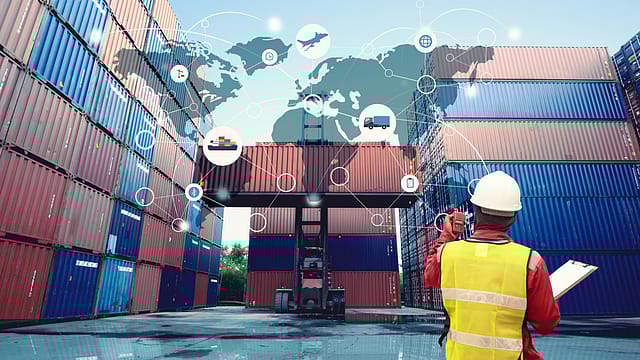
India is seeking to build a domestic manufacturing base for shipping containers as rising trade volumes, supply-chain disruptions and dependence on imported containers expose a key vulnerability in the country's logistics ecosystem.
The proposed Container Manufacturing Assistance Scheme (CMAS), announced in the Union Budget 2026-27 with an outlay of ₹10,000 crore over five years, is aimed at developing a globally competitive container manufacturing industry in India. The scheme will support new manufacturing facilities, expansion of existing plants, operational competitiveness, testing infrastructure and skill development.
Why does India need domestic container manufacturing?
Containers are the backbone of modern global trade because they allow cargo to move between ships, trains and trucks without being unloaded and repacked. The most widely used containers are 20-foot and 40-foot units, with capacity measured in Twenty-foot Equivalent Units (TEUs).
India's growing merchandise trade and expanding manufacturing base are expected to increase demand for containerised transportation. However, the country currently relies heavily on imports to meet its container requirements. According to the government, India imports nearly 2 million empty containers annually, including for domestic requirements and repositioning.
This dependence can make the availability and cost of containers vulnerable to global freight cycles, geopolitical disruptions and changes in shipping routes.
What does CMAS offer?
The scheme will provide capital assistance for new Greenfield container manufacturing facilities and support the expansion of existing Brownfield units. It will also provide operational support aimed at improving the competitiveness of Indian manufacturers.
The government expects the initiative to raise annual domestic manufacturing capacity to around 7.5 lakh TEUs, which it describes as roughly 10 times the existing production capacity.
The scheme is also expected to support the wider manufacturing ecosystem, including producers of Corten steel, corner castings and wooden components used in containers.
What could be the economic impact?
The policy is expected to create around 3,000 direct jobs and more than 50,000 indirect jobs across manufacturing and allied industries.
For India, the larger objective is to shift from being primarily a consumer of imported containers to becoming a manufacturing base for the global maritime supply chain. A domestic production ecosystem could also reduce the time and cost involved in sourcing containers during periods of supply shortages.
However, the success of the scheme will depend on whether Indian manufacturers can achieve scale, competitive costs and consistent quality while meeting international safety and technical standards.
Is India already producing containers?
There are signs that domestic production is beginning to gain commercial traction. In July 2026, India rolled out its first India-manufactured EXIM shipping container for global shipping major A.P. Moller–Maersk. The container was manufactured to internationally recognised ISO standards and the International Convention for Safe Containers (CSC).
Maersk has also placed an order for 1,000 additional Made-in-India containers with DCM Shriram Group, providing an early indication of demand from global shipping companies.
How does CMAS fit into India's maritime strategy?
The container manufacturing push is part of a wider attempt to build an integrated maritime ecosystem.
The proposed Bharat Container Shipping Line (BCSL) brings together the Shipping Corporation of India, Container Corporation of India, Jawaharlal Nehru Port Authority, V.O. Chidambaranar Port Authority and Sagarmala Finance Corporation. The initiative envisages investment of around ₹99,149 crore in a fleet of 51 container vessels and domestic container procurement.
Other initiatives, including PM Gati Shakti, the National Logistics Policy and the Sagarmala Programme, are aimed at improving connectivity between ports, industrial centres and inland logistics networks.
The government has also announced a ₹70,000-crore Shipbuilding Financial Assistance Package, while new port projects such as Vadhavan Port and the Galathea Bay transshipment port are expected to expand India's maritime capacity.