
FM Sitharaman seeks Parliament nod for ₹2.81 lakh crore additional spending; proposes ₹57,381-crore economic stabilisation fund
ADVERTISEMENT
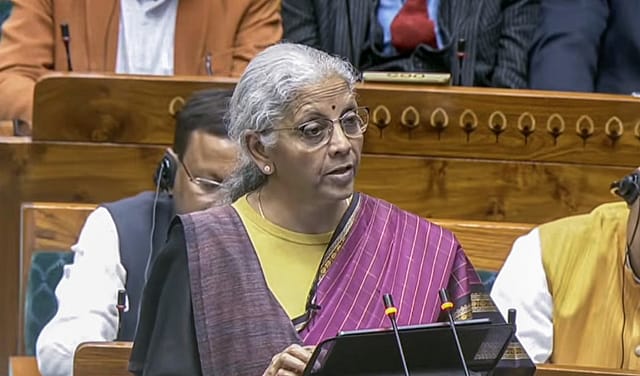
Finance Minister Nirmala Sitharaman on Thursday sought Parliament’s approval for additional expenditure of about ₹2.81 lakh crore under the second supplementary demands for grants (SDG) for FY2025-26, while proposing the creation of a ₹57,381.84-crore economic stabilisation fund to help India respond to global economic shocks.
Replying to the discussion in the Lok Sabha, Sitharaman said 33 members had participated in the debate, though most focused on the broader union budget rather than the specific provisions of the supplementary demands.
Why has the government brought supplementary demands?
The finance minister said supplementary demands are a long-standing parliamentary instrument that allows the government to respond to emerging expenditure needs during the financial year.
She said that historically up to three supplementary demands were often introduced annually, but the government has imposed a self-discipline to limit them.
“Under the guidance of the Prime Minister, we have brought it down to the bare minimum — one or two, not beyond two,” she said, adding that avoiding supplementary demands altogether would make the government inflexible when departments and states require essential funds.
The present proposal seeks approval for expenditure across 61 grants, involving a gross outlay of ₹2.81 lakh crore.
How is the additional spending structured?
According to Sitharaman, the supplementary demands include multiple categories of expenditure.
₹2.01 lakh crore as cash supplementary under 18 grants
₹0.80 lakh crore as technical supplementary across 32 grants
59 token supplementary items across 43 grants
In addition, ₹902 crore has been provided to report advances drawn from the contingency fund of India.
She stressed that the additional spending would remain within the fiscal deficit target announced in the Union Budget on February 1.
“I don’t want any MP to wonder whether we will still be able to reach the fiscal deficit number that was announced in the budget,” Sitharaman said, assuring the parliament that the government remains committed to the fiscal consolidation roadmap.
What is the proposed economic stabilisation fund?
A key feature of the supplementary demands is the creation of an economic stabilisation fund with an allocation of ₹57,381.84 crore.
The minister said the fund is intended to provide the government with fiscal headroom to respond to global headwinds, supply-chain disruptions and other economic shocks that could have stressed fiscal implications.
“The proposed economic stabilisation fund will provide headroom for India to respond to global headwinds like the recent crisis, unanticipated supply-chain disruptions, and shocks to sub-sectors of the Indian economy,” she said.
The fund will be financed partly through existing appropriations and partly through additional allocations.
What allocations have been made for defence?
The government has proposed ₹41,430.48 crore under defence services revenue in the supplementary demands.
Of this:
₹35,290 crore will be used for spectrum charges payable to the department of telecommunications linked to defence requirements.
₹6,140 crore has been allocated for the ex-servicemen contributory health scheme (ECHS) to ensure continued healthcare access for former armed forces personnel.
The total allocation under the ECHS for FY2025-26 will stand at ₹14,458 crore, Sitharaman said.
What support has been provided for farmers?
The government has also provided ₹19,230 crore in additional fertiliser subsidy to ensure uninterrupted supply to farmers.
Sitharaman said fertiliser stocks currently stand at 163 lakh metric tonnes for April 2026, higher than 128.54 lakh metric tonnes a year earlier, which she attributed to government planning.
The supplementary demand also includes ₹23,641 crore for the PM Garib Kalyan Anna Yojana, to be routed through the Food Corporation of India and state procurement systems.
What allocations are proposed for MSMEs and rural employment?
For small businesses, the government has proposed ₹3,000 crore for the Small Industries Development Bank of India (SIDBI) to support micro, small and medium enterprises.
Under the MGNREGA programme, the government has allocated ₹30,000 crore in the supplementary demands to clear pending bills under the current scheme.
For the upcoming financial year beginning April 1, the government has already provided ₹95,000 crore in the union budget for the rural employment programme under the new G-RAM-G mission framework.
How large is the total supplementary spending this year?
Sitharaman said that combined supplementary demands so far in the fiscal year amount to ₹4.13 lakh crore, of which ₹1.71 lakh crore represents technical supplementary allocations that largely involve internal adjustments, savings from other grants, or additional receipts.
She said such technical reallocations are common administrative adjustments that do not necessarily increase overall spending.