
FM Sitharaman highlights infra push, MSME support, and medical tourism plan; pitches Budget as long-term growth blueprint
ADVERTISEMENT
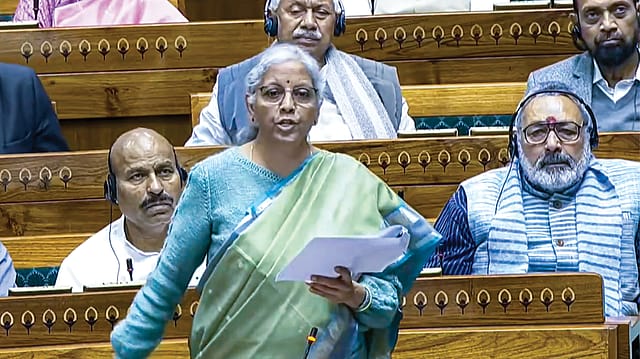
Union Finance Minister Nirmala Sitharaman on Wednesday addressed the Lok Sabha, responding to criticism over the Union Budget and the India–US interim trade deal, and outlining the government’s long-term economic priorities.
Describing the document as “the first Budget of the second quarter of the 21st century,” Sitharaman said it focuses on long-term investments that will shape India’s growth trajectory. She noted that several concerns raised during the Budget session were addressed through targeted measures and structural reforms.
Thrust on infrastructure development
The minister underlined the Centre’s continued thrust on infrastructure development, stating that the focus extends beyond roads and national highways. She said investments in waterways aimed at reducing logistics costs and enabling landlocked states to transport goods faster and more affordably, thereby improving trade efficiency and supporting regional growth.
Rejecting allegations that certain states were denied funds, Sitharaman cited the 16th Finance Commission’s recommendations and said the constitutional provisions on devolution had been fully honoured, while adding that recommendations for 2018–19 and the period between 2020 and 2023 were duly implemented.
Debt-to-GDP ratio
Detailing fiscal projections, Sitharaman said gross tax receipts for 2026–27 are estimated at ₹44.04 lakh crore, around 8% higher than the revised estimates for 2025–26, marking an increase of ₹3.26 lakh crore. Total expenditure is pegged at ₹53.47 lakh crore while capital expenditure is projected at ₹12.22 lakh crore — 3.1% of GDP and 11.5% higher than the previous year’s revised estimates. She clarified that the debt-to-GDP ratio is not a new target but is already embedded in the amended FRBM Act of 2018.
MSME boost
On industry support, Sitharaman said the expanded MSME definition introduced earlier ensures that firms do not lose benefits upon crossing turnover thresholds. Additional measures have been proposed to strengthen medium-sized, export-oriented firms and help them emerge as sectoral champions.
Skilling into formal education
The minister also announced plans to integrate skilling into formal education and establish mega entrepreneurship hubs near industrial clusters in partnership with states. Five regional medical hubs will be developed to promote medical tourism, with states eligible to participate under the PM Gati Shakti framework.
Meanwhile, Sitharaman is scheduled to address the Reserve Bank of India’s central board on February 23 to outline key FY27 Budget priorities, days after the RBI retained the policy rate at 5.25% amid global uncertainties.