
India, Canada sign uranium and critical minerals pacts; aim for $50 billion bilateral trade by 2030
ADVERTISEMENT
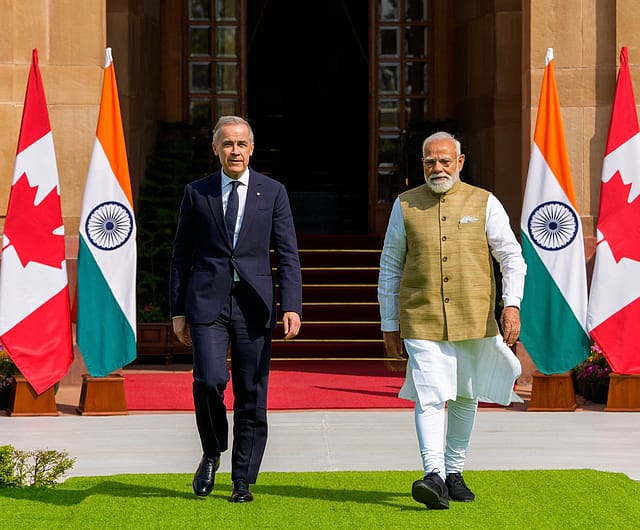
India and Canada on Monday signed key agreements on uranium supply and critical minerals and agreed to conclude a comprehensive economic partnership agreement soon, as Prime Minister Narendra Modi and his Canadian counterpart Mark Carney set an ambitious target of taking bilateral trade to $50 billion by 2030.
After wide-ranging talks in New Delhi, the two leaders also decided to expand cooperation in defence, critical technologies, small and modular nuclear reactors, education, and renewable energy. Modi said ties between the two countries are now marked by “new energy, mutual trust, and positivity”.
A major highlight was a $2.6-billion agreement under which Canada will support India’s civil nuclear energy sector through long-term uranium supplies.
The two sides also underlined the need to work together against global security threats. Modi said both countries agreed that terrorism, extremism, and radicalisation are serious challenges. “Our close cooperation against these is crucial for global peace and stability,” he said.
The leaders discussed the security situation in West Asia, with Modi saying, “The current situation in West Asia is a matter of deep concern for us. India supports the resolution of all disputes through dialogue and diplomacy. We will continue to work with all countries to ensure the safety of all Indian citizens in the region.”
Trade push and economic reset
At present, two-way annual trade between India and Canada stands at around $13 billion. The decision to expand trade comes at a time when Canada’s economic ties with the United States under President Donald Trump have turned increasingly strained.
“Our goal is to reach $50 billion in trade by 2030. Unlocking the full potential of economic cooperation is our priority. Therefore, we have decided to finalise the Comprehensive Economic Partnership Agreement soon. This will create new investment and employment opportunities in both countries,” Modi said.
He noted that “Canada's pension funds have invested $100 billion in India. This symbolises their deep belief in India's growth story.”
The two countries also signed a Memorandum of Understanding on critical minerals, aimed at building resilient supply chains. Canada has significant reserves of critical minerals and rare earth materials, which are vital for clean energy and advanced manufacturing.
“In the energy sector, we are building a next-generation partnership, which will focus on hydrocarbons as well as renewable energy, green hydrogen and energy storage,” Modi said.
“In civil nuclear energy, we have signed a landmark deal for long-term uranium supply. We will also work together on small modular reactors and advanced reactors,” he added.
On defence ties, Modi said, “We will work to enhance defence industries, maritime domain awareness and military exchanges. To this end, today we have decided to establish the India-Canada defence dialogue.”
Energy partnership and political thaw
Carney said the two countries are launching a broader energy partnership. “Today, we are launching a strategic energy partnership with significant potential to expand bilateral energy trade. We've signed a new critical minerals partnership spanning development, processing and secure supply chains for clean energy, electric vehicles and advanced manufacturing,” he said.
“We're deepening our cooperation in clean energy, expanding collaboration across wind, solar and hydrogen, because Canada has big plans as well,” he added.
Describing the uranium agreement as a step towards reliable and clean energy, Carney said: “All of these agreements under one planet are the beginning of a new, prosperous relationship that will offer generational opportunities for workers and businesses in both their countries and which will protect the planet for future generations.”
Carney arrived in New Delhi on Sunday after a two-day visit to Mumbai, where he met industry leaders. Facing tense trade ties with the US, Canada is seeking to build a more resilient and independent economy.
The renewed push in ties follows efforts by both sides to reset relations that had hit a low after former Canadian Prime Minister Justin Trudeau’s 2023 allegations of a possible Indian link to the killing of Hardeep Singh Nijjar, which India had termed “absurd”. Diplomatic expulsions followed in 2024.
Since Carney’s electoral victory last year, both countries have moved to normalise relations, including restoring high commissioners in each other’s capitals. Modi and Carney had also met on the sidelines of the G7 summit in Kananaskis last June, where they began discussions on rebuilding ties.
(With inputs from PTI)