
‘India does not need lower standards; it needs wider lenses’ on infrastructure ratings: Gautam Adani
ADVERTISEMENT
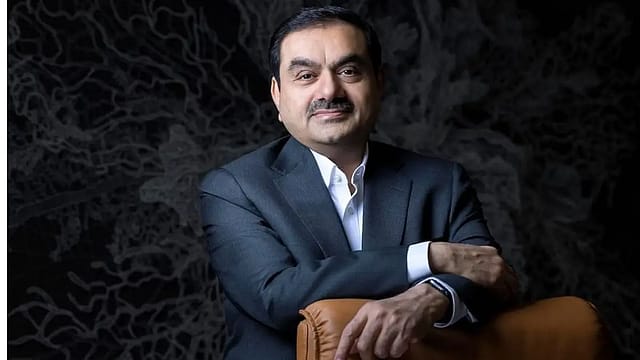
Adani Group Chairman Gautam Adani has called for a fundamental overhaul of how infrastructure projects are assessed by credit-rating agencies, arguing that conventional models can overlook the wider economic and strategic value created by large, interconnected assets.
Speaking at CareEdge Ratings’ Infrastructure Landscape 2026, Adani said India’s infrastructure ambitions require rating frameworks to evolve alongside increasingly complex projects. "India does not need lower standards. India needs wider lenses," he said, urging CareEdge to develop what he described as the world’s first comprehensive credit framework for "integrated platform infrastructure".
Adani’s three categories of infrastructure
Adani divided infrastructure into three categories — replacement infrastructure, where traditional rating models are generally adequate; growth infrastructure, where assessments should factor in ecosystem effects; and "platform infrastructure", which can create new markets, capabilities and industrial clusters.
"Platforms like Mundra, Vizhinjam and Khavda do not just satisfy existing demand. They create new demand. They create new ecosystems. They create new capabilities," he said.
Mundra port, according to Adani, demonstrates how an infrastructure asset can evolve into a broader economic platform. What began as a port project on a relatively undeveloped coastline has grown into a maritime gateway for northern and northwestern India, supported by rail, logistics centres, power generation, manufacturing and multimodal connectivity.
"If we build only for the demand we can see today, India will always be late for the opportunities of tomorrow," Adani said.
Vizhinjam International Seaport in Kerala, commissioned in December 2024, is another example. India’s first deep-draft mega transshipment port handled 1.3 million TEUs in its first year and crossed 2 million TEUs within 18 months. Its annual capacity is being expanded to 5.7 million TEUs by December 2028.
"The greatest risk was never in building Vizhinjam. The greatest risk was India continuing to believe that it could not," he said.
Khavda links energy with India’s AI ambitions
Adani also cited the group’s renewable-energy development at Khavda in Gujarat’s Kutch region. Adani Green Energy is developing a 30-GW renewable-energy project across about 538 sq km. As of March 31, 2026, 9.4 GW was operational, with completion of the full project targeted for 2029.
Adani said the project should not be viewed merely as a power-generation asset, arguing that large-scale clean energy could support data centres, artificial intelligence, advanced manufacturing and other energy-intensive industries.
"AI may look like software. But ultimately, AI runs on infrastructure," he said, highlighting electricity, data centres, cooling, transmission networks and land as critical requirements.
He stressed that the proposed framework was not about weakening credit discipline. "I am not asking you to compromise your independence or say yes to unviable ambition," he said. "I am asking you to use your independence to build dynamic models that recognize the compounding power of national platforms."
The framework, he said, should consider ecosystem multipliers, strategic resilience and adjacency value alongside leverage, cash flows and execution risk.
"Why should the world’s first truly comprehensive Credit Framework for Integrated Platform Infrastructure not come from India?" Adani asked.
"The India of 2047 will not be built by ambition alone," he said. "It will be built when ambition earns trust, when trust unlocks capital and when capital builds national capability."