
India to maintain 7% growth momentum despite global conflicts and supply strains, says Nirmala Sitharaman
ADVERTISEMENT
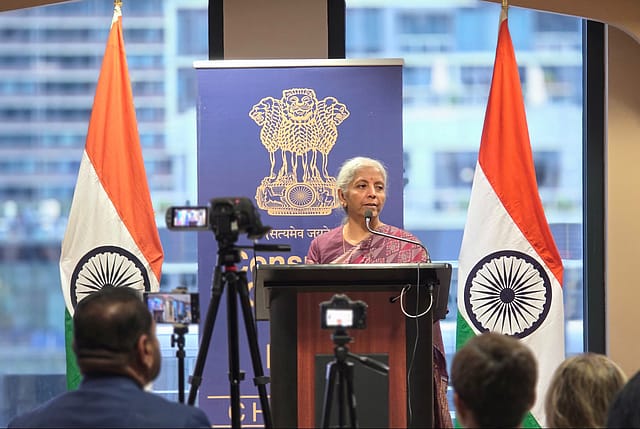
India is poised to maintain its robust economic momentum of 7% or more in the current fiscal year despite severe global trade disruptions and geopolitical conflicts, Union Finance Minister Nirmala Sitharaman said while addressing the Indian diaspora in Chicago today.
Sitharaman highlighted India's resilient post-pandemic recovery, noting that the nation has consistently sustained high growth even as international uncertainties have multiplied.
“We thought, we saw the worst when we went through Covid,” she said. “This year too, our growth will be at that range,” she added, pointing to the economic strains caused by two ongoing global wars, escalating tariff issues, and severe disruptions at the crucial Strait of Hormuz shipping lane.
The finance minister’s statements follow the Reserve Bank of India’s (RBI) recent fiscal update, which upwardly revised India’s real GDP growth projection for 2026-27 to 6.7%. The RBI adjusted its estimate by 10 basis points to reflect an economy successfully weathering a turbulent global environment and an unpredictable domestic monsoon.
India historically imports nearly 80% of its consumed fertilisers through the Strait of Hormuz. Labeling the current shipping blockade an “unthinkable” situation that threatened to leave farmers stranded, Sitharaman explained how New Delhi secured alternative supply routes.
However, shielding citizens from inflation has come at a steep fiscal price. The government continues to provide urea to domestic farmers at ₹300 per bag despite a global procurement cost of ₹3,000 per bag.
“So, ₹2,700 is the subsidy we give per bag of fertilizer,” Sitharaman stated, reassuring that “there is no shortage” of agricultural supplies.
The finance minister affirmed that India remains committed to strict fiscal discipline and structural reforms, including aggressive capital investments and bilateral trade treaties.
“So, reforms continue. We are also talking with several countries for bilateral investment treaty and also bilateral trade agreements because multilateral institutions are very slow…,” she said.
Sitharaman detailed India's long-term economic roadmap, which includes reducing national borrowing to 50% of the GDP by 2030. “We have given ourselves a fiscal discipline path on the fiscal deficit as well. We have fulfilled the trajectory. The last mile that had to be reached by 2025-26, we have reached,” she added.
She also credited Prime Minister Narendra Modi's governance for improving India's credit ratings through "proper management of the economy" rather than cutting social welfare budgets. She called upon the diaspora to actively support India's target of becoming a fully developed nation, or Viksit Bharat, by 2047.
“It’s hardly 20 years from now. So, the speed and scale with which the reforms are happening require a lot more support. Lots more support from people who are talented and have exposure. Lots more support from people who can give ideas for us to carry it forward. And, above all, support in terms of capital, which is so required for a country to meet all its aspirations,” she said.