
India to sign free trade agreement with Oman: What is in it for New Delhi?
ADVERTISEMENT
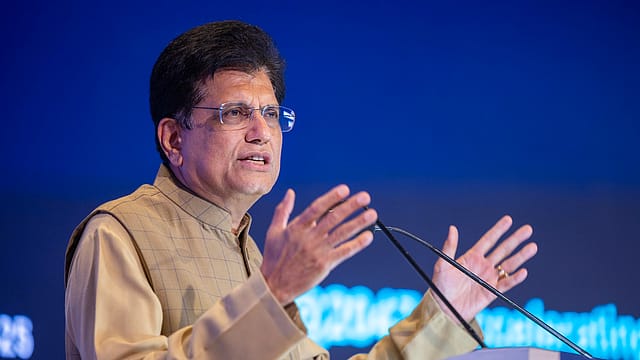
India is set to sign a free trade agreement (FTA) with Oman today in the presence of Prime Minister Narendra Modi. On Wednesday, Union Commerce & Industries Minister Piyush Goyal said that the FTA offers “immense opportunities” in various sectors, including textiles and footwear.
So far, trade between India and Oman has been heavily dominated by oil, gas, and related products. This FTA, which has the potential to open the doors of Eastern Europe to India, is aimed at expanding trade in various sectors beyond oil and gas. Here is an overview of India-Oman trade and what’s at stake for New Delhi in the FTA.
India-Oman trade so far
For India, Oman is one of the most important trade partners in the Gulf region. However, New Delhi exports less and imports more from the Gulf country.
For example, in 2024, the overall merchandise trade between the two countries crossed about $10.6 billion; India’s exports were around $4-4.1 billion, while imports were more than $6.5 billion. This shows the trade imbalance between the two nations.
Major imports and exports
So far, India’s exports to Oman are diverse but primarily led by energy and industrial goods. These include petroleum products (naphtha and petrol), industrial inputs (machinery, electrical equipment, aircraft parts), metals and minerals (calcined alumina, iron and steel items), agriculture and processed foods, and consumer and chemical products.
The Comprehensive Economic Partnership Agreement (CEPA) is aimed at expanding trade beyond these sectors. The agreement is also seeking a reduction of tariffs by more than 98% at both ends. It is reported that both countries have agreed on this.
Major imports from Oman to India include crude oil, liquefied natural gas (LNG), and other petroleum products such as fuel oil and petroleum coke. India also imports fertilisers and agri inputs such as urea, ammonia and other fertiliser intermediates.
Gateway to global markets
The CEPA assumes significance because of its potential to open India’s access to key global markets such as the GCC region, Eastern Europe, Central Asia, and Africa.
While addressing the audience at the India-Oman Business Forum in Muscat, Goyal said, “This free trade agreement offers immense opportunities in terms of several sectors, including textiles, footwear, automobiles, gems and jewellery, renewable energy, and auto components.”
“The sky is the limit in terms of potential, particularly with Oman opening the doors as a gateway to the Gulf Cooperation Council region, eastern Europe, central Asia, and Africa,” The minister said.
Key areas for collaboration
During his address in Muscat, Goyal highlighted four key areas where both countries can create meaningful collaboration.
“One is in the energy transition that both are committed to, whether it’s renewable sources of energy, battery storage, or green hydrogen. That whole ecosystem can open up between Oman and India, and together for the rest of the world,” the minister said.
The second area, Goyal said, can be in infrastructure, multimodal logistics, and export warehouses.
“We can help Oman ensure food security, whether we can work together to make this a hub from where we work for the rest of the several regions that I just described. Food parks—there is a lot of potential in this area,” Goyal said.
The fourth area, the Commerce & Industry Minister said, in which India and Oman could work together, was to develop their startup ecosystems.
“The startups can engage with each other, build bridges, work on deep-tech, or smarter ways to work on logistics software services and artificial intelligence. There is tremendous potential to leverage this area as a hub,” Goyal said.