
India-US interim trade pact enters final phase as both sides push to seal deal before July 24 tariff deadline
ADVERTISEMENT
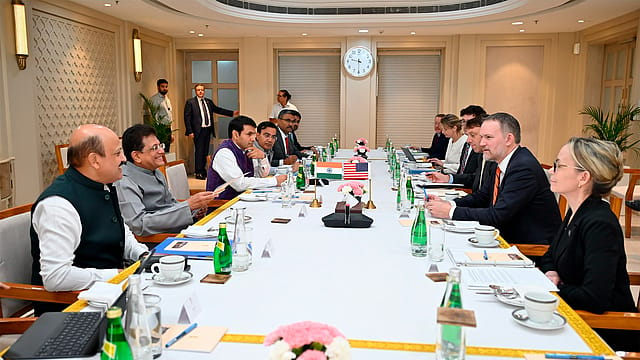
India and the United States (US) appear to be closing in on an interim trade agreement, with both sides indicating that negotiations have entered their final phase following high-level discussions between Commerce and Industry Minister Piyush Goyal and US Trade Representative (USTR) Jamieson Greer in New Delhi.
The proposed pact, viewed as the first phase of a broader Bilateral Trade Agreement (BTA), is expected to serve as a bridge toward a more comprehensive trade framework while addressing immediate market-access and tariff-related concerns between the two countries.
Momentum builds ahead of key tariff deadline
The latest round of discussions assumes significance as negotiators work against the clock ahead of July 24, when the United States' temporary 10% tariff regime imposed under Section 122 of the Trade Act is scheduled to expire.
In a statement issued after the talks, the Ministry of Commerce and Industry said the two sides undertook a detailed review of key elements of the proposed BTA, including market access, digital trade, supply-chain resilience, reduction of non-tariff barriers and cooperation in strategic sectors.
“Both sides noted substantial progress by negotiating teams in recent months and welcomed the momentum from successive technical and ministerial-level engagements,” the ministry said.
Officials familiar with the discussions indicated that the focus has now shifted to resolving a limited set of outstanding issues, with negotiators working to finalise the contours of an interim agreement.
Market access and tariff stability in focus
According to the ministry, the discussions were aimed at identifying practical milestones that could pave the way for a wider trade pact.
“Discussions focused on pathways to conclude an interim agreement as an important milestone toward a comprehensive BTA,” the statement noted.
India has proposed calibrated tariff reductions on a range of American industrial and agricultural products, including dried distillers' grains (DDGs), red sorghum, tree nuts, fresh fruits and soybean oil. At the same time, New Delhi is seeking greater certainty and long-term stability in tariff treatment for Indian exports entering the US market.
The urgency has increased following changes in the US tariff regime earlier this year. A previous framework, which had envisaged lower tariff treatment for Indian goods relative to several competing economies, had to be revisited after legal and policy developments in Washington altered the trade landscape.
Mission 500 drives broader economic agenda
The interim pact is also expected to advance the two countries' ambitious “Mission 500” objective of raising bilateral trade to US$500 billion by 2030.
The Commerce Ministry said both governments remain committed to ensuring that the agreement delivers concrete gains across sectors.
“Both sides reaffirmed their commitment to an agreement that is balanced, commercially meaningful, and delivers tangible benefits for businesses, farmers, workers, and consumers in both countries,” the statement said.
Beyond trade, India and the United States are deepening cooperation across technology, clean energy, critical supply chains, defence and advanced manufacturing. Policymakers on both sides view the proposed trade pact as a key pillar of that broader strategic partnership.
While negotiations on a full-fledged BTA are expected to continue beyond the interim agreement, officials believe a successful first-phase deal would provide a strong foundation for deeper economic integration between the world's largest and oldest democracies.