
India’s arms exports surge 25x to ₹38,400 in FY26, eye ₹50,000 crore by FY29: Report
ADVERTISEMENT
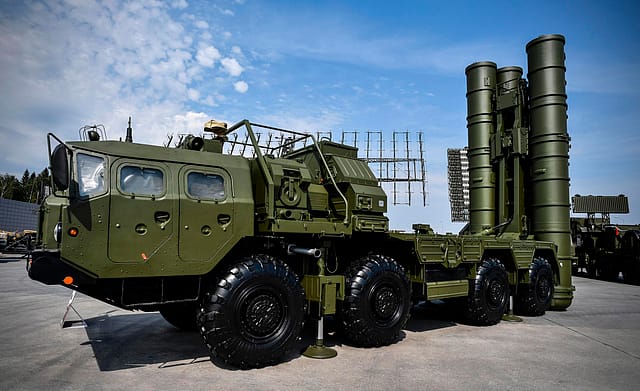
India’s defence exports surged over 25x from ₹1,535 crore in FY17 to ₹38,400 crore in FY26, with a target of ₹50,000 crore by FY29, according to a report by Rubix Data Sciences on Wednesday, underscoring the country’s steady progress towards defence self-reliance, supported by strong government policies and rising private sector participation.
Notably, in a major growth, defence production hit a record ₹1.54 lakh crore in FY25, nearly 3.2x higher than FY15 levels, with a target of ₹3 lakh crore by FY29.
“While reliance on critical imports continues to shape key decisions, the emphasis is steadily moving towards building capacity within India, where stronger supply chain resilience directly supports greater self-reliance and, ultimately, national security,” said Mohan Ramaswamy, Co-founder and CEO, Rubix Data Sciences.
The defence budget has nearly tripled since FY214, rising to ₹7.85 lakh crore in FY27, making it the largest allocation among all Union ministries and accounting for 14.67% of the total Union Budget.
Increasing private participation in defence
Some of the world’s major military powers have heavily relied on private firms to build stronger defence capabilities. Data suggests that such policies have helped them achieve this. The report suggests that India is also following this approach, which is expected to reduce the country's dependence on arms imports.
According to the report, private sector participation has risen from 19% of production in FY17 to 23% in FY25 while contributing 45% of defence exports in FY26. About 16,000 MSMEs are now part of the supply chain, and more than 1,000 defence startups have together attracted close to $2 billion in funding since 2017.
“A key reason behind this growth is the increasing preference for domestic manufacturers in procurement decisions. In FY25, the Ministry of Defence signed 193 contracts worth $2.09 trillion, with 92% by volume and 81% by value directed at Indian firms. Around 65% of India’s defence equipment is now produced domestically, a reversal of the 65–70% import dependence that defined the sector a decade ago,” it said.
Operation Sindoor factor
India’s defence budget has nearly tripled from ₹2.53 lakh crore in FY14 to ₹7.85 lakh crore in FY27. The country ranked as the world’s fifth-largest military spender in 2025, underscoring its growing global stature. Defence expenditure as a share of GDP has remained stable at 2% between FY22 and FY27.
In FY26, Defence Public Sector Undertakings (DPSUs) accounted for about 55% of exports while the private sector contributed roughly 45%.
“Operation Sindoor has brought India's defence preparedness into sharp focus, and the data is encouraging. Procurement is increasingly anchored within the country, and the industrial base is widening, with private players, MSMEs, and start-ups now participating alongside established public sector enterprises,” Ramaswamy explained.
What are the concerns that persist?
Despite this momentum, the report highlights several structural challenges. For example, India continues to be the second-largest arms importer globally, with an 8.2% share during 2021–2025.
Furthermore, India’s continued reliance on imports for critical technologies such as jet engines and advanced sensors, a persistent shortfall in R&D intensity, and vulnerability to global supply chain disruptions are concerning.
“Addressing these will require accelerated R&D investment, deeper industry–academia collaboration, and continued policy support to strengthen domestic capability in high-end technologies,” it added.