
Oil surges on war fears; Strait of Hormuz risks may push Brent towards $100 per barrel
ADVERTISEMENT
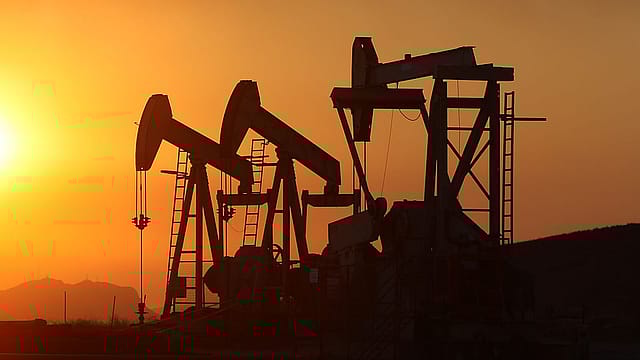
Global oil markets are once again reacting sharply to rising tensions in West Asia. An analysis by domestic brokerage Equirus shows that oil prices rarely move in a straight line during wars. Instead, markets often add a large “fear premium” that goes well beyond the actual loss of supply.
The study comes at a time when Brent crude has firmed nearly 10% in recent sessions, as traders factor in the risk of escalation involving Iran and possible disruption in the Strait of Hormuz.
Why Iran matters more than its output
Currently, Iran produces around 3.3 million barrels per day, roughly 3% of global oil supply. On simple math, a 3% supply shock typically leads to a 9–15% rise in prices, assuming oil reacts by 3–5% for every 1% disruption in supply.
At a base price of $70 per barrel, that would translate into a $6–$11 increase, taking crude towards $76–$81 purely on production loss. However, the study suggests that oil markets rarely behave in such a mechanical way.
While Iran’s share in global cross-border oil trade has fallen to about 2.5%, nearly half of what it was a decade ago, its strategic importance remains high. The country sits along the Strait of Hormuz, the narrow passage through which nearly 20% of global oil and a similar share of liquefied natural gas flows pass every day.
Any threat to this chokepoint can trigger a risk premium far larger than Iran’s production alone would justify. Equirus estimates that if tensions escalate to the point where Hormuz traffic is threatened, markets could add a structural premium of $20–$40 per barrel. That would reopen a path towards $95–$110 crude, even without a complete supply shutdown.
History shows oil often overreacts
Over the past five decades, oil prices have repeatedly surged between 25% and 300% during geopolitical crises, even when the physical disruption turned out to be temporary.
During the 1973 Arab oil embargo by OPEC, prices surged nearly 300%, from about $3 to $12 per barrel, even though roughly 9% of global supply was cut. The 1979 Iranian Revolution led to another 180% surge on a supply loss of about 6%. In both cases, alternative producers eventually filled the gap, but it took years.
The invasion of Kuwait by Iraq in 1990 pushed oil from $15 to $40 per barrel, before prices retreated as production resumed and Saudi Arabia increased output. Similarly, during the 2003 Iraq war, crude rose about 40% within months but quickly corrected once uncertainty reduced.
More recently, the 2022 Russia–Ukraine conflict saw Brent climb from the low $80s to above $120 per barrel. A significant war premium was built into prices, especially after sanctions and a G7 price cap on Russian oil. Yet within six months, trade flows adjusted, Russian barrels were rerouted to buyers such as India, and prices eased as fundamentals reasserted themselves.
The pattern is consistent. Oil prices spike first on fear, embed a geopolitical premium, and then gradually adjust as supply chains reroute and inventories stabilise.
Current market setup
Despite geopolitical risks, the underlying market structure remains relatively comfortable. Output from OPEC+ and non-OPEC producers is rising, and inventories are seen as adequate. In baseline scenarios, Brent averages are still projected in the $60–$70 range.
However, risk perception can override fundamentals in the short term.
Eight members of OPEC+ recently decided to raise output by over 200,000 barrels per day, a move aimed at stabilising markets. Yet traders remain focused on developments around the Strait of Hormuz.
According to energy consultancy Rystad Energy, around 15 million barrels per day of crude pass through the Strait daily. Any temporary disruption could tighten supplies quickly and push prices higher.
Implications for India
For India, the risks are significant. Nearly 40% of its crude imports transit through the Strait of Hormuz. Even a short-lived disruption can affect freight costs, insurance premiums and landed crude prices.
Brokerage estimates suggest that limited retaliation could add $5–$10 per barrel. Direct damage to Iranian oil facilities may raise prices by $10–$12. A disruption in Hormuz could push crude above $90, while a broader regional conflict may send it past $100.
Higher oil prices would strain India’s current account balance and inflation outlook. Analysts estimate that every $10 increase in Brent could widen the current account deficit by around 0.5% of GDP and add pressure on retail fuel prices.