
Real estate a major beneficiary of GST cuts as construction costs to come down by 7%: Amit Shah
ADVERTISEMENT
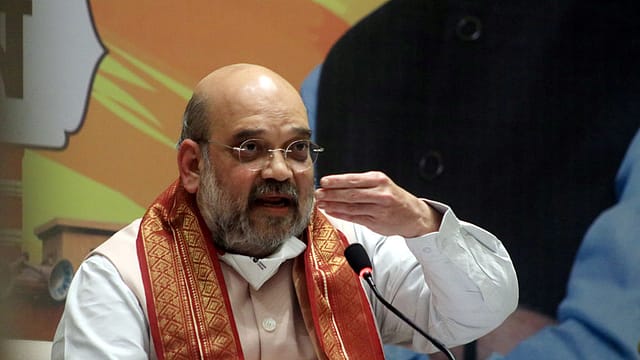
Amit Shah, Union Home Minister and Minister of Cooperation, said that the real estate sector has benefitted the most from the recent GST reforms, citing reductions in housing and building materials, which would in return bring down housing prices. He was addressing CREDAI’s national conference “Viksit Bharat @ 2047” in New Delhi on Friday.
He stated that GST on affordable housing has been reduced from 8% to 1%, on housing projects from 12% to 5%, on cement from 28% to 18%, and on marble, granite, sand, lime, and bricks from 12% to 5%. GST on bamboo flooring has also been reduced from 12% to 5%. He stated that, overall, these new reforms have created the possibility of a 5-7% reduction in the cost of building construction. He added that to promote the development of this sector, the government has permitted 100% FDI in construction projects through the automatic route and also released a ₹60,000 crore National Urban Housing Fund.
Shah said that Prime Minister Narendra Modi has set a goal of building India as a leading global economy by 2047, with $5 trillion economic benchmark.
He said that over the past 11 years, the Modi government has done extensive work on next-generation infrastructure, including the concept of the National Infrastructure Pipeline. Through several new initiatives, a roadmap for structured urban development has been created to bring India closer to nations having the world’s best infrastructure.
Shah said that CREDAI has planted 20 lakh saplings and worked to rejuvenate 9,000 acres of barren land across 25 villages. He encouraged developers to keep some green area in mind while designing projects. He added that if every developer in the country makes an effort to plant 10 trees during the construction of each building they create, it would be a very commendable initiative.
The Union Home Minister said that since 1999, CREDAI has consistently achieved its objective of promoting housing and habitat development, as priority is given to a code of conduct and ethical practices. He said that as the apex body of India’s private real estate developers, CREDAI has played a major role in structuring the sector and establishing it as a recognised and accepted industry.
CREDAI is present in 230 cities across 21 states, representing nearly 13,000 developers. He said that with the completion of 25 years, CREDAI has also proven its relevance and necessity in this sector, and has provided training to more than 3 lakh workers.
Shah said that urbanisation in India will rise to about 40% by 2035, and by 2047, 50% of the country’s population will be living in cities, and the responsibility for providing housing largely rests with developers. Shah said that both urban infrastructure and urban housing will expand, and CREDAI should form a team and deliberate on promoting affordable, eco-friendly housing with a better standard of living. He said that single-window clearances, time-bound approvals, online tracking, and digitised records have built trust in the sector’s architecture, and these reforms will be taken forward at an even faster pace.
The Union Home Minister said that RERA was a structural breakthrough in reforming this sector, and has been adopted by 35 states and Union territories. He added that appellate authorities have been constituted in 29 states, and 29 RERA authorities have also launched their websites. He said that 1.55 lakh real estate projects are registered under RERA, and nearly 1.10 lakh developers have also been registered under its framework.
Shah said that the government understands the importance of this sector and that through CREDAI, Prime Minister Modi’s promise of providing every person with a home can be fulfilled. He also urged CREDAI that it must move forward with a strong sense of responsibility through green building norms, energy-efficient designs, water recycling, rainwater harvesting systems, and scientific waste management should be made the new normal in housing.