
US President Donald Trump warns Iran over Strait of Hormuz escalation; oil trade risks rise
ADVERTISEMENT
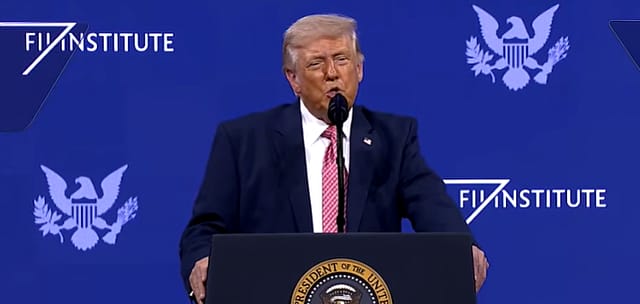
United States President Donald Trump has issued a sharp warning to Iran following fresh tensions in the Strait of Hormuz, flagging potential military and economic consequences that could roil global trade and energy markets. In a post on Truth Social, Trump alleged that “Iran decided to fire bullets… a total violation of our ceasefire agreement,” adding that some of the fire was directed at “a French ship, and a freighter from the United Kingdom.”
Highlighting the strategic chokepoint’s importance, Trump claimed that Iran’s recent moves were backfiring economically. “They are the ones that lose with the closed passage, $500 million dollars a day! The United States loses nothing,” he wrote, while asserting that American-bound shipments were being rerouted to ports in Texas, Louisiana and Alaska.
Shipping disruption fears intensify
The Strait of Hormuz handles a significant share of global crude shipments, and any disruption typically triggers volatility in oil prices, freight rates and insurance premiums. Trump’s remarks that “our blockade has already closed it” have heightened concerns among global shippers and energy traders over supply chain disruptions.
He also indicated diplomatic engagement alongside the hardline rhetoric, stating, “My representatives are going to Islamabad, Pakistan… for negotiations.” However, the tone of the message remained combative, with Trump warning that if a deal is not reached, “the United States is going to knock out every single power plant, and every single bridge, in Iran.”
Markets brace for geopolitical risk
Trump’s declaration of “NO MORE MR. NICE GUY!” underscores the risk of escalation, which could push crude prices higher and unsettle equity markets globally. Energy-importing economies are particularly vulnerable to sustained disruptions in the Gulf region, as tighter supply could feed inflation and widen trade deficits.
India impact: Oil, trade, and inflation
For India, which imports over 80% of its crude oil needs, any instability in the Strait of Hormuz is a direct economic concern. A prolonged disruption could raise oil import bills, weaken the rupee, and add to inflationary pressures. Sectors such as aviation, logistics and manufacturing would face cost headwinds.
At the same time, rerouting of global energy flows could open limited opportunities for diversification of sourcing, including increased imports from the US. However, higher global prices would likely offset such gains.
Notably, tensions around the Strait of Hormuz have periodically disrupted global trade, given its role as a critical artery for oil shipments from the Middle East. Trump’s latest comments echo his historically aggressive stance on Iran, raising the stakes for global markets already sensitive to geopolitical shocks.
As the situation unfolds, businesses and policymakers alike will be watching for signs of either de-escalation through negotiations or further disruption that could reshape energy and trade dynamics worldwide.