
Tata Motors to hike commercial vehicle prices
ADVERTISEMENT
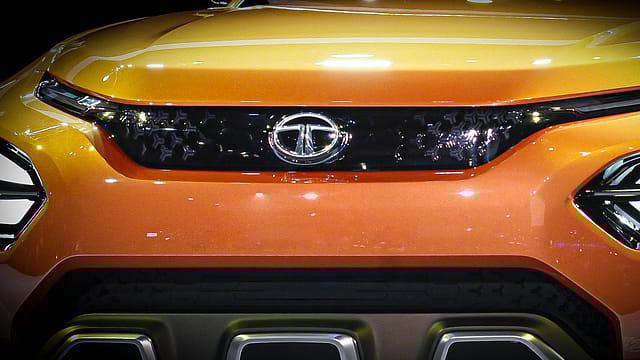
India's largest commercial vehicle manufacturer, Tata Motors will hike prices of its commercial vehicle range from April to offset the steep rise in commodity prices and other input costs.
The price hike will be in the range of 2-2.5% depending upon individual model and variant, the company said in an exchange filing.
The increase in the prices of commodities such as steel, aluminium and other precious metals, in addition to higher costs of other raw materials led to this price hike of commercial vehicles.
The company said it has initiated actions to absorb a significant portion of the increased costs, at various levels of manufacturing. But the steep rise in overall input costs "made it imperative to pass on some residual proportion via a minimized price hike".
Shares of Tata Motors jumped 3% after the price hike announcement to ₹440.30 apiece on Tuesday.
The company's net automotive debt stood at ₹40,900 crore at the end of FY21. But it went up to ₹61,300 crore at the end of the June quarter, and ₹64,400 crore in the second quarter—mainly due to the impact of working capital amid low production. The production impacted at Jaguar Land Rover (JLR) due to a shortage of semiconductors.
Tata group chairman N Chandrasekaran had earlier said that Tata Motors would achieve its previously stated target of zero net debt by March 2024.
Meanwhile, India's largest automaker is betting big on its electric vehicle business.
Last year, the company incorporated a wholly-owned electric vehicle subsidiary, Tata Passenger Electric Mobility Limited (TPEML), with an initial capital of ₹700 crore. It plans an investment of $2 billion in the EV business and the launch of about 10 new EVs by 2025 across segments in India.
The company currently manufactures Nexon, Tigor and Altroz electric vehicles.
The automaker, which has a two-third share of the fast-growing electric passenger vehicles market in India, also plans to invest in lithium-ion cell manufacturing in India and Europe, Fortune India reported earlier.
Tata Motors has teamed up with Tata Power to set up more than 1000 charging points in 180 cities, in car owners' homes and workplaces and key intercity highways, Tata Motors dealerships and other public locations.