
India achieves breakthrough at ₹6,800-crore Zojila Tunnel, boosting Ladakh connectivity and strategic mobility
ADVERTISEMENT
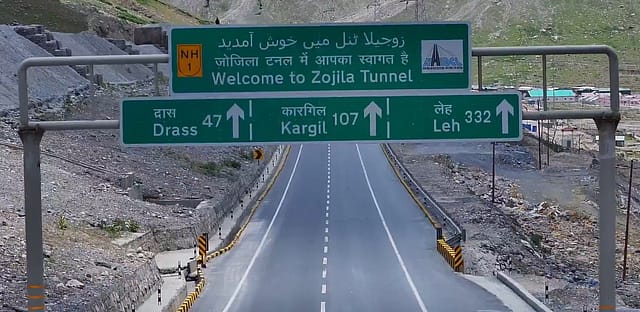
India on Tuesday achieved a major milestone in one of its most ambitious infrastructure projects, with the breakthrough of the main tunnel at the ₹6,800-crore Zojila Tunnel project, paving the way for year-round road connectivity between Jammu & Kashmir and Ladakh.
Union road transport and highways minister Nitin Gadkari, along with Jammu and Kashmir Lieutenant Governor Manoj Sinha, and chief minister Omar Abdullah, witnessed the breakthrough at the eastern portal of the tunnel at Minamarg in Kargil district, calling it a big step towards overcoming the geographical challenges that have long hindered connectivity to Ladakh during winter months.
"The successful breakthrough of the Zojila Tunnel symbolizes the emergence of a New India that transforms geographical challenges into opportunities for development, prosperity and national progress," Gadkari said.
Constructed between Baltal and Minamarg on National Highway-1, the nearly 14-km-long bi-directional tunnel is being developed at an estimated cost of about ₹6,800 crore. Built at altitudes ranging from 2,900 metres to 3,310 metres, the project is regarded as one of the country's most challenging mountain infrastructure undertakings.
Travel time to reduce to 30 minutes
The tunnel is expected to dramatically improve connectivity between Kashmir and Ladakh by ensuring all-weather access across the Zojila Pass, which remains closed for several months every year due to heavy snowfall and avalanche risks.
According to the government, travel time between Sonamarg and Minamarg will be reduced from nearly two hours to about 30 minutes, resulting in substantial savings in both time and fuel. The project is also expected to reduce accident risks and disruptions caused by avalanches and adverse weather conditions.
"The Zojila Tunnel is much more than a transportation project and will serve as a gateway to development for the region," Gadkari said.
The tunnel will be equipped with modern ventilation systems, automatic fire detection systems, advanced CCTV surveillance and pedestrian cross-passage facilities. The broader project includes snow galleries, avalanche protection structures, bridges, culverts and other safety infrastructure designed for the region's harsh terrain and weather conditions.
Strategic importance amid China, Pakistan challenges
Beyond improving civilian mobility, the tunnel is expected to significantly enhance India's strategic capabilities in the sensitive Ladakh region, which borders both China and Pakistan.
At present, weather-related disruptions at the Zojila Pass can affect the movement of personnel and supplies for several months every year. The all-weather tunnel is expected to ensure uninterrupted connectivity to border areas and strengthen logistical support to security forces deployed in the region.
Highlighting the defence importance of the project, the government said, "From a national security perspective, year-round connectivity will enable faster and more efficient movement of the Indian Army, equipment, supplies and logistics, thereby strengthening strategic preparedness."
The project assumes added importance as India continues to strengthen border infrastructure following military tensions with China along the Line of Actual Control (LAC) in eastern Ladakh and persistent security challenges along the Line of Control (LoC) with Pakistan.
Part of broader connectivity push
Gadkari said the Zojila Tunnel forms part of a wider infrastructure push aimed at transforming connectivity across Jammu & Kashmir and Ladakh.
"Road and tunnel projects worth about ₹18,000 crore are under implementation between Kargil and Leh-Ladakh," he said.
The minister added that highway projects worth approximately ₹1.35 lakh crore, including completed, ongoing and upcoming works, are being implemented across Jammu & Kashmir to strengthen connectivity, improve logistics efficiency and accelerate socio-economic development.
He also said that the planned tunnel projects at Baralacha La, Lachulung La and Tanglang La along the Manali-Leh route, which are expected to further improve year-round access to Ladakh.
With the breakthrough now achieved, the project moves into its next phase of construction, bringing India a step closer to securing seamless all-weather connectivity to one of its most strategically vital frontier regions.