
Budget 2026: Investors push for LTCG relief, but experts see limited room for rate cut
ADVERTISEMENT
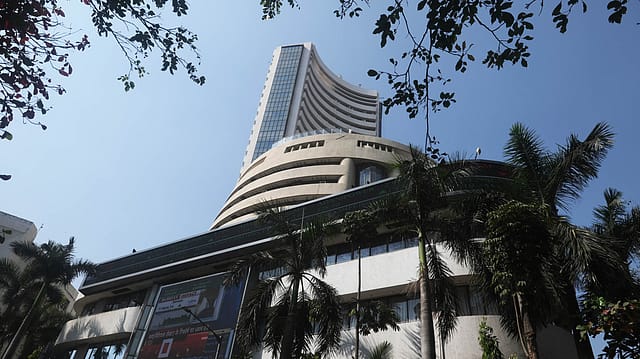
As the Union Budget 2026 draws closer, investors and tax experts are renewing calls for refinements to India’s capital gains tax framework, even as expectations of a sharp policy shift remain divided. Key demands include a reduction in the long-term capital gains (LTCG) tax rate, higher exemption limits, uniform holding periods across asset classes, and restoration of indexation benefits to protect real returns.
Debate follows a major overhaul of the capital gains regime
The debate comes against the backdrop of a major overhaul of the capital gains regime in July 2024, when the government introduced a uniform 12.5% LTCG tax rate across asset classes such as equities, mutual funds, real estate, gold, and bonds, albeit with differing holding periods. Currently, gains on equity mutual funds held for over one year are taxed beyond an exemption limit of ₹1.25 lakhs while real estate attracts LTCG tax after a two-year holding period.
How cutting LTCG from 12.5% to 10% boosts investor returns
Tax experts advocating a rate cut argue that lowering LTCG from 12.5% to 10% would directly boost investors’ net returns and reinforce long-term investing behaviour. However, many market participants believe Budget 2026 is more likely to focus on incremental changes such as raising the tax-free threshold or simplifying holding period rules, rather than rolling back rates.
Vinayak Magotra, Product Head and founding team member at Centricity WealthTech, said a rate cut is unlikely. “Equity markets are already seeing peak domestic inflows, and the government has little incentive to reduce a levy that is low by global standards. The current framework provides clarity and fairness while supporting fiscal revenues,” he said. Magotra added that with investor participation expanding into smaller cities and towns, policy efforts should prioritise financial inclusion and ease of investing rather than tax sops.
In contrast, Monjit Gogoi, founder of Alphamarket, said a lower LTCG rate could act as a catalyst at a time when markets are facing global headwinds. “Reducing LTCG to 10% would encourage investors to stay invested longer and help curb short-term panic,” he said. Gogoi also flagged long-pending expectations of the salaried class for higher income tax exemptions to boost consumption and called for restoring indexation benefits to ensure investors are taxed on inflation-adjusted, real gains.
Startups expect to improve early access to capital and widen funding sources
From the startup ecosystem’s perspective, Gogoi said founders expect Budget 2026 to ease access to capital from both public and private markets, enabling startups to raise funds earlier in their lifecycle and reduce reliance on a small pool of private investors.
Mihir Tanna, Associate Director, Direct Tax at S.K. Patodia & Associate LLP, echoed the view that a rate cut is unlikely. “A unified 12.5% LTCG rate was introduced across most asset classes, and the exemption limit was raised to ₹1.25 lakh only in the last Budget after seven years. Further increases or a rate reduction may not be on the table,” he said.
Indexation benefits remain limited despite partial restoration
On indexation, Tanna noted that benefits were partially restored after Budget 2024 for residential property acquired before July 23, 2024, but only for resident taxpayers. “Some clarity on the scope of indexation could be expected,” he added.
Overall, while investor demands are growing louder ahead of Budget 2026, experts believe the government may opt for fine-tuning rather than sweeping changes to the capital gains tax regime.