
Indian securities market shows resilience in FY26 despite global headwinds: Sebi
ADVERTISEMENT
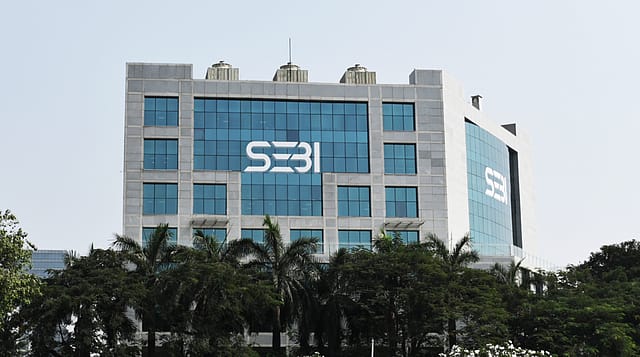
India’s securities market demonstrated strong resilience in FY25-26 despite heightened geopolitical tensions, trade uncertainties, foreign capital outflows and volatile global financial conditions, according to the Securities and Exchange Board of India (Sebi).
The market’s resilience was supported by robust corporate fundraising across equity, debt and hybrid instruments, rising participation by domestic investors and the continued financialisation of household savings.
India remained among the leading global destinations for initial public offerings (IPOs), aided by strong macroeconomic fundamentals, improving corporate performance and deepening investor participation. Domestic institutional investors (DIIs) and retail investors helped cushion the impact of foreign portfolio investor (FPI) outflows.
Primary market
India’s primary market mobilised ₹13.6 lakh crore during FY26, down 4.4% from the previous year. However, public equity fundraising through IPOs, follow-on public offers (FPOs) and rights issues reached a record ₹2.3 lakh crore, an 11.7% increase.
Fundraising through IPOs and FPOs remained broadly unchanged at ₹1.9 lakh crore, while the number of newly listed companies increased to 366 from 320. Mainboard IPOs raised ₹1.8 lakh crore, up 8.9%.
The SME segment also maintained its momentum, with 257 companies raising ₹11,587 crore, an 18.1% increase. Preferential allotments surged 76.3% to ₹1.48 lakh crore, while qualified institutional placements fell 50% to ₹67,853 crore.
Debt fundraising declined 8.4% to ₹9.11 lakh crore, largely due to higher corporate bond yields and risk aversion. Private placements, which accounted for 98.8% of debt fundraising, fell 8.8% to ₹9 lakh crore. In contrast, public debt issuances rose 39.2% to ₹11,343 crore.
Municipal bonds also gained traction, with 14 issues raising ₹1,756 crore, compared with just ₹100 crore through one issue in the previous year. Infrastructure investment trusts (InvITs) raised ₹21,026 crore, while real estate investment trusts (REITs) mobilised ₹9,300 crore through three issues. At the end of March 2026, REITs and InvITs had net assets under management of ₹2.4 lakh crore and ₹6.4 lakh crore, respectively.
Secondary market
The Nifty 50 hit a record high of 26,328.6 in January 2026 before geopolitical tensions triggered a 15.2% correction. The index ended FY26 down 5.1%, while its decline in US dollar terms was sharper at 13.9%, reflecting the rupee’s depreciation.
DIIs emerged as a key stabilising force, recording cumulative net inflows of ₹8.5 lakh crore. Their equity holdings reached an all-time high of 17% by March 2026, while FPI ownership fell to a 15-year low of 15.8%.
India’s aggregate market capitalisation stood at ₹411.6 lakh crore, retaining its position as the world’s fifth-largest stock market.
Cash equity turnover declined 6.8% to ₹280 lakh crore, while the market-capitalisation-to-GDP ratio fell to 118.8% from 130.1%.
Retail participation continued to deepen, with demat accounts reaching 22.5 crore. Meanwhile, delivery-based trading increased to around 30% of traded quantity and value, indicating a greater preference for investment over speculative intraday activity.
The corporate bond market saw traded value rise 27.9% to ₹21.2 lakh crore. Electronic trading through the Request for Quote platform increased nearly six-fold, while corporate debt tri-party repo volumes also expanded significantly.
Equity derivatives, however, saw a sharp fall in options contracts, with volumes declining 51.5% following SEBI measures such as higher contract sizes, rationalised weekly expiries, upfront premium collection and a higher securities transaction tax.
Mutual funds and alternative investments
Mutual fund assets under management rose 12.2% year-on-year to ₹73.7 lakh crore in March 2026. The investor base expanded 13.2% to 6.1 crore, with Tier-II cities recording particularly strong growth.
SIP accounts reached 10.45 crore, while average monthly SIP contributions rose 25.8% to a record ₹16,413 crore. Gold ETF inflows jumped 4.6 times to ₹68,868 crore amid geopolitical uncertainty and inflation concerns.
AIF commitments increased 25.6% to ₹16.9 lakh crore, while cumulative net investments reached ₹6.8 lakh crore. PMS assets under management rose 9.6% to ₹41.4 lakh crore.
FPI outflows
FPIs recorded a record net outflow of ₹1.53 lakh crore in FY26, reversing from a ₹20,018 crore inflow in FY25. Geopolitical tensions, elevated crude oil prices, higher US bond yields, rupee depreciation, relatively high Indian equity valuations and moderating earnings growth contributed to the outflows.
Despite the record withdrawal, the net FPI outflow was equivalent to only 2.1% of their assets under custody, indicating that liquidations remained moderate relative to their overall holdings.
Regulatory push
SEBI continued to focus on investor protection, market development, systemic stability and ease of doing business. During FY26, its advisory committees held 49 meetings covering 203 policy and regulatory issues, while 82 consultation papers, draft circulars and investor charters were issued for public comments.
Industry Standard Forums held 69 meetings covering 148 agenda items. SEBI also consolidated regulatory directions through 16 master circulars and issued 103 circulars covering primary and secondary markets, intermediaries and asset management, reinforcing its efforts to simplify compliance and strengthen the regulatory framework.