
Juniper Green trims IPO size to ₹1,800 crore after refinancing ₹1,200 crore debt; proceeds to strengthen balance sheet: CEO
ADVERTISEMENT
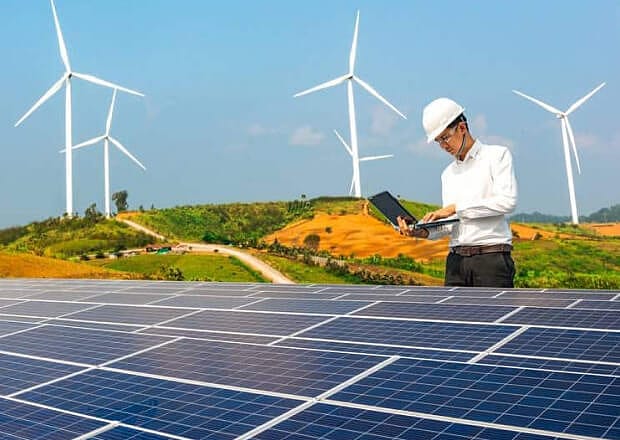
Renewable energy producer Juniper Green Energy has fixed the price band for its upcoming initial public offering (IPO) at ₹214-225 per share, aiming to raise ₹1,800 crore through an entirely fresh issue. The Gurugram-based independent power producer has reduced the size of its IPO by 40% from the ₹3,000 crore proposed in its draft red herring prospectus (DRHP).
The IPO, comprising 8 crore fresh equity shares with no offer for sale (OFS), will open for subscription on July 30 and close on August 3. Since the issue consists entirely of fresh equity, the entire proceeds will accrue to the company.
The basis of allotment is expected to be finalised on August 4, while the shares are scheduled to list on the BSE and NSE on August 6.
The Singapore-based AT Capital Group-owned company has reserved up to 50% of the issue for qualified institutional buyers (QIBs), 35% for retail investors, and 15% for non-institutional investors (NIIs). Investors can bid in lots of 66 shares, requiring a minimum investment of ₹14,850 at the upper end of the price band.
Why the IPO size was reduced
Explaining the reduction in the issue size, the company's management said the DRHP had earmarked nearly ₹1,200 crore for repaying subsidiary borrowings through the IPO proceeds. However, those loans have since been refinanced at lower interest rates.
"The DRHP is a provisional document. At the time of filing, we had identified around ₹1,200 crore of subsidiary loans to be refinanced through the IPO proceeds. Since then, we have refinanced these borrowings at lower interest rates. Accordingly, they have been removed from the RHP, reducing the issue size to ₹1,800 crore from ₹3,000 crore," Parag Agrawal, CFO of Juniper Green Energy, told Fortune India.
Agrawal said the fresh issue proceeds will primarily be used to repay borrowings at both the parent and subsidiary levels, strengthening the company's balance sheet.
Betting on complex renewable projects
Juniper Green Energy has positioned itself as a renewable energy IPP focused on utility-scale solar, wind, wind-solar hybrid (WSH), and firm and dispatchable renewable energy (FDRE) projects supported by battery energy storage systems (BESS).
The company believes this strategy differentiates it from peers. "Around 83% of our portfolio comprises WSH and FDRE projects. Our average tariff stands at ₹3.64 per unit, which is higher than the broader market. Our execution capabilities in these complex projects help protect margins and strengthen our competitive position," Agrawal said.
He added that the company has witnessed rapid expansion over the past 15 months, with operational capacity more than doubling to 2,400 MWp from 1,174 MWp in FY25.
As of June 30, 2026, Juniper Green Energy had a renewable energy portfolio of 7,910.2 MW (10,247.06 MWp) across operational, under-construction, contracted, and awarded projects, making it one of India's top 10 renewable energy IPPs by total capacity.
Ankush Malik, CEO of Juniper Green Energy, said the company added more than 600 MW of capacity in the first three months of FY27 alone, equivalent to the capacity commissioned during the entire previous financial year.
He added that Juniper currently has a development pipeline exceeding 10 GW alongside an operational portfolio of 2.4 GW, providing significant visibility for future growth.
Focus on profitability over aggressive bidding
Despite heightened competition in renewable energy auctions, the company said it has maintained pricing discipline to protect returns.
"Competition has been a reality in the renewable energy sector for the past eight years. By remaining patient and moving quickly when opportunities arise, we have consistently generated better returns than the market," Malik said.
The company deliberately stayed away from projects during 2021 and 2022, when returns were unattractive, before aggressively bidding for complex RTC and FDRE projects between 2023 and 2025, where profitability was significantly higher.
Looking ahead, the management sees firm dispatchable renewable energy as the next major growth opportunity.
"Evening peak power tariffs have reached ₹16-20 per unit this year, creating a compelling case for firm dispatchable renewable energy that combines solar, wind, and battery storage. That is where our focus remains," Malik added.
For FY26, Juniper Green Energy reported a 41% year-on-year increase in total income to ₹804.93 crore from ₹569.78 crore in FY25. Profit after tax rose 11% to ₹40.46 crore, while EBITDA increased to ₹692.18 crore from ₹485.69 crore a year earlier.
As of March 31, 2026, the company's total borrowings stood at ₹12,920.54 crore, reflecting the capital-intensive nature of its expansion strategy.
(DISCLAIMER: The views and opinions expressed by investment experts on fortuneindia.com are either their own or of their organisations, but not necessarily that of fortuneindia.com and its editorial team. Readers are advised to consult certified experts before taking investment decisions.)