
Nithin Kamath explains why IPO-bound NSE is a rare 'cash generation and distribution machine'
ADVERTISEMENT
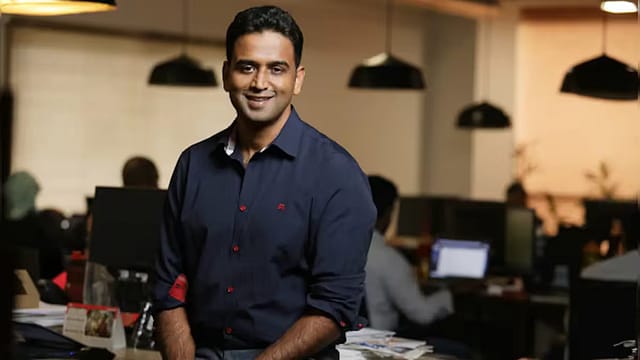
Days after the National Stock Exchange (NSE) filed its long-awaited draft red herring prospectus (DRHP) with market regulator Sebi, Zerodha co-founder Nithin Kamath shared a detailed analysis of the exchange's business model, describing it as a rare "cash generation and distribution machine" in India's corporate landscape.
In a post on X, Kamath highlighted NSE's extraordinary profitability and dividend-paying ability, noting that the exchange generated more than ₹10,300 crore in profit during FY26 and distributed around ₹8,660 crore as dividends, translating into a payout ratio of 84%.
"NSE is a cash generation and distribution machine," Kamath wrote, adding that such high payouts are likely to continue even after the exchange goes public.
According to him, NSE's unique position stems from regulatory restrictions that limit how stock exchanges can deploy their surplus capital.
"Sebi doesn't allow exchanges to invest in other businesses, listed or private. So why aren't there more businesses like this?" he said.
The comments come at a time when NSE is preparing for what could become one of the largest IPOs in Indian corporate history. On Tuesday, the exchange filed its DRHP for an entirely offer-for-sale (OFS) issue comprising 14.89 crore shares.
At the current unlisted market price of around ₹2,000 per share, the issue is estimated to be worth nearly ₹30,000 crore, potentially surpassing the ₹27,000-crore IPO of Hyundai Motor India to become one of the biggest public offerings ever in India.
Kamath used NSE's example to make a broader point about India's tax structure and why most profitable businesses prefer reinvestment over dividend distribution.
He explained that a company earning ₹100 first pays corporate tax, leaving around ₹75. If that amount is distributed as dividends, shareholders pay tax again at their applicable income tax rates, significantly reducing post-tax returns.
“Assume a business earns ₹100. It pays 25% corporate tax, leaving ₹75. If that ₹75 is distributed as dividends, the shareholder pays tax again at their marginal rate. Can be another 36% for someone in the highest bracket. The investor ends up with ₹48 out of the original ₹100,” he said.
By contrast, companies that reinvest profits into growth can create shareholder value through stock price appreciation, which is taxed only when investors sell their shares and generally at lower capital gains tax rates.
"A differential of 14.5% versus 51% creates a strong incentive for profitable companies to reinvest aggressively rather than distribute," Kamath said.
He argued that the wide gap between dividend taxation and capital gains taxation discourages companies from rewarding shareholders through payouts and partly explains why many new-age businesses prioritise growth over profitability.
"I think there should not be such a big differential in taxes on dividend income as compared to capital gain," he said.
The NSE IPO is also set to generate massive wealth for long-term shareholders. The largest seller, State Bank of India, is expected to raise nearly ₹4,950 crore by selling 2.47 crore shares. Remarkably, SBI's weighted average acquisition cost is just 80 paise per share.
Other major beneficiaries include MS Strategic, CPPIB, Aranda Investments, Bank of Baroda, Stock Holding Corporation of India, GIC Re and New India Assurance, with the top 10 selling shareholders collectively expected to realise nearly ₹24,000 crore based on current valuations.
Kamath's observations have also revived a broader debate on the double taxation of corporate profits. Pointing to examples from countries such as Australia and the United States, he noted that several markets provide tax relief on dividends to reduce the burden on shareholders and encourage profit distribution.
(DISCLAIMER: The views and opinions expressed by investment experts on fortuneindia.com are either their own or of their organisations, but not necessarily that of fortuneindia.com and its editorial team. Readers are advised to consult certified experts before taking investment decisions.)