
NSE IPO: The India opportunity for Rothschild & Co
ADVERTISEMENT
As part of its preparations to go public this year, India’s largest stock exchange, National Stock Exchange (NSE), appointed one of the world’s leading financial advisory firms, Rothschild & Co, as an independent advisor to its IPO process in February.
The mandate included overseeing the selection of key intermediaries such as book-running lead managers (BRLMs), legal counsel, and managing the entire process—from documentation and clarifications to back-office coordination. With more than 30 bankers now on the ground in India, Rothschild & Co sees significant growth opportunities across sectors, particularly in the financial services space.
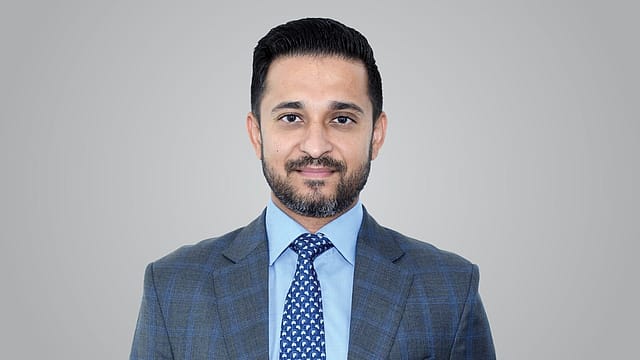
Having been appointed Head of India at Rothschild & Co. in June last year, Aalok Shah said the firm is currently looking to double down on its business in fundraising advisory and mergers and acquisitions, including cross-border deals. In an exclusive conversation with Fortune India, Shah said, “We are also working with companies to get them ready for IPOs and running a whole process for an IPO. So, we are effectively now working with companies across this entire value chain, and we are also now looking to have more or add more people who can work on the debt syndication for our clients.”
The IPO market and FII sell-off
Last calendar year, India’s mainboard market saw over 100 listings, along with more than 250 in the SME segment. Among the biggest offerings were LG Electronics India’s IPO, which topped the parent company in value, as well as listings of new-age companies such as Groww and Lenskart.
While ongoing macroeconomic uncertainties have cast a shadow over some planned offerings, the pipeline for 2026 appears promising, with names such as NSE, Reliance Jio, Oyo, and PhonePe among those expected to tap the market. Describing the current geopolitical uncertainty as largely a short-term phenomenon, Shah says India continues to remain a preferred listing destination for many companies.
“We are currently speaking with multiple companies who are trying to flip their structure and have an India domiciled entity so that they can list it here. We are also engaging with lot of our global/ MNC clients, who all want to list their Indian subs in India,” he says.
At a time when the Indian stock market is seeing record foreign institutional investor (FII) outflows, he adds that whether in roadshows or anchor books, FIIs are no longer the key price setters. Instead, domestic institutional investors are now largely at the forefront of price discovery for IPOs in the current market.
As India’s two main stock exchanges continue to remain under pressure on the back of FII sell-offs, Shah says, “I think once they start seeing they can make high returns from the Indian market, that's when they'll come back. And two, they will be when the valuations are pretty attractive for them." According to reports, foreign investors have pulled out over ₹43,000 crores out of the Indian stock market in April alone and over ₹1.75 lakh crores in the first four months of the current calendar year. The figure will shortly be surpassing the total exit for the entire year of 2025.
M&A and the war impact
In India, mergers and acquisitions (M&As) is another area where the firm is betting big, amid a steady rise in interest in cross-border transactions. Shah says the approach of Indian companies toward cross-border M&As has clearly shifted from merely expanding their global footprint to strategically strengthening and augmenting business capabilities. “We've been involved in multiple cross border M&As - $150-200 million in size or upwards. So, I think there is big appetite for Indian groups now to buy businesses overseas, and they are getting it at good valuations”, he adds.
More recently, the firm advised on IT major Wipro’s $1-billion deal with Singapore-based food conglomerate Olam Group, which included a buyout component involving Olam’s IT and digital services subsidiary, Mindsprint, for a cash consideration of $375 million. Shah says that the firm is seeing strong outbound M&A traction in sectors such as industrials, chemicals, pharma and technology.
On inbound interest from private equity players, Shah says the preference today is clearly tilted towards organic investments rather than buying smaller or mid-sized companies and scaling them up. With PE players sitting on dry powder, a large share of allocations from Asia-focused funds is now being directed towards India, “They continue to be very acquisitive on India deals. The real challenge is around finding the right opportunity at the right valuations. They are active across sectors, but their preferences let's say, heavy on healthcare, pharma, financial services, technology, consumer,” he says.
While the Middle East had recently emerged as a magnet for investments, with large global banks and advisory firms actively expanding their footprint, the ongoing war has created uncertainty for many investors, particularly those backing large AI-related investments.However, Shah says it is still too early to determine whether this will lead to any reallocation of funds. “We've not seen any decisions, or at least investment decisions, being made right now where people have said we will reallocate our portfolio from Middle East to other markets,” he says.
However, where the impact is being seen is the investments from the Middle East into India, which are now on hold or is being paused. “The transactions that they committed to, or they were signed up for; they are closing those. But for new transactions, I think they'll probably just be a little cautious to decide where they want to deploy their capital.” Shah adds.