
Market meltdown dents portfolios of Jhunjhunwala, Mukul Agrawal, Ashish Kacholia, Madhusudan Kela; Damani bucks trend
ADVERTISEMENT
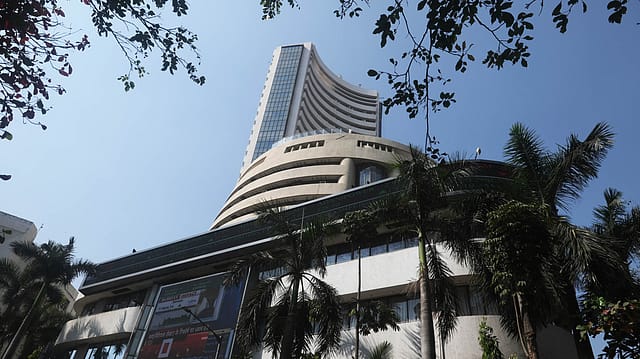
The January-March quarter of 2026 delivered a harsh reality check for India’s marquee individual investors. A brutal selloff across equities - triggered by surging crude oil prices and escalating geopolitical tensions in West Asia - wiped out billions in market wealth and rattled portfolios that had ridden the small- and mid-cap rally for years.
From the Bajaj family and the late Rakesh Jhunjhunwala’s portfolio to investors such as Mukul Agrawal, Ashish Kacholia, and Madhusudan Kela, most marquee names saw erosion in portfolio values during the quarter. Data from Primeinfobase showed that only Radhakishan Damani managed to emerge relatively unscathed, helped by the resilience of Avenue Supermarts.

The benchmark Sensex and Nifty plunged nearly 15% during the January-March quarter, with March alone seeing a sharp 10% decline, the steepest monthly fall for Indian equities since the pandemic-driven turmoil of 2020. As risk appetite weakened, richly valued mid- and small-cap stocks bore the brunt of the selloff, exposing the vulnerability of concentrated bets.
Barring Damani, all ace investors suffer big losses
Among the country’s best-known investors, Radhakishan Damani, founder and chairman of Avenue Supermarts, remained the biggest gainer in absolute terms, with the value of his disclosed holdings rising 4.4% quarter-on-quarter to ₹1.75 lakh crore in March 2026, as per data shared by Primeinfobase.
The increase was largely driven by his dominant stake in Avenue Supermarts, whose holding value climbed to ₹1.73 lakh crore from ₹1.65 lakh crore in the previous quarter. Gains in stocks such as Bhagiradha Chemicals & Industries and TSF Investments also supported the portfolio.
In contrast, portfolio associated with late investor Rakesh Jhunjhunwala fell 9.6% to ₹57,591 crore. The weakness was led by declines in several consumer-facing and financial stocks including Titan Company, Metro Brands and Star Health and Allied Insurance. However, some positions such as Inventurus Knowledge Solutions and Fortis Healthcare helped offset part of the decline.
Investor Mukul Agrawal saw one of the steepest corrections among major investors, with portfolio value dropping 25.6% quarter-on-quarter to ₹4,648 crore. The decline reflected weakness across several mid-cap and small-cap holdings despite increased exposure in select counters. Stocks such as Dishman Carbogen Amcis, Intellect Design Arena and PDS witnessed notable pressure. At the same time, Agrawal increased stakes in companies including Hindustan Construction Company, Ajmera Realty & Infra India and Valor Estate.
Similarly, the portfolio of Hemendra Kothari declined 25.7% to ₹4,482 crore, largely due to a sharp correction in Sonata Software despite gains in Alkyl Amines Chemicals.
Investor Madhusudan Kela saw portfolio value fall 21.2% to ₹1,643 crore amid weakness in stocks such as Choice International and Windsor Machines. However, he increased exposure in names including Indiabulls Enterprises and Rashi Peripherals during the quarter.
The correction in broader markets also impacted investors with concentrated mid-cap exposure. Portfolio values of Ashish Kacholia and Ashish Dhawan fell 16.9% and 12.5%, respectively. Kacholia added to positions in engineering and manufacturing names such as Aeroflex Industries and Fineotex Chemical, while Dhawan raised exposure in Northern Arc Capital and Bluspring Enterprises.
Among the few outliers, Vanaja Iyer emerged as the strongest performer, with portfolio value more than doubling sequentially to ₹1,123 crore. The surge was aided by gains in holdings such as Linde India and fresh positions in niche industrial and chemical companies.
Meanwhile, investors with exposure to banking and financial stocks witnessed relatively limited downside compared with broader mid-cap investors. Holdings of Yusuff Ali remained supported by stakes in Federal Bank, South Indian Bank, and CSB Bank.