
Sebi looking to engage with government for banks, insurance companies, pension funds to trade in non-agro commodities: Tuhin Kanta Pandey
ADVERTISEMENT
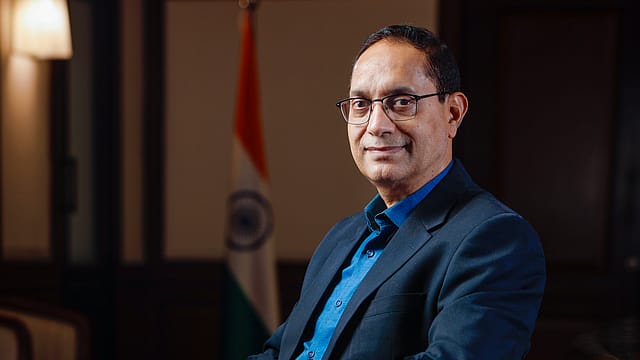
The Securities Exchange Board of India (Sebi), India's capital markets regulator, is looking to engage with the government to consider banks, insurance companies, and pension funds to trade in non-agricultural commodities, its chairman Tuhin Kanta Pandey said on Wednesday.
Pandey divulged these details while speaking on Sebi’s multi-pronged approach to develop financial instruments that would help finance and de-risk the exploration and mining of critical minerals, so that India becomes self-reliant in these vital resources.
According to Pandey, who was speaking at a keynote address, “Metals—from mines to markets”, a proposal to allow FPIs to trade in non-cash settled non-agricultural commodities contracts is currently under examination. This is part of Sebi’s approach to deepen and widen participation in the non-agricultural commodity space, which would include metals. A non-negotiable for Sebi in this space is real-time margin collection and continuous monitoring as guardrails, which would strengthen the integrity and safety of the markets.
“Our markets are for large corporations, traders, importers, and SMEs. They are also available for institutional investors like mutual funds and AIFs, who are increasingly recognising metals as an asset class that improves risk-adjusted returns for investors. Enhanced institutional participation will bring in higher liquidity, making the market more attractive for hedging,” he averred.
He also said that by December, Sebi will include commodity-specific brokers in the Samuhik Prativedan Manch, a common reporting mechanism for compliance reports. “This will ease their compliance requirements. We have engaged and will continue to engage with the Government to resolve GST-related challenges for participants who wish to receive or deliver commodities through the Exchange platform,” he said.
The capital markets regulator will also run targeted awareness and education programs to make non-agricultural commodity markets more accessible and relevant to all.
Pandey also recounted that for decades, India’s physical metal markets were largely dependent on foreign price benchmarks to transact. “The London Metal Exchange led the way for non-ferrous metals, setting the prices that our domestic producers and consumers had to follow. Our markets were fragmented with regional exchanges trading local commodities.”
The new millennium, according to Pandey, brought a seismic shift. In the early 2000s, private entities had established national-level online commodity exchanges. Another significant milestone was the merger of the FMC with Sebi in 2015, which brought the commodity derivatives market under a unified, modern regulatory framework.