
Weathering the storm: How AI is transforming India’s agriculture and rural economy
ADVERTISEMENT
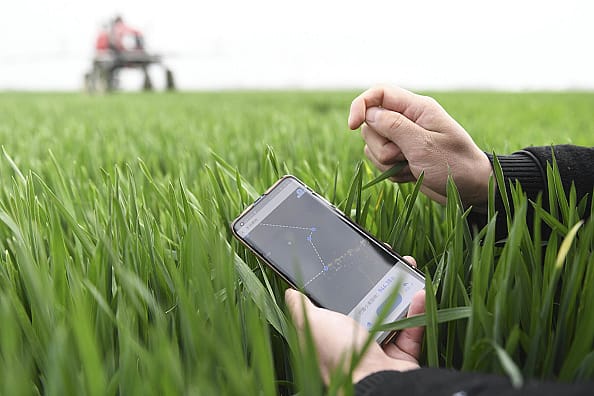
Artificial Intelligence is rapidly emerging as one of the most transformative forces in India’s rural economy. As the country seeks to boost farm productivity, stabilise farmer incomes, and build climate-resilient agriculture, AI-powered tools are stepping in to fill long-standing gaps in information, forecasting, and decision-making. What was once dependent on intuition and experience is now increasingly guided by data, algorithms, and real-time intelligence.
Smarter farming through predictive analytics
One of the most powerful contributions of AI lies in its ability to predict weather patterns, pest outbreaks, and irrigation needs with remarkable accuracy. Machine-learning models analyse years of meteorological data, soil parameters, and crop cycles to generate localised advisories delivered directly to farmers’ mobile phones. These alerts help farmers decide when to sow, irrigate, fertilise, or protect their crops--reducing losses and optimising resource use.
In regions prone to erratic rainfall or pest attacks, such predictive systems have already shown measurable impact. Farmers who receive AI-based advisories report higher yields, lower input costs, and reduced crop damage, demonstrating how technology can mitigate climate-related risks.
Drones, satellites, and the new era of precision agriculture
AI-powered drones are becoming indispensable tools for modern agriculture. Equipped with multispectral cameras and machine-vision algorithms, these drones can:
● Detect nutrient deficiencies
● Identify early signs of disease
● Map crop stress
● Optimise fertilizer and pesticide application
By enabling targeted interventions, drones help reduce chemical usage, cut costs, and improve soil health.
Satellite imagery, combined with AI-driven analytics, is also revolutionising harvest forecasting. High-resolution images processed through deep-learning models allow governments, cooperatives, and agri businesses to estimate yields weeks in advance. This supports better procurement planning, storage management, and market stabilisation.
Market intelligence for better price realisation
Beyond the farm, AI is reshaping the economics of agriculture. Market price prediction models analyse historical price trends, mandi arrivals, weather patterns, and consumption data to forecast demand and supply fluctuations. These insights empower farmers to make informed decisions about when and where to sell their produce.
Such tools are particularly valuable for small and marginal farmers who often lack access to reliable market information. With AI-enabled priceintelligence, they can avoid distress sales and secure better returns.
Localised AI tools: The next frontier
A major challenge in rural India is the diversity of languages, dialects, and agro-climatic conditions. AI is now bridging this gap through localised, multilingual advisory systems.
Two notable innovations stand out:
Mausum GPT
A next-generation AI tool designed to provide context-aware agricultural insights, Mausum GPT helps farmers understand soil health, crop suitability, and climate risks. Its ability to process complex datasets and deliver simple, actionable recommendations makes it a powerful decision-support system.
Agri Chat Engine by ANNAM.AI, IIT Ropar
Developed at IIT Ropar, the Agri Chat Engine is a breakthrough in rural digital empowerment. It offers:
● Real-time, hyper-local agricultural information
● Guidance in regional languages
● Voice-enabled support for farmers with low digital literacy
● Instant answers on crops, pests, weather, and government schemes
By combining AI with local knowledge systems, ANNAM.AI is ensuring that technology reaches the last mile - where it matters most.
A new rural economy powered by AI
The integration of AI into agriculture is not just improving productivity; it is reshaping the rural economy itself. From precision farming and climate-smart practices to market intelligence and multilingual advisory platforms, AI is enabling farmers to make informed decisions, reduce risks, and increase incomes.
As India accelerates its digital transformation, the convergence of AI, satellite data, drones, and mobile connectivity promises to unlock unprecedented opportunities for rural communities. The country is well-positioned to build a future-ready, resilient, and prosperous agricultural ecosystem.
(The author is director, IIT Ropar. Views are personal.)