
HDFC Bank AGM: Lender at 'cusp of change', poised for stronger growth on merger, technology push, says part-time chairman Rajiv Kumar
ADVERTISEMENT
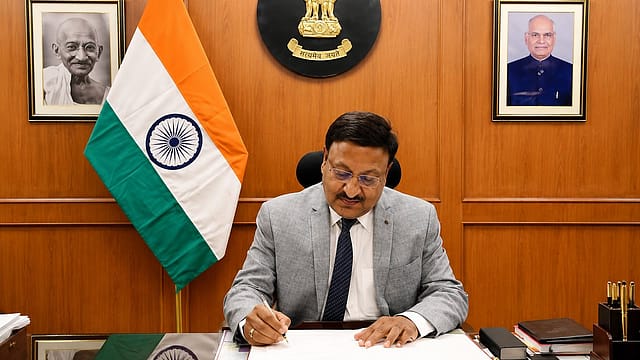
HDFC Bank Part-Time Chairman Rajiv Kumar on Wednesday said the country's largest private sector lender is at the "cusp of a change", with merger synergies, technology investments, and an expanding distribution network expected to drive stronger business growth over the coming years. He reaffirmed the Board's commitment to the highest standards of corporate governance and a zero-tolerance approach towards ethical lapses.
Since March, HDFC Bank, under CEO and MD Sashidhar Jagdishan's leadership, has faced several governance-related scrutiny following the sudden resignation of its part-time chairman, Atanu Chakraborty, on March 18. In his resignation letter to the Board, Chakraborty said certain "happenings and practices" at the bank were not in consonance with his "personal values and ethics."
In June, the bank commissioned an independent legal review by Wilson Sonsini Goodrich & Rosati and Wadia Ghandy. The review concluded that the contemporaneous evidence examined was "inconsistent" with the statements made by Chakraborty in his resignation letter.
Addressing shareholders at the bank's 32nd Annual General Meeting (AGM), Kumar said HDFC Bank's governance framework and internal control systems remain robust and will be further strengthened to preserve stakeholder confidence. "The Bank's ethos and internal control systems are strong. I assure you that these will be further strengthened and empowered," he said.
Kumar said the global economy continues to face elevated uncertainty amid geopolitical tensions, particularly in West Asia, which have disrupted energy markets and supply chains.
He noted that the International Monetary Fund (IMF) expects global economic growth to moderate to around 3% in 2026 from 3.4% in 2025, suggesting external conditions are likely to remain challenging.
Despite the global headwinds, Kumar said India continues to be among the world's fastest-growing major economies, supported by strong domestic demand, sustained public and private capital expenditure, manufacturing expansion, the rapid growth of Global Capability Centres (GCCs) and a resilient services sector. "The acceleration in consumer demand, continued investment in physical and digital infrastructure, rapid formalisation of the economy and a favourable demographic profile provide a strong foundation for sustained growth," he said.
Kumar noted that the Reserve Bank of India (RBI) has projected GDP growth of 6.6% for FY27 while forecasting inflation at 5.1%. He added that the Indian banking system remains well-capitalised, with healthy credit growth and the lowest gross non-performing asset ratio in more than two decades.
Reviewing HDFC Bank's FY26 performance, Kumar said the lender delivered healthy growth while maintaining strong asset quality. Profit after tax rose 10.9% year-on-year to ₹74,671.3 crore, advances increased 12.1% to ₹29.37 lakh crore, while deposits grew 14.4% to ₹31.05 lakh crore, outpacing the banking system's deposit growth of 11.5%.
According to Kumar, the bank has resumed growing its loan book broadly in line with the industry and expects to outperform system-wide credit growth in the coming years. He acknowledged that cumulative repo rate cuts during 2025 compressed net interest margins (NIMs), as lending rates repriced faster than deposit rates.
He also highlighted FY26 as a landmark year for shareholders, with HDFC Bank issuing its first-ever 1:1 bonus shares. Including a special interim dividend of ₹2.50 per share and a final dividend of ₹13 per share, the bank paid a total dividend of ₹15.50 per share for the year.
Kumar said the merger with HDFC Ltd has started generating tangible business synergies. More than 95% of new home loan customers now open savings accounts with HDFC Bank, strengthening customer relationships and creating cross-selling opportunities across lending, investments, insurance and wealth management.
Describing HDFC Bank as a financial services conglomerate, he said the group now comprises 15 subsidiaries, including HDFC Life, HDFC ERGO, HDFC AMC, HDFC Capital, HDFC Securities, and HDB Financial Services.
Outlining the bank's future roadmap, Kumar identified expanding deposit market share, leadership in MSME lending, branch expansion, retail and MSME credit growth, and technology-led transformation as the key growth drivers.
The bank has added more than 4,000 branches over the past five years, nearly half of them in semi-urban and rural areas. It has also invested heavily in modernising its technology infrastructure and deploying Generative AI across the organisation through its in-house platform, Neev, to improve customer acquisition, service delivery and employee productivity.
Corporate governance remained a key focus of Kumar's address. Referring to the resignation of the bank's former part-time chairman, he said the Board had appointed domestic and international law firms to conduct an independent review under the supervision of a committee of independent directors, with the findings disclosed to stock exchanges in June.
"Strong institutions are defined by the quality of their policies, processes and governance frameworks, and by how rigorously these are followed," he said.
Reiterating the Board's position, Kumar said there are no systemic governance concerns at HDFC Bank. "The Bank is fundamentally strong, with a pristine balance sheet. There are no governance-related concerns at the systemic level," he said, adding that the Board would ensure control functions remain fully empowered and that any unethical practices would be dealt with swiftly under the bank's zero-tolerance policy.
Highlighting the bank's contribution to financial inclusion, Kumar said HDFC Bank has sanctioned loans worth over ₹1 lakh crore under the Pradhan Mantri Mudra Yojana since its inception. It has also opened 58.8 lakh Jan Dhan accounts and enrolled 1.28 crore customers under various government-backed social security schemes.