
Explained: Will UPI payments above ₹2,000 become chargeable?
ADVERTISEMENT
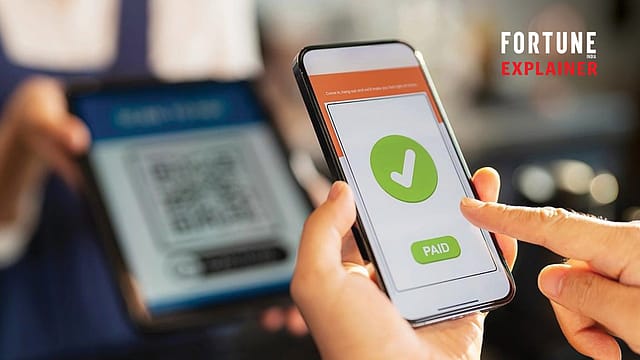
UPI has become a routine way to pay for crores of Indians. Scan a QR code, enter the PIN and the transaction is done. But a government notification has now drawn attention to the possibility of charges on higher-value UPI transactions.
The government has effectively created a threshold of ₹2,000 for the statutory protection against charges on UPI payments. This has raised a key question: will UPI payments above ₹2,000 now attract a fee? The short answer is no, not yet.
The government has not announced a new fee on UPI transactions or specified a merchant discount rate (MDR). However, its latest notification has potentially opened the door for an MDR to be introduced on higher-value UPI transactions.
What has the government notified?
The Finance Ministry, through a notification dated September 14, specified UPI transactions up to ₹2,000 and RuPay-powered debit card payments as electronic modes of payment on which banks and payment system providers cannot impose charges.
The notification was issued under Section 10A of the Payments and Settlement Systems Act, 2007. It says no bank or system provider can impose a charge, directly or indirectly, on a person making or receiving a payment through these specified electronic modes.
In simple terms, UPI transactions of up to ₹2,000 remain protected from charges. The same protection applies to payments made using RuPay-powered debit cards.
The important change is the threshold. The government's notification specifically provides protection for UPI transactions up to ₹2,000, rather than covering all UPI transactions.
Does this mean UPI payments above ₹2,000 will now be charged?
No. The notification does not itself introduce an MDR or any other fee on UPI payments above ₹2,000. So, a ₹2,500 or ₹5,000 UPI transaction does not automatically attract a charge simply because it crosses the threshold.
What the notification does is create the legal space for charges to be imposed on transactions above ₹2,000 once the relevant framework is finalised.
The government has not yet specified the MDR rate, which transactions it will apply to, who will collect it or when such charges could take effect.
This distinction is important. The notification changes the legal framework around UPI charges, but it does not immediately change the cost of using UPI for consumers.
What is MDR and why does it matter?
MDR, or merchant discount rate, is a fee paid by a merchant to a bank, payment service provider or another participant in the payments ecosystem for processing a digital transaction.
MDR is already common in card payments. UPI, however, has operated without MDR since January 2020, when the government made UPI transactions free as part of its efforts to encourage digital payments.
That zero-MDR model helped UPI become one of India's most widely used payment methods. But it has also left banks and payment companies looking for ways to monetise the enormous transaction volumes flowing through the system.
If MDR is introduced for higher-value UPI transactions, it could create a new revenue stream for banks and payment service providers.
Who will pay the UPI fee?
If MDR is eventually introduced on UPI transactions above ₹2,000, the charge is expected to be levied on merchants rather than consumers, according to government officials cited previously by Reuters.
Consider a simple example. A customer buys a product worth ₹10,000 and pays through UPI. If an MDR is introduced, the merchant could be required to pay the applicable fee to the bank or payment service provider. The customer would still make a ₹10,000 payment. However, the final structure has not been announced. It remains unclear whether the MDR would be uniform across transactions or vary according to the merchant category, transaction value or type of business.
There is also a broader question; would merchants absorb the additional cost, or could some businesses eventually pass it on to customers?
Why is the issue coming up now?
The debate over UPI charges comes against the backdrop of the platform's extraordinary growth. UPI has emerged as the world's largest retail fast-payment system by transaction volume, according to a 2025 International Monetary Fund report.
The latest numbers highlight the scale. In August 2026, UPI processed 24.51 billion transactions worth ₹29.82 lakh crore. At such volumes, even a small MDR on a portion of transactions could generate substantial revenue for banks and payment companies. The challenge for policymakers is to find a sustainable funding model without undermining one of UPI's biggest advantages: its low-cost and convenient nature.