
Gold’s rollercoaster ride: Record rally in 2025 gives way to sharp correction in Q1 2026
ADVERTISEMENT
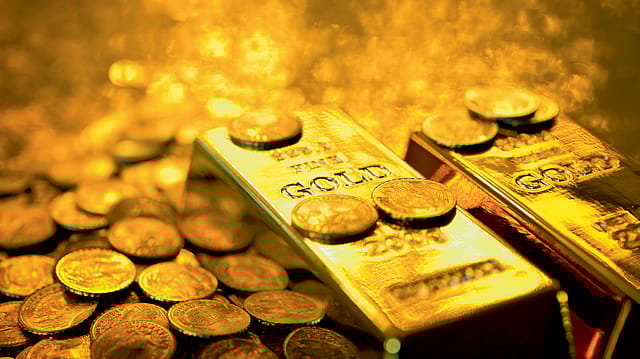
Precious metals have seen sharp volatility over the past year, with gold scaling record highs through 2025 and early 2026 before undergoing a steep correction in the first quarter of 2026, according to a report by Axis Mutual Fund.
Silver and platinum also rallied strongly during the upcycle, but reversed course alongside gold amid changing global macroeconomic conditions.
Rally fuelled by safe-haven demand, liquidity, and de-dollarisation
Gold’s historic rally was driven by a combination of geopolitical tensions, abundant global liquidity and a weakening US dollar.
Heightened uncertainty from the Russia-Ukraine conflict, flare-ups in West Asia, and rising trade tensions pushed investors towards gold as a safe-haven asset. At the same time, easy monetary conditions and low real interest rates made gold more attractive.
A weaker dollar, which declined around 10% in 2025, further boosted demand, as it made gold cheaper for global buyers.
Another key structural factor was the ongoing shift towards reserve diversification. With US fiscal pressures mounting and debt rising to nearly $39 trillion by end-2025, several emerging market central banks increased gold purchases to reduce reliance on the dollar.
Collectively, central banks added around 1,000 tonnes of gold over the past three years, raising gold’s share in global reserves from about 13% to over 24%. The Reserve Bank of India was also among the significant buyers.
These combined factors pushed gold prices to nearly $5,600 per ounce by January 2026.
Sharp reversal as liquidity tightens, dollar strengthens
The rally, however, reversed sharply in late Q1 2026. By March-end, gold had erased its gains for the year, falling to the $4,100–$4,300 per ounce range, a decline of nearly 20–25% from its peak.
The correction was triggered by multiple factors, beginning with the unwinding of leveraged positions. Profit booking intensified as prices began to fall, setting off stop-loss triggers and margin calls that accelerated the decline.
Geopolitical developments also played a role. The escalation of the US–Iran conflict disrupted oil markets, pushing crude prices higher and stoking inflation concerns.
This led to tighter global liquidity conditions and a stronger US dollar. Signals from the US Federal Reserve that interest rates may remain higher for longer further strengthened the dollar and pushed bond yields higher, reducing gold’s appeal.
At the same time, financial stress in oil-exporting Middle Eastern economies raised the possibility of reduced investment flows, or even liquidation of gold holdings, adding to downward pressure.
The result was a sharp sell-off in mid-March, with gold dropping over 10% in a week, its steepest weekly fall since 1983 while silver plunged more than 15%.
Central bank demand slows, ETF outflows rise
After two years of strong accumulation, central banks slowed gold purchases in early 2026. Gold-backed exchange-traded funds (ETFs) also saw consecutive weekly
Trade deficit, inflation pressures
As one of the world’s largest gold consumers, India remains highly sensitive to price movements.
The surge in gold prices in 2025 contributed to a higher import bill, widening the trade deficit and adding to inflationary pressures, particularly in jewellery prices. Core inflation saw some uptick despite softer wholesale price trends.
At the same time, the Reserve Bank of India has continued to view gold as a strategic reserve asset, aligning with the broader global trend of diversification.
Recovery depends on liquidity, inflation trajectory
As of late March 2026, gold is trading in the mid-$4,000 range per ounce, with early signs of bargain buying emerging.
However, the near-term outlook remains uncertain and will depend on global liquidity conditions, inflation trends and central bank policy signals.