
India’s private markets shift to domestic capital, but exit risks remain underappreciated
ADVERTISEMENT
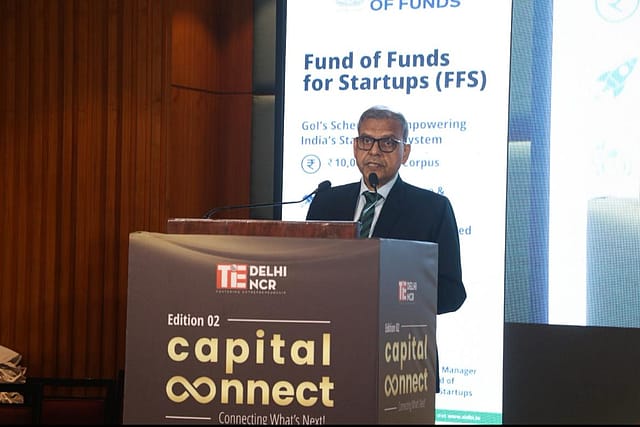
India’s private markets are undergoing a structural shift towards domestic capital, even as concerns remain around investor maturity and exit risks, industry leaders said at TiE Delhi-NCR’s Capital Connect 2026.
Manoj Mittal, chairman and managing director of Small Industries Development Bank of India, said India is entering a new phase where local capital is beginning to take the lead.
“We are witnessing the foundations of India’s next growth era being laid, where domestic capital is not just participating, but leading,” he said.
He pointed to a six-fold rise in domestic capital since 2016, supported by initiatives such as Fund of Funds and the proposed ₹1 lakh crore RDI Fund, calling the current moment “the beginning of India’s innovation-led growth decade.”
Is India reducing its dependence on foreign capital?
Despite the momentum, India’s startup ecosystem remains heavily reliant on overseas funding.
Sandeep Sinha of Oister Global said more than 80% of private market capital is still foreign, underlining the need for stronger domestic participation.
“We need to own our own assets,” he said.
Ritesh Chandra of Avendus Future Leaders Fund added that domestic allocations, currently below 5%, are gradually rising as investors gain confidence from past returns.
“Domestic institutions hold the key,” he said, drawing parallels with India’s public markets, which have shifted from foreign to domestic dominance.
Where is the next wave of growth emerging?
Speakers highlighted tier 2 and tier 3 cities as the next frontier for capital deployment and entrepreneurship.
Adit Dawda of India SME Investments said smaller cities are witnessing rapid growth, with increasing participation from family offices and local investors.
“70% of our portfolio companies don’t have direct flight connectivity,” he said, pointing to both the opportunity and the operational challenges in accessing these markets.
Are investors underestimating risks?
Even as capital flows increase, fund managers cautioned that investor understanding of private markets remains uneven.
Chandra described private market investing as a “Chakravyuh”, warning:
“It’s easy to get in… you need to know how to get out.”
He noted that many investors have yet to experience a full market cycle, having operated largely in a post-pandemic bull run.
Why is capital concentrating among a few fund managers?
Nilesh Kothari of Trifecta Capital said investors are increasingly favouring established managers with proven track records.
“There are about 10–15 managers who attract most of the capital,” he said.
He also cautioned against excessive direct investing by family offices, noting that lack of diversification and expertise can heighten risks.
What does this mean for India’s capital ecosystem?
While India is building a stronger domestic capital base and pushing into deeptech and innovation, the ecosystem still faces challenges around talent, institutional capacity and risk awareness.
Mittal said unlocking the full opportunity will require expansion in alternative investment funds, stronger incubators and a deeper talent pipeline