
AI may add 79 million sq. ft to India’s office demand by 2030: Redseer
ADVERTISEMENT
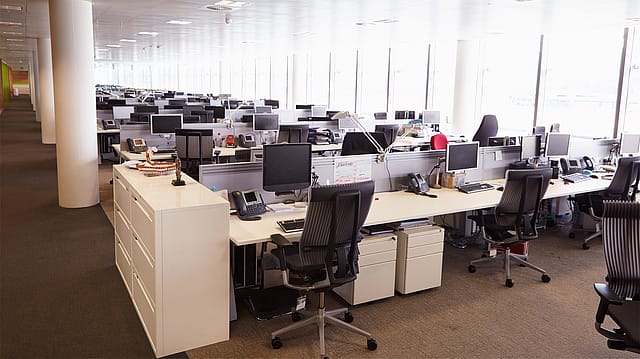
India’s artificial intelligence boom may end up creating far more office demand than it destroys, according to a new report by Redseer Strategy Consultants, which argues that AI is fundamentally reshaping—not reducing—the country’s workspace economy.
The report, AI and the Future of Flexible Workspaces, estimates that AI adoption could add nearly 79 million sq. ft. of incremental office demand in India by 2030, as companies ramp up hiring in AI, machine learning, data science and automation-led functions.
The findings come at a time when global conversations around AI have largely centred on job losses, automation and shrinking office footprints. But Redseer’s study suggests India could witness the opposite effect: leaner yet more specialised teams, rising collaboration intensity, faster business cycles, and growing demand for premium, flexible workspaces.
“AI-led teams are becoming more specialised, collaboration-heavy, and dynamic in scale,” said Chhavi Singh, associate partner at Redseer Strategy Consultants. “That is accelerating the move toward core-plus-flex workplace models, where enterprises want agility without compromising on infrastructure or employee experience.”
Why is AI hiring surging as India becomes a global talent hub?
India’s AI hiring market has expanded sharply over the past six years. AI job postings have grown nearly six-fold since 2019 to cross 290,000 roles in 2025, while the country now ranks second globally in AI talent concentration growth, according to the report.
The demand is increasingly skewed toward experienced professionals in machine learning, Generative AI, MLOps and AI engineering as companies move beyond experimentation into scaled deployment. Redseer estimates India’s total AI workforce has already crossed 700,000 in 2025.
This expansion is also being fuelled by global capital. Worldwide AI investments reached nearly $582 billion in 2025, with India emerging as one of the preferred destinations for AI-native startups and enterprise AI operations.
Companies such as Microsoft, SAP, Walmart and Vanguard have expanded their India campuses and GCC operations in 2025, reinforcing India’s role as a strategic AI and engineering base rather than merely a low-cost outsourcing destination.
Why are GCCs emerging as the biggest office demand driver?
Global capability centres are expected to play a central role in India’s next office leasing cycle.
The report projects GCCs will drive nearly 55 million sq. ft. of annual office leasing by 2030, with their share in overall leasing expected to rise from 38% in 2025 to 48% by the end of the decade.
Unlike earlier generations of GCCs focused on support functions, newer centres are increasingly handling AI product development, engineering R&D, automation and enterprise transformation mandates. Redseer estimates the AI workforce within GCCs could grow four-fold—from around 181,000 employees in 2025 to nearly 730,000 by 2030.
The report also highlights the rapid rise of mid-market GCCs, particularly from APAC-based enterprises, which prefer flexible workspaces over large captive campuses because of uncertain scaling trajectories and lower upfront capital commitments.
Why may AI increase office demand instead of reducing it?
One of the report’s more striking arguments is that AI could intensify workplace collaboration rather than weaken it.
Nearly 93% of enterprises surveyed reported higher collaboration intensity over the past year as AI adoption increased, driving demand for offices with stronger digital infrastructure and collaborative layouts.
At the same time, planning cycles are shrinking rapidly, forcing companies toward more agile workplace models. This shift is already visible in India’s flexible workspace market, which has expanded from around 33 million sq. ft. in 2020 to over 103 million sq. ft. in 2025.
Redseer estimates nearly 82% of enterprises plan to increase flex workspace usage over the next two years, while AI-led hiring alone could contribute around 31% of total flex seat leasing demand by 2030.
What structural advantages are helping India benefit from the AI wave?
The report argues that India remains uniquely positioned to benefit from the AI wave because of its combination of talent availability, cost competitiveness and digital infrastructure.
India is currently the world’s second most cost-competitive office market after Malaysia, while producing more than 2.1 million STEM graduates annually.
Combined with a relatively young workforce and large domestic digital economy, these factors are strengthening India’s positioning as a preferred global AI and GCC hub. For India’s commercial real estate sector, the AI wave may now become its biggest growth catalyst yet.