
From Cook’s kitchen to Ternus’s table: Apple’s next act involves AI, hardware, and India
ADVERTISEMENT
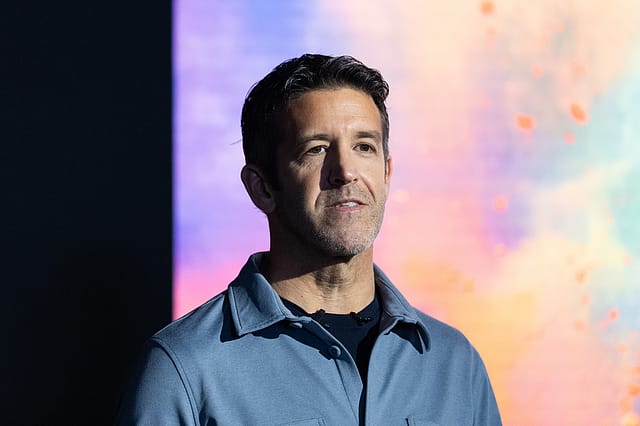
John Ternus takes charge of Apple today, September 1, inheriting a company that is far larger and more financially powerful than the one Tim Cook took over from Steve Jobs in 2011. Cook leaves behind an Apple that has grown from a market capitalisation of about $350 billion to more than $4 trillion, while building a formidable supply chain, expanding the company’s services business and making India an increasingly important part of its global manufacturing and consumer strategy.
But Ternus also takes over at a moment when Apple faces a different set of challenges. The company needs to demonstrate that it can keep its hardware leadership while closing the gap with rivals in artificial intelligence, turning AI into products and services that are as deeply integrated into its ecosystem as the iPhone, Mac and Apple Watch.
A new era for Apple ushers
Ternus is not an outsider coming into Apple to disrupt the company from the outside. He has spent more than two decades at Apple and has been closely involved in the development of some of its most important hardware. As senior vice president of Hardware Engineering, he has overseen work across the iPhone, Mac, Apple Silicon and Vision Pro.
“Tim Cook leaves behind big shoes to fill, having grown Apple from a $350 billion market cap to $4 trillion during his tenure as CEO. That is the massive legacy John Ternus inherits. However, Ternus is no outsider. He has spent decades shaping Apple’s most iconic hardware—from Apple Silicon and Vision Pro to today’s iPhone and Mac lineup,” said Tarun Pathak, research director at Counterpoint Research.
Pathak said Ternus’s biggest challenge could be less about protecting Apple’s hardware advantage and more about determining how that advantage translates into the next phase of computing.
“While the hardware foundation is rock solid, the AI and software story remains less settled. This is where Ternus needs to be bold rather than cautious,” he said.
That could make the transition particularly important. Cook’s tenure was defined by operational discipline, supply chain management, manufacturing scale and the expansion of Apple’s ecosystem. Ternus now has to combine that discipline with a stronger technology narrative around AI.
“Beyond the products, Cook leaves a legacy defined by excellence in supply chain management, manufacturing, and policy, alongside a rare, personal bond with Apple’s global user base,” Pathak said.
He added that Ternus has the engineering background and leadership style to build on that foundation.
“With Engineering eye and mentoring under Tim Cook, Ternus can very well be the bridge between Jobs’ obsession with product and Cook’s demand for discipline,” Pathak said. “Ternus holds the ultimate opportunity to script a story for Apple on how its hardware can evolve and seamlessly integrate with the next great leap in AI and intelligent ecosystems.”
India becomes a bigger test for Apple’s new CEO
India is likely to be one of the markets where Ternus will have to extend rather than reinvent Cook’s strategy. During Cook’s tenure, India moved from being a largely price-sensitive, Android-dominated market to becoming both an important manufacturing base and an increasingly important consumer market for Apple.
Cook repeatedly highlighted India’s potential and Apple has expanded its presence across manufacturing, retail and the developer ecosystem. Apple now has six company-owned stores in India, while the company has also been expanding its online retail presence. Apple’s own retail listings currently show stores in Mumbai, Delhi, Bengaluru, Pune and Noida, including its second Mumbai location in Borivali.
The shift is also visible in manufacturing. Apple’s India production has expanded rapidly through partners including Foxconn and Tata Electronics, with India emerging as an important export base for iPhones. Multiple reports suggest that India accounted for about 25% of global iPhone output in 2025, with roughly 55 million iPhones assembled in the country that year.
Another clearest indication of how strategically important India had become to Apple came during the Trump administration’s tariff offensive in 2025. As US President Donald Trump repeatedly criticised Apple’s decision to expand iPhone production in India and pushed the company to manufacture more in the US, Tim Cook was telling investors that India was becoming central to Apple’s US supply chain.
On Apple’s May 2025 earnings call, Cook said that for the June quarter, “the majority of iPhones sold in the U.S. will have India as their country of origin.” He also said Vietnam would be the country of origin for almost all iPads, Macs, Apple Watches and AirPods sold in the US.
The comments came as Apple was dealing with a rapidly changing tariff regime. Cook estimated that the tariffs in place at the time could add around $900 million to Apple’s costs for the June quarter.
By Apple’s July 2025 earnings call, Cook confirmed that the shift had taken place, saying that the majority of iPhones sold in the US had India as their country of origin.
The expansion has also moved beyond final assembly, with Apple and its suppliers working to deepen component localisation and build a wider electronics manufacturing ecosystem in the country.
For Ternus, therefore, India is no longer simply a market in which Apple needs to sell more iPhones, but an increasingly part of how the company thinks about manufacturing resilience, exports, suppliers and long-term growth. “India is one of Apple’s most vital markets. Tim Cook has done an excellent job of uncovering the country’s potential and structurally signaling its global importance through multiple lenses—including the manufacturing push, retail expansion, and the developer and user communities,” Pathak said.
“Throughout this process, Cook developed a deep personal connection with the Indian audience; John Ternus must now build upon that foundation, especially considering the market’s future potential.”
Apple’s India manufacturing story gives Ternus a strong foundation
Apple’s manufacturing expansion in India has accelerated sharply in recent years. According to Pathak, overall iPhone manufacturing in India registered a 62% CAGR between 2021 and 2025, crossing 50 million units for the first time in calendar 2025, primarily driven by exports. iPhone exports grew at a 92% CAGR over the same period, he said.
Pathak said Apple’s manufacturing partners have expanded production capabilities and assembly lines while broadening the range of products made in India. Tata Electronics’ increasing role is also contributing to the shift, while exports to markets including Europe and the US remain an important driver.
This creates a different challenge for Ternus. He does not need to establish India’s strategic importance from scratch; he needs to deepen it.
That could mean pushing further into local component manufacturing and supplier development while continuing to expand Apple’s retail footprint and consumer ecosystem. Apple has already moved from having no company-owned stores in India to six in a little over three years, following the opening of its first Mumbai and Delhi stores in April 2023.
Apple is also expected to bring Apple Pay to India, adding another potential layer to its ecosystem strategy, with plans to roll it out later this year.
“Ternus’s strong engineering and hardware background, combined with his charismatic personality, is likely to resonate well with India’s young and aspirational user base,” Pathak said.