
Oura enters India with a premium health pitch, even as smart ring market shrinks
ADVERTISEMENT
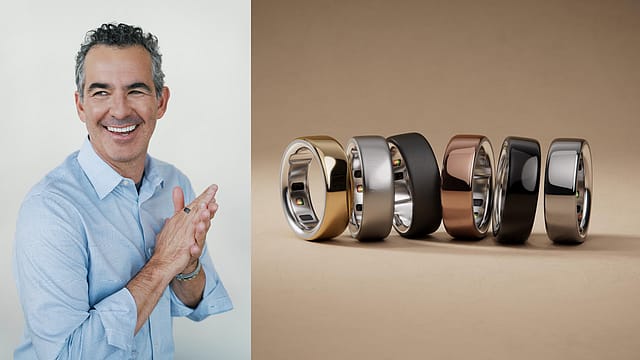
Oura entered India in March this year with a premium play in a price-sensitive category. The Oura Ring is priced starting at ₹28,900, going up to ₹39,900 for higher-end finishes, and requires a ₹599 monthly subscription to unlock its full features.
That pricing structure is central to its strategy. Oura is positioning itself as a long-term health platform rather than a one-time device. “Oura Ring is not just a wearable to track your steps, it’s a health companion that helps you stay healthier for longer,” said Doug Sweeny, Chief Marketing Officer at Oura.
A subscription-first model
Unlike most players in India’s wearable market, Oura is not competing on upfront affordability. The ring acts as a sensing layer, while the subscription delivers insights, algorithm updates, and new features over time.
“The membership builds on this foundation by transforming that data into insights,” Sweeny said, adding that it enables continuous product evolution through regular updates. “The membership fee directly supports this pace of innovation, as well as our continued commitment to invest in science, giving members access to cutting-edge advancements and research, without any additional cost,” he further elaborated.
This is a deliberate divergence in a market where rivals often highlight the absence of subscriptions. Oura’s argument is that recurring revenue supports deeper science and product development, while also removing the need to monetise user data.
On privacy, the company says it adheres to global standards and will meet or exceed requirements under India’s Digital Personal Data Protection Act, 2023.
Consumer-first entry
Oura is not entering India through healthcare integrations—at least not yet. “Currently, our focus in India is raising awareness of Oura to consumers,” Sweeny said. He added that partnerships with healthcare systems may come later, but the company is taking a “highly deliberate approach”.
A market under pressure, but growing
Oura’s entry comes at a volatile moment, as according to International Data Corporation (IDC), India’s smart ring shipments declined 30.6% year-on-year in 2025, while average selling prices fell 8.7% to $159.7. Ultrahuman led the category with a 30.4% share, followed by Gabit at 18.3%.
At the same time, Maximize Market Research estimates the market at $11.72 million in 2025, projecting growth to $14.06 million in 2026 and $54.04 million by 2032, driven by rising preventive healthcare awareness and deeper digital health integration.
Early India insights
Oura is also using its existing user base to build local context. The company says men in India sleep less and have poorer sleep quality than women—falling asleep later, waking earlier, and getting less REM and deep sleep.
The data is limited, but it reinforces Oura’s broader positioning around continuous, personalised health insights.