
POTUS vs. SCOTUS: Trump says SC ruling extremely disappointing, announces 10% additional tariffs, investigations into unfair trade practices
ADVERTISEMENT
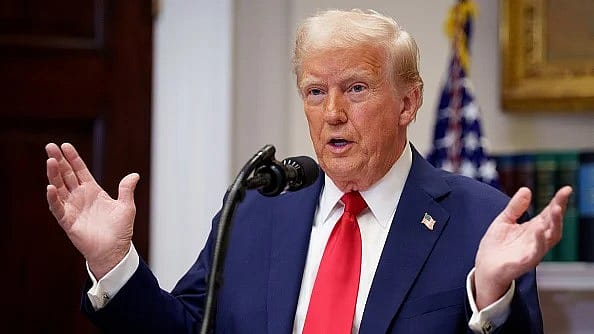
Responding to the U.S. Supreme Court invalidating the tariffs, U.S. President Donald Trump today said the ruling is “deeply disappointing”.
During a briefing, he said certain members of the court did not have the courage to do what is right for the United States of America. Trump said he will sign an order imposing 10% additional tariffs over and above the normal tariffs already being charged and will initiate investigations to protect the U.S. from unfair trade practices of other countries and companies.
I have been modest in my ask from other countries: Trump
Trump said he had been very modest in his ask from the other countries and businesses. “I have effectively utilized tariffs to make America great again,” he said, adding that the tariffs have likewise been used to end five of eight wars.
“I settled eight wars, whether you like it or not,” he said, adding that the tariffs have ensured a great national security, referring to fentanyl.
Trump said the SC decision does not matter. “There are powerful alternatives (to the ruling) that have been approved by this decision …for those that thought they had us,” Trump said. Quoting from a dissent note from one of the Judges, Trump said, “the decision might not constrain a President’s ability to order tariffs going forward….that's because numerous other statutes authorize the president to impose tariffs and might justify most, if not all. Those statutes include the Trade Expansion Act, 1962, section 232, the trade act (1974) and the Tariff Act of 1930.”
Earlier, the US Supreme Court’s ruling that the unilateral imposition of tariffs on multiple nations without Congressional ratification violated the federal law, came as a major legal setback to Trump’s aggressive trade policies, which he adopted ever since taking over the reins as the US president for second time last year.
Chief Justice John Roberts issued the majority opinion, and the court agreed 6-3 that the tariffs exceeded the law. “The president asserts the extraordinary power to unilaterally impose tariffs of unlimited amount, duration, and scope," Roberts wrote.
“In light of the breadth, history, and constitutional context of that asserted authority, he must identify clear congressional authorisation to exercise it," the Chief Justice added. The court ruled that the emergency authority which Trump took recourse to “fell short" of authorising him to impose tariffs.
The case -- ‘Learning Resources v. Trump’, and ‘Trump v. V.O.S. Selections, Inc.’ – was filed in the US Supreme court last year in the wake of the tariffs imposed by the trump administration. The US Supreme Court, deliberated on whether the Trump administration had the authority under the International Emergency Economic Powers Act (IEEPA) to announce various tariffs via executive orders.
On April 2, 2025, Donald trump signed the ‘Liberation Day’ tariffs, issuing the Executive Order 14257, imposing tariffs on every trading partner across the globe. Trump regime argued that the measures were paramount to insulate the US economy, and jobs, and address persistent trade issues.
Trump’s tariffs were met with strong criticism, particularly from Democrats, who argued that the president had no authority to impose tariffs, as it is traditionally reserved for Congress under the US Constitution. Several lower courts ruled that the tariffs exceeded presidential authority.