Cooling appliance demand jumps up to 55% this summer amid early heat, premium push
/ 4 min read
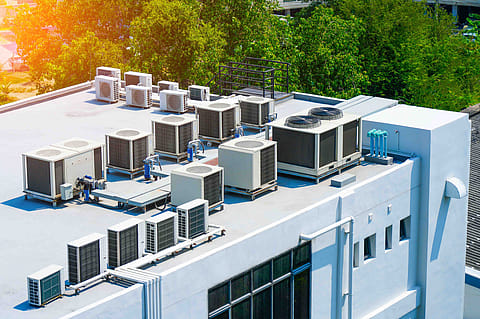
AC, Ventilation, summer, coolness | Credits: Shutterstock
Cooling appliance demand jumps up to 55% this summer amid early heat, premium push
India’s cooling appliances market is booming this summer, with demand up 20–55% across categories, led by early heat, premiumisation and e-commerce offers. Flipkart and Amazon report strong growth in ACs, refrigerators and energy-efficient models, including in Tier-2 cities. But manufacturers face surging input and freight costs, signalling imminent price hikes of up to 10% or more.
This summary is AI-generated, and Fortune India is not responsible for its content or any associated copyright issues.
E-commerce-led affordability fuels growth, but West Asia tensions drive input costs up, prompting likely price hikes across categories.
AC, Ventilation, summer, coolness | Credits: Shutterstock
India’s cooling appliances market is witnessing a sharp surge this summer, with demand rising as much as 20–55% across categories compared to last year, driven by an early onset of heat, premiumisation trends, and strong e-commerce-led affordability.
However, the demand boom is unfolding alongside mounting cost pressures, as geopolitical tensions in West Asia disrupt supply chains and inflate raw material prices—setting the stage for likely price hikes during peak season.
Is early summer heat triggering a spike in demand?
The summer season has started on a strong note for appliance makers and online platforms alike.
Flipkart reported a 55% year-on-year growth in air conditioners and 35% growth in refrigerators, signalling robust consumer demand despite intermittent unseasonal weather. Industry estimates suggest overall demand for cooling appliances could be 20–30% higher than a typical summer season.
Amazon India, too, flagged a “surge in demand” since the onset of summer, particularly for energy-efficient models. Four-star ACs have seen over 20x growth, emerging as a key value segment for consumers seeking a balance between affordability and efficiency.
“Consumer intent remains strong,” a Flipkart spokesperson said, noting that affordability levers such as no-cost EMI and protection programmes are helping sustain purchases even amid price fluctuations.
How are Tier-2 markets and premiumisation shaping growth?
Demand is being driven by a mix of geographic expansion and evolving consumer preferences.
Tier-2 cities such as Bhopal, Ludhiana, and Patna are emerging as key growth markets for air coolers, driven by price sensitivity and demand for affordable cooling solutions. In contrast, metros like Mumbai, Hyderabad, and Kolkata continue to dominate volumes for air conditioners and refrigerators, according to an Amazon India spokesperson.
At the same time, premiumisation is accelerating. Side-by-side refrigerators are witnessing double-digit growth, while inverter ACs and energy-efficient appliances are gaining traction.
Kamal Nandi, business head at Appliances Business, Godrej Enterprises Group, said premium categories such as ACs and frost-free refrigerators had grown 2x–5x faster than the industry last year, a trend expected to continue as consumers prioritise long-term savings and performance.
Shibashish Roy, CEO and MD of Infiniti Retail (Croma), added that there is a clear shift toward inverter and energy-efficient models, indicating a more value-conscious consumer mindset.
{{#most-powerful-women-snapshot-individual.slug}} {{/most-powerful-women-snapshot-individual.slug}} {{^most-powerful-women-snapshot-individual.slug}} {{/most-powerful-women-snapshot-individual.slug}} {{#showRanking}} {{current-rank}} {{/showRanking}} {{#photo.0.url}}
{{name}}
How is e-commerce driving accessibility and decision-making?
Online platforms are playing a key role in accelerating adoption, particularly among first-time buyers.
Amazon highlighted its expanded selection, including over 70 new cooler models this year from brands such as Kenstar, Voltas, and Singer, with delivery across all serviceable pin codes. It is also leveraging AI-led features—such as its shopping assistant Rufus, visual search tools, and AI-generated review summaries—to simplify purchase decisions.
These are complemented by affordability levers like instant bank discounts and no-cost EMIs, along with installation services for air conditioners across more than 300 cities.
Why are input costs surging amid geopolitical volatility?
Even as demand rises, manufacturers are facing significant cost headwinds due to global developments.
Industry executives point to a sharp increase in crude-linked raw materials. Prices of plastics, chemicals, and paper have surged by nearly 70% in recent months, while crude oil itself has risen close to 50%, pushing up the cost of components such as resins and electronic parts.
Ashutosh Gupta of Summercool Home Appliances said these pressures have led to a 10–15% increase in overall input costs. For air coolers—heavily dependent on plastic and chemical components—prices could rise by as much as 30–40% during peak demand.
Naman Shah, MD and CEO of LeSol Group, noted that manufacturers have so far absorbed 5–7% of these costs, but margins are now under 8–10% pressure, making price hikes increasingly inevitable.
Supply-side disruptions are adding to the strain. Kamal Nandi highlighted shortages in LPG and key plastics like polypropylene and polystyrene, along with a threefold increase in ocean freight costs. As a result, most brands, including Godrej, are planning price increases of 6–10% from April.
Kalpesh Ramoliya of Raj Cooling Systems added that rising fuel and logistics costs could further increase manufacturing and distribution expenses by 8–10%, potentially pushing retail prices up by 5–10%.
Are consumers in smaller markets turning more price-sensitive?
While metros continue to absorb premiumisation and price increases, Tier-2 and Tier-3 markets are showing early signs of caution.
Consumers in these regions are either delaying purchases or shifting toward more value-driven options, as affordability becomes a concern. Manufacturers are responding by optimising product designs, reducing material usage, and increasing the use of recycled inputs to keep prices competitive.
At the same time, financing options such as EMIs are helping offset the immediate impact of price hikes, ensuring that demand remains relatively resilient.
What lies ahead for demand and pricing this summer?
With forecasts pointing to an intense summer, the cooling appliances segment is expected to maintain strong momentum through the coming months.
Industry players believe that rising temperatures could offset the adverse impact of price increases in the near term, as cooling appliances increasingly become essential household purchases rather than discretionary spends.
However, sustained volatility in crude prices, currency fluctuations, and supply chain disruptions will remain critical variables to watch—potentially shaping both pricing strategies and demand patterns for the rest of the season.
Follow Fortune India
NEXT STORY