Economic Survey 2026: India is the world's largest source country of international students
/ 3 min read
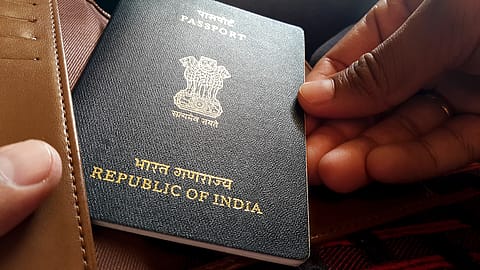
In 2024, for every one international student coming to India, 28 Indian students went abroad, with significant associated foreign exchange costs. | Credits: Shutterstock
Economic Survey 2026: India is the world's largest source country of international students
The Economic Survey 2026 highlights India as the largest source of international students, with numbers rising from 6.85 lakh in 2016 to over 18 lakh in 2025. Despite H1B visa challenges, Indian students are drawn to countries like the U.S., Canada, and the UK. The survey emphasises the need for India to enhance its educational appeal to retain talent.
This summary is AI-generated, and Fortune India is not responsible for its content or any associated copyright issues.
The number of Indians studying overseas has risen from 6.85 lakh in 2016 to over 18 lakh in 2025
In 2024, for every one international student coming to India, 28 Indian students went abroad, with significant associated foreign exchange costs. | Credits: Shutterstock
The recent H-1B visa confusion has been a dampener for Indian students dreaming of an international qualification, especially in the U.S. Despite that, the Economic Survey 2026 says that India has emerged as the world’s largest source country of international students. The number of Indians studying overseas has risen from 6.85 lakh in 2016 to over 18 lakh in 2025.
In 2024, for every one international student coming to India, 28 Indian students went abroad, with significant associated foreign exchange costs. Annual outward remittance under the ‘studies abroad’ component increased to $3.4 billion in FY24. “Indian students abroad are highly concentrated in a small group of host countries, including Canada, the U.S. the U.K., and Australia, whose attractiveness is driven by perceived quality, work rights, migration pathways and strong branding,” says the Economic Survey.
Inbound students in India
Inbound students in India increased from under 7,000 in 2000-01 to around 49,000 in 2020, just before the pandemic. However, this represents only about 0.10% of total higher education enrolment, far below leading host countries where international students form 10-40% of enrolments. State-wise, earlier hubs such as Karnataka and Tamil Nadu have seen declines in international student enrolment, while Punjab, Uttar Pradesh, Gujarat, and Andhra Pradesh have emerged as hosts, suggesting that sub-national policies, institutional capacity and outreach significantly shape inflows.
According to the Survey, 13 programmes account for over 1,000 foreign students each—Bachelor of Technology, Bachelor of Business Administration and Bachelor of Science—underscoring India’s particular strength in cost-effective English-medium STEM and management education. “India remains the principal host within South Asia, attracting over four-fifths of all inbound students to the sub-region in 2023, largely from neighbouring countries such as Nepal, Afghanistan, Bangladesh, and Bhutan,” says the Survey. However, India’s South Asian share has fallen by several percentage points since 2011, indicating rising competition from other regional and extra-regional destinations and signalling the need to refresh its regional value proposition.
National Education Policy
The Government of India’s National Education Policy 2023 (NEP) allows foreign educational campuses in India. The University Grants Commission (UGC) has given its nod to 17 universities from the U.K., Australia and other countries—including the Illinois Institute of Technology (the U.S.); University of Liverpool (the U.K.); Victoria University (Australia) and Western Sydney University (Australia)—to set up campuses in Mumbai, Delhi-NCR, Chennai, and Bengaluru. On the other hand, the IIMs and IITs have also been doing their bit to increase the number of foreign student enrolments.
The Survey has recognised the fact that internationalisation of education is the foundational step towards encouraging talent retention and migration into India. “The competition from campuses of international universities can further incentivise Indian HEIs (higher education institutions) to advance standards and quality,” says the Survey.
India’s policy ecosystem for internationalisation has become more enabling, with the introduction of the NEP, updated UGC guidelines, regulations for academic collaboration, and mutual recognition of qualifications and permissions for foreign branch campuses, including those in GIFT City. “The ‘Study in India’ initiative leverages quality benchmarks, including NAAC66, NIRF, IoE67, NBA68, and global rankings, to create a compelling proposition for international students. This directly advances an education-tourism strategy that capitalises on India's distinctive strengths—its rich traditions in philosophy, Ayurveda, classical arts, and spirituality, combined with affordability, widespread English proficiency and a rapidly advancing innovation and digital ecosystem.”
However, the Survey also acknowledges that to position India as an education hub, broader strategies need to be deployed. “Programme diversification beyond full degrees, such as summer schools, semester-abroad modules, heritage and philosophy tracks, yoga and Ayurveda certificates and innovation or rural-immersion labs, can be bundled with tourism circuits and tailored for BRICS and wider global south partners.”
Follow Fortune India
NEXT STORY