Gen Z is reshaping India’s consumption playbook—from ownership to identity: Shashwat Goenka
/ 3 min read

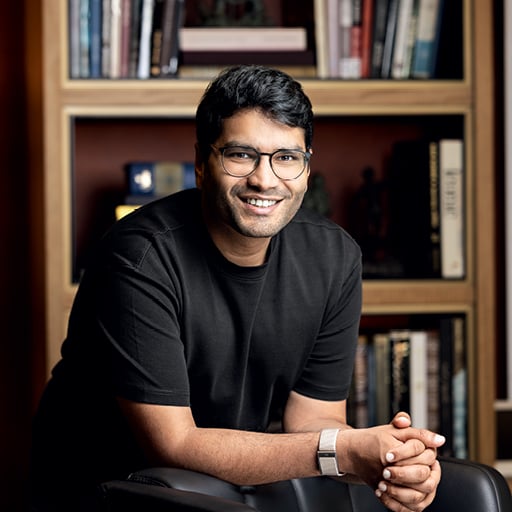
Shashwat Goenka, Vice Chairman, RP-Sanjiv Goenka Group | Credits: Narendra Bisht
Gen Z is reshaping India’s consumption playbook—from ownership to identity: Shashwat Goenka
Shashwat Goenka highlights a shift in India's consumption patterns, driven by Gen Z's focus on identity over ownership. This generation prioritizes self-improvement and experiences, reshaping market dynamics. Brands must adapt to this identity-driven consumption, as Gen Z's spending power is set to command nearly $2 trillion by 2035, signaling a new era of growth.
This summary is AI-generated, and Fortune India is not responsible for its content or any associated copyright issues.
The Vice Chairman of the RP-Sanjiv Goenka Group said brands risk misreading the market as young consumers shift from material ownership to self-transformation, creating a $2 trillion consumption opportunity by 2035.
THIS STORY FEATURES
Shashwat Goenka, Vice Chairman, RP-Sanjiv Goenka Group | Credits: Narendra Bisht
India Inc. may be chasing a consumer that no longer exists.
That is the view of Shashwat Goenka, Vice Chairman of the RP-Sanjiv Goenka Group, who argues that the sharpest shift in India’s consumption story is not within categories, but in the very meaning of ownership for a new generation of consumers.
What is Gen Z really spending on?
In a series of posts on X, Goenka observed while earlier generations built external portfolios—homes, cars, and gold—India’s Gen Z is focused on building an “internal” one. The implication is both cultural and commercial: young consumers are no longer prioritising the accumulation of tangible assets as markers of success but are instead spending aggressively on self-improvement and identity-building.
This shift is already visible in consumption patterns. Categories such as fitness, personal care, travel, dining and out-of-home entertainment are seeing disproportionate traction among younger consumers. According to Goenka, Gen Z already accounts for a significant share of discretionary spending across sectors, including nearly half of fashion and lifestyle purchases and a comparable share in beauty and personal care. Travel, too, is increasingly being driven by this cohort.
Far from being a generation that is cutting back, Goenka describes Gen Z as “the most aggressive consumer cohort India has ever produced.” The difference lies in how—and why—they spend. What appears unfamiliar to legacy brands is, in fact, a redefinition of aspiration itself.
“The Indian consumer has always been aspirational,” Goenka wrote. “What they aspire to has changed—from acquiring things to acquiring identity.”
Are brands selling the wrong idea of value?
For companies, this marks a structural shift in brand-building. The fastest-compounding categories today are not those built around ownership, but those promising transformation. Products are no longer endpoints; they are enablers of a desired version of the self. In this paradigm, the value proposition moves away from utility or status signalling through possessions, and towards personal evolution—whether that is through wellness, grooming, experiences or lifestyle upgrades.
The scale of the opportunity is significant. Goenka points out that Gen Z is expected to command nearly $2 trillion in consumption in India by 2035, with every second rupee spent in the economy coming from this cohort. Coupled with India’s demographic profile, where nearly 65% of the population is under the age of 35, the shift signals a long runway for consumption-led growth, albeit on new terms.
What does this mean for India Inc.?
For businesses, however, the transition is not merely about tapping into new categories. It requires a rethinking of core strategy. The traditional question, what does the consumer want to buy, may no longer be sufficient. Instead, brands need to interrogate a more fundamental question: who does the consumer want to become, and how does the brand participate in that journey?
Companies that are already aligned with identity-driven consumption—across wellness, fitness, personal care, and experiences—are, in Goenka’s view, not just early movers but structurally advantaged. Those that continue to anchor their messaging around ownership risk misreading the market. “The biggest mistake brands are making today is that they are still selling products to a generation that is buying identity,” he wrote.
In a consumption story increasingly defined by self-transformation rather than accumulation, relevance may hinge less on what brands sell, and more on what they enable consumers to become.
Follow Fortune India
NEXT STORY