India's retail inflation rises to 3-month high of 1.33% in December
/ 3 min read
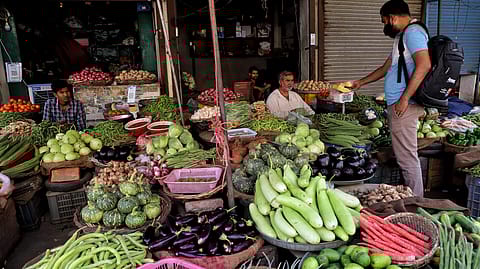
Retail inflation across both rural and urban areas saw an uptick in December 2025, driven by rising food prices while other key sectors such as housing, education, health, transport, and fuel recorded modest changes. | Credits: Getty Images
India's retail inflation rises to 3-month high of 1.33% in December
India's retail inflation climbed to a three-month high of 1.33% in December 2025, primarily due to increased prices of vegetables and protein-rich items. Despite food inflation remaining negative, it showed signs of easing. The rise in inflation was observed across both rural and urban areas, with modest changes in sectors like housing, education, and health.
This summary is AI-generated, and Fortune India is not responsible for its content or any associated copyright issues.
Food inflation, measured by the CPI, remained in negative territory for the seventh consecutive month at (-)2.71%, although it eased from (-)3.91% in November.
Retail inflation across both rural and urban areas saw an uptick in December 2025, driven by rising food prices while other key sectors such as housing, education, health, transport, and fuel recorded modest changes. | Credits: Getty Images
India’s retail inflation rose to a three-month high of 1.33% in December 2025, driven largely by higher prices of kitchen essentials such as vegetables and protein-rich items, data released by the statistics ministry showed. Inflation had stood at 0.71% in November while the previous peak was recorded at 1.44% in September.
Food inflation, measured by the Consumer Price Index (CPI), remained in negative territory for the seventh consecutive month at (-)2.71%, although it eased from (-)3.91% in November.
According to the National Statistics Office (NSO), the uptick in headline inflation and food inflation in December was mainly due to higher prices of personal care and effects, vegetables, meat and fish, eggs, spices, and pulses and related products.
Retail inflation stayed below the Reserve Bank of India’s lower tolerance limit for the fourth straight month in December.
Under the government’s mandate, the central bank is required to maintain inflation at 4%, with a tolerance band of 2% on either side.
Retail inflation across both rural and urban areas saw an uptick in December 2025, driven by rising food prices while other key sectors such as housing, education, health, transport, and fuel recorded modest changes.
Akhil Mittal, Senior Fund Manager - Fixed Income at Tata Asset Management, said CPI inflation for December is lower than market expectations of 1.56%. The headline inflation continues to remain well in line with RBI trajectory. "The low print was largely on account of low food inflation at -2.71% (within food, significant fall in vegetable prices contributed to low number). While core inflation has shot up a bit at 4.6%, this is largely on account of high gold prices. If we look through the same, we believe CPI could be well anchored going ahead also, and might undershoot RBI trajectory."
Rural inflation
Headline inflation in rural areas rose to 0.76% (provisional) in December from 0.10% in November. Food inflation, measured by the Consumer Food Price Index (CFPI), remained in negative territory at -3.08% in December, though it improved from -4.05% in the previous month.
Urban inflation
Urban headline inflation increased to 2.03% (provisional) in December from 1.40% in November. Food inflation in urban areas also rose, moving from -3.60% in November to -2.09% in December, indicating easing of deflationary pressures.
Here are the sectoral trends
Housing: The year-on-year housing inflation rate for December stood at 2.86% (provisional), slightly lower than November’s 2.95%. The housing index is calculated for the urban sector only.
Education: Combined rural and urban education inflation eased marginally to 3.32% in December from 3.38% in November.
{{#most-powerful-women-snapshot-individual.slug}} {{/most-powerful-women-snapshot-individual.slug}} {{^most-powerful-women-snapshot-individual.slug}} {{/most-powerful-women-snapshot-individual.slug}} {{#showRanking}} {{current-rank}} {{/showRanking}} {{#photo.0.url}}
{{name}}
Health: Health inflation for both rural and urban areas declined to 3.43% in December, down from 3.60% in November.
Transport and communication: Inflation in transport and communication remained subdued at 0.76% in December, compared with 0.88% in November.
Fuel and light: Year-on-year inflation for fuel and light fell to 1.97% in December from 2.32% in November, reflecting moderation in energy costs.
As per NSO data, this indicates a gradual rise in overall inflation, particularly in rural and urban headline and food indices, even as key household and service sectors saw marginal declines. Economists note that while food prices continue to exert downward pressure on overall CPI, urban cost pressures are slowly building, reflecting ongoing shifts in consumption and supply patterns.
Follow Fortune India
NEXT STORY