The FAQs are AI-generated, and Fortune India is not responsible for its content or any associated copyright issues.
Lionsgate Play’s founder-led buyout bets big on scale, profitability and India’s OTT consolidation
/ 5 min read
As global studios shift from ownership to licensing in India’s streaming market, Rohit Jain is positioning Lionsgate Play as a multi-platform media company spanning theatres, television and digital distribution across Asia.
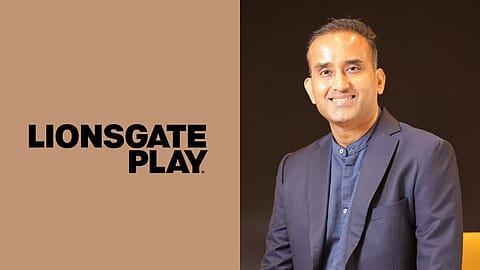
Rohit Jain
When global studios are stepping back from directly operating streaming platforms in India, Rohit Jain is leaning in.
The longtime Asia head of Lionsgate Play has acquired full ownership and operational control of the platform from Hollywood studio Lionsgate in what industry executives describe as India’s first management buyout in the streaming sector. The transaction signals more than a change in ownership—it reflects a broader reset underway across the global OTT industry, where profitability, scale and capital efficiency are beginning to matter more than headline subscriber growth.
Under the new structure, Lionsgate will continue licensing its content library and brand to the platform under a long-term agreement, while retaining its broader film and television business in India and Southeast Asia. Jain, meanwhile, is betting that founder-led ownership can build a scalable and profitable media company at a time when streaming companies are grappling with slowing growth, rising content costs and increasing consolidation.
“Our world suddenly seems to have exploded because the entire global market is now our oyster,” Jain told Fortune India. “Our ambitions don’t have to be limited anymore by running only a streaming company.”
The buyout gives Lionsgate Play significantly greater strategic flexibility—not just to scale its OTT business, but also to evolve into a broader content and distribution company spanning theatres, television and digital platforms.
Can Lionsgate Play become a multi-platform media company?
The company’s immediate priority is expansion.
Lionsgate Play, which historically launched around 50–60 titles annually, plans to scale that slate to more than 100 titles this year across Hollywood, Hindi and regional content.
“I think we’re scaling up our content ambition massively,” Jain said. “We now want to do 100-odd titles this year.”
The platform has also expanded beyond Hollywood-only programming, adding Tamil, Telugu and Malayalam titles alongside its established catalogue of franchises such as John Wick, The Hunger Games and Knives Out.
The strategy marks a notable divergence from the broader direction of the streaming industry, where several platforms have cut back on programming investments to improve margins. Jain believes long-term profitability cannot come from shrinking content pipelines.
“What most companies end up doing is cost optimisation,” he said. “The route we’ve always taken to become profitable is to actually increase the content lineup because long-term viability comes via scale.”
{{#most-powerful-women-snapshot-individual.slug}} {{/most-powerful-women-snapshot-individual.slug}} {{^most-powerful-women-snapshot-individual.slug}} {{/most-powerful-women-snapshot-individual.slug}} {{#showRanking}} {{current-rank}} {{/showRanking}} {{#photo.0.url}}
{{name}}
That philosophy is central to Lionsgate Play’s next phase. Rather than positioning itself solely as a subscription streaming service, the company wants to build a multi-window content business that monetises IP across theatrical releases, TVOD, television licensing and streaming.
“We want to transform from streaming to multi-platform distribution,” Jain said.
As part of that strategy, the platform plans to release 10–12 films theatrically this year, while simultaneously expanding distribution across television and digital platforms.
“Theatre audiences are not conflicting to streaming. In fact, it only adds to our streaming audience,” Jain said. “It’s monetising a different window of content.”
Is consolidation reshaping India’s streaming market?
The buyout comes at a critical moment for India’s OTT industry.
After years of rapid expansion driven by cheap data and aggressive content spending, the streaming market is entering a maturity phase. Subscriber growth is slowing, advertising remains uneven, and competition is intensifying not just from rival OTT platforms, but also from YouTube, gaming and short-form video apps.
Jain believes the industry is entering a consolidation cycle similar to what India’s DTH business experienced more than a decade ago.
“When we launched in OTT between 2016 and 2022, there were 40, 50, even 60 OTT companies,” Jain said. “The advantage of being a long-term operator is that eventually the serious players remain.”
The company currently claims around 5 million paying subscribers outside the broadcaster-led and global streaming ecosystem, and Jain believes that base can grow to 12–15 million over the next three to five years.
“I feel in the next three-four years we can double what we’ve done in the last six-seven years,” he said.
The broader industry shift has also changed how global studios approach India. Instead of committing capital to operate standalone streaming services, many are now prioritising licensing and partnerships.
Jain called that transition “totally understandable”, citing the challenge of allocating capital and management bandwidth across multiple global markets.
But he also believes the shift opens space for Indian-led companies to emerge.
“It opens a phenomenal opportunity for us,” he said. “This is the time for India and this is the time for Indians.”
Where is Lionsgate Play investing next?
Over the past few years, Lionsgate Play invested heavily in technology and distribution infrastructure. Jain said the platform now owns its entire streaming technology stack internally, giving it greater operational control and faster deployment capability.
“We are one of the very few companies that owns the entire tech stack end-to-end for a streaming company,” he said.
With those foundational investments largely completed, future spending will increasingly shift towards content and marketing.
“We’ve invested heavily into distribution and technology. Now the future investments are really about content and marketing,” Jain said.
The company also plans to deepen its presence across South and Southeast Asia, building on operations across eight countries. Jain said the key to scaling internationally lies in balancing global strategy with deep localisation.
“You have to think global, but you have to act extremely local,” he said. “If I want to understand audiences in Tamil Nadu, I have to understand Tamil Nadu better.”
He pointed to sharply different audience behaviours across markets. While Indian consumers widely accept dubbed content, viewers in countries like Indonesia prefer watching programming in original languages.
Can Indian media companies unlock greater IP value?
A major part of Jain’s thesis revolves around building stronger monetisation models for content IP.
He believes Indian media companies have historically failed to extract long-term value from their libraries compared to Hollywood studios, where content is monetised repeatedly across theatrical, streaming, television and library windows.
“How do we build a monetisation engine that values theatrical cycle, TVOD, streaming, television and library rights?” Jain said.
He also sees collaboration and shared infrastructure becoming increasingly important in improving profitability across the media ecosystem.
“I think collaboration between companies will create large value,” Jain said, comparing the opportunity to tower-sharing models in telecom that significantly improved industry economics.
Is this India’s next media opportunity?
For Jain, the management buyout is ultimately a long-term wager on India’s ability to build globally relevant entertainment businesses.
Having previously helped scale Videocon d2h into one of India’s largest DTH companies, he now wants to replicate that journey in streaming and content distribution.
“We’re an entrepreneur-led local company, but our company is built like a global company,” he said.
The backdrop is favourable but increasingly competitive. India’s media and entertainment sector, valued at ₹2.5 lakh crore in 2024, is expected to cross ₹3 lakh crore by 2027, according to the FICCI-EY Media & Entertainment Report 2025. Digital media remains the fastest-growing segment, though monetisation pressures across streaming continue to intensify.
For Lionsgate, the transaction allows the studio to remain present in India through licensing rather than direct ownership. For Jain, independence comes with significantly greater risk—but also the freedom to pursue a larger ambition.
“I’ve invested my entire life into this buyout,” Jain said. “But I think this is a tremendous opportunity for India to take centre stage in media.”
Frequently Asked Questions
NEXT STORY