Our ambition is to entertain the world: Netflix’s Bela Bajaria
/ 6 min read
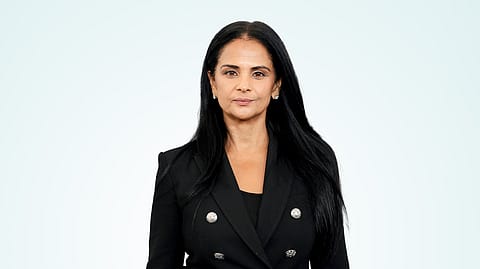
Bela Bajaria, Chief Content Officer, Netflix | Credits: Fortune India
Our ambition is to entertain the world: Netflix’s Bela Bajaria
Netflix chief content officer Bela Bajaria says the company’s core ambition is to “entertain the world” by backing authentic local stories and launching them globally. With 325 million subscribers and a growing ad tier, Netflix is betting on diverse content, live events and fearless creative choices rather than mega sports rights or risky acquisitions like Warner Bros. Discovery.
This summary is AI-generated, and Fortune India is not responsible for its content or any associated copyright issues.
Sports may be the best soap opera, but if it is too expensive and comes in the way of storytelling, it isn’t the best investment for Netflix, says Bajaria.
Bela Bajaria, Chief Content Officer, Netflix | Credits: Fortune India
Netflix was in the news for its bid to acquire Warner Bros. Discovery. The deal fell through, but its share price actually jumped by 10% when the management stated that it was no longer a “financially attractive” deal. With a subscriber base of around 325 million, Netflix is far ahead of its peers in terms of paid subscribers. Its ad-tier in 2025 also started firing. While there was a high-decibel acquisition bid happening at its global headquarters, Chief Content Officer Bela Bajaria did what she knew best — entertain the world through stories from different countries. During a visit to India, Bajaria, in an interview with Fortune India, talked about expanding incredible storytelling from all over the world and telling those stories through the local creative community. Edited excerpts:
You have made Netflix a universal streaming platform where there is content for everyone, in whichever part of the world they live. What does it take to be able to tell so many stories across cultures?
I think what’s amazing about Netflix, and what has been exciting over the years, is that we are trying to do something that no company has really done before. No other company is trying to do it across this many tastes, languages, and cultures around the world. And audiences have so many different tastes and moods. Sometimes you are in the mood for comedy; sometimes you are in the mood for drama. That’s why we programme with audiences always in mind first. What I love about my job is I have to think about what will surprise my audience, what’s the next bold swing we need to take. Our ambition is to entertain the world. And if our ambition is to entertain the world, you definitely cannot do that without having incredible local stories from countries like India.
When we talk about local storytelling, it is important that you have creators and amazing stories from around the world, and you allow them the space to tell a very specific, local, authentic story. That vision — something they have to say, something they want to talk about — usually comes from a deeply human as well as culturally specific experience. Then we launch them on a global service for people around the world to see at the same time. That’s how people can discuss and discover stories from all over the world. Whether you are sitting in Mumbai, Madrid, or Mexico City, you can click on Netflix and find your local show — Money Heist, Chamkila, or Stranger Things.
The idea has always been about supporting local storytellers in each country, in their own language and time zone. The last several years at Netflix have been about expanding incredible storytelling from all over the world and hiring amazing people from those creative communities. If you think about India, people love local titles. But they also enjoy content from Hollywood. They love Money Heist from Spain and Squid Game.
Netflix today is the world’s largest streaming service, but you did go through a lot of ups and downs soon after the COVID-19 pandemic and even after that. What was your strategy? Did you do anything differently?
It was always about how we continue to grow. Our DNA is technology, which allows a lot of learning and taking big swings. There wasn’t any blame or fear. During the time you are referring to, it was about continuing to make great content. If we make things that people love, they will keep coming back to Netflix. We know people want new things, more things, different things, and a wide variety of content. Even during that period — when the stock dropped — we focused on our slate.
It was more about whether we had the right team in all the countries. Do we have the right titles? Squid Game was coming, Stranger Things was coming. There was Senna from Brazil, 100 Years of Solitude from Colombia. There were so many great things in the pipeline. At the end of the day, if you have great stories that people love, they will come back to Netflix and continue to talk about it. That’s really it. I always say my job is as simple and as hard as that.
But didn’t you lose a lot of subscribers too?
I don’t think we lost a lot of subscribers. The market was down, there was the Russia-Ukraine war, and we pulled out of Russia — which accounted for the subscriber loss. So it was always about staying the course. The key thing we said at the time was: don’t listen to all the noise. At the end of the day, we have to stay focused on what we know how to do — bet on creators, take big swings, not play it safe, and not act out of fear. We have to continue to be fearless in storytelling.
What kind of programming bets did you take?
We expanded into live programming. We realised that with live content, we could stream NFL Christmas Day games and even have Beyoncé perform during halftime, making it a big entertainment weekend. We also streamed the Mike Tyson vs Jake Paul fight. It was the first time anyone had launched the NFL globally like this. And people don’t usually do halftime shows unless it’s the Super Bowl, right? But we did a big halftime show, which generated global conversation.
We also streamed the Mike Tyson–Jake Paul fight, at a time when boxing hadn’t been widely featured. That did well in India too. Right before that, we streamed a women’s boxing match between Katie Taylor and Amanda Serrano, which became the highest-viewed women’s sporting event. It’s been about continuously expanding and investing, not pulling back. Even in India, we focused on deepening investments. Tamil and Telugu markets looked strong, with great movies and shows, and we continued to invest there.
You have launched advertising in many markets. India still remains a subscription market. Is there any particular reason for this strategy?
The rationale was to pick a set of markets, roll out advertising, and learn how to do it well. It’s a tier, right? The idea was to build it properly, understand it, and then expand to other markets. For users without the ad tier, the Netflix experience remains unchanged.
Most of the countries where you have launched advertising are mature markets. Is that why India hasn’t seen it yet?
It may be because they are mature and strong ad markets. Also, we didn’t want to launch it everywhere at once since we had never done advertising before. We had to build the entire system — hire teams, develop infrastructure, and create an ad stack. So the idea was to learn first and then expand gradually.
{{#most-powerful-women-snapshot-individual.slug}} {{/most-powerful-women-snapshot-individual.slug}} {{^most-powerful-women-snapshot-individual.slug}} {{/most-powerful-women-snapshot-individual.slug}} {{#showRanking}} {{current-rank}} {{/showRanking}} {{#photo.0.url}}
{{name}}
Do you expect the ad tier to contribute as much as subscriptions?
It simply gives more people access to Netflix. Advertisers are excited to be associated with our content, which is great. But it doesn’t influence what we create. At the end of the day, we still have to make great content — that’s what both consumers and advertisers want.
What about sports? How important is it as a vertical?
Sports can sometimes be the best soap opera, with a lot of emotion attached. Personally, I love sports. But for us, it’s more about event-based programming around sports. We look at it opportunistically — whether it’s something our members would love and whether it adds to the entertainment experience.
Why not invest in IPL?
Do you know how much the IPL rights were sold for? (laughs) That’s a big investment, and it would come at the cost of making fewer films and shows. That’s not our strategy. We prefer to invest in films, TV, and live events rather than spending a large chunk on a league we don’t control.
How do you unwind?
I unwind by watching what I love. I watch a lot of soccer and NFL football. Sundays are for football — I can watch it all day. I love the US Women’s National Soccer Team, and I follow Manchester United and Real Madrid.
Follow Fortune India
NEXT STORY