The FAQs are AI-generated, and Fortune India is not responsible for its content or any associated copyright issues.
India–New Zealand FTA seen unlocking multi-fold trade growth: ASSOCHAM
/ 2 min read
Duty-free access, proposed $20 billion investment and services push seen accelerating bilateral ties
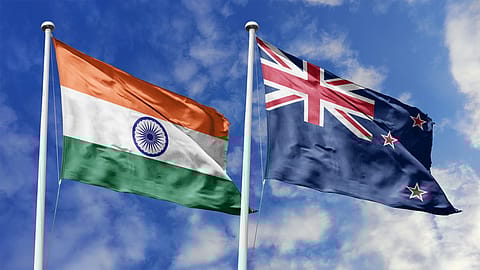
Representational Image | Credits: Shutterstock
India’s proposed free trade agreement with New Zealand (NZ), which will come into force today, could sharply scale up bilateral commerce, with industry body Associated Chambers of Commerce and Industry of India (ASSOCHAM) terming the pact a key step in the country’s evolving trade strategy. The agreement, still under negotiation, is being positioned as part of New Delhi’s renewed push to deepen engagement with developed markets through targeted trade deals.
ASSOCHAM President Nirmal Kumar Minda said the pact would open new avenues for trade, investment and economic cooperation, particularly for export-oriented sectors looking to diversify beyond traditional markets.
Duty-Free access, investment push
A central feature of the proposed FTA is 100% duty-free market access for Indian goods, coupled with an estimated $20 billion investment commitment from New Zealand over a 15-year horizon. The industry body believes this could significantly alter the scale and composition of bilateral trade.
Two-way trade between India and New Zealand is projected to reach $5 billion by 2030, with MSMEs and labour-intensive sectors expected to drive incremental gains. Agriculture-linked exports, services and tourism are likely to be early beneficiaries, though much will depend on the fine print of market access and rules of origin.
Beyond goods: Services, mobility ley
Minda flagged that the agreement’s success would hinge on parallel progress in non-tariff areas. Improved air connectivity, easier mobility for professionals and students, and closer collaboration in digital and financial ecosystems would be critical to unlocking the full value of the pact.
The FTA is also expected to deepen services trade and people-to-people linkages—areas where India has been seeking stronger footholds in its recent trade negotiations.
Negotiations revived after long pause
Talks for the India–New Zealand FTA were originally launched in 2010 but remained stalled for over a decade amid differences over market access, particularly in agriculture and dairy. Negotiations were formally revived in 2024, although the agreement has not yet been signed.
Recommended Stories
The renewed push aligns with India’s recent trade deals with countries such as Australia and the United Arab Emirates, signalling a calibrated shift towards bilateral agreements after years of caution. If concluded on workable terms, the New Zealand pact could broaden India’s trade footprint in the Indo-Pacific—though execution, as past experience shows, will be key.