
India–New Zealand to formalise FTA today: Which sectors will gain the most from the deal?
ADVERTISEMENT
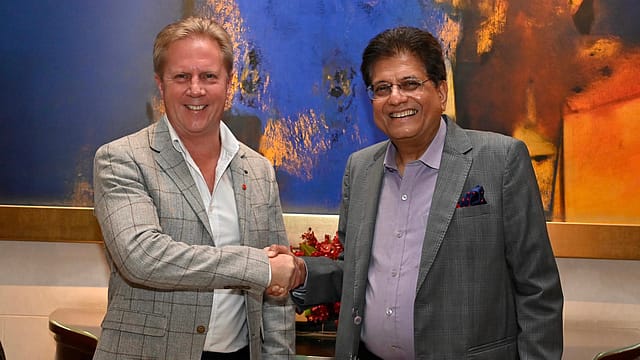
India and New Zealand will finalise the Free Trade Agreement (FTA) on Monday, enabling zero tariffs on India’s exports to the Oceanian nation while India will remove duties on over 95% of imports.
The agreement will be signed by Union Commerce and Industry Minister Piyush Goyal and his New Zealand counterpart Todd McClay, Minister for Trade and Investment.
However, the deal will not take effect immediately after the ceremony. It still requires domestic ratification in both countries, with implementation likely later in 2026.
“The #IndiaNZFTA marks a defining milestone, unlocking new opportunities for our farmers, women, artisans, MSMEs, businesses & skilled professionals. Mr. Todd McClay reaffirmed that India is a strategic priority for New Zealand and urged businesses to actively pursue joint ventures & investment in India,” Goyal wrote on X on Thursday.
Notably, in Agra, known for its leather and footwear industry, the minister also launched the brand campaign ‘Agra: World Capital of Footwear’ to celebrate the skills of artisans and women entrepreneurs while positioning the city as a global sourcing destination, employment hub, and export powerhouse. Goyal was joined by McClay during the Agra visit.

Lauding the agreement, Goyal wrote, “In line with PM @NarendraModi ji's vision, this Agreement is a gateway to a deeper, more enduring and people-centred partnership between our two nations.” According to Goyal, India’s leather industry will see a boost after the India–New Zealand free trade agreement.
Let’s look at the top five sectors that stand to gain the most from this deal.
Textiles and Pharmaceuticals
The textiles and apparel industry is expected to be a major beneficiary of the pact, as duty-free access will make Indian garments more cost-effective than those from other countries. It is likely to particularly benefit MSME exporters and manufacturers.
Indian pharmaceutical and medical device companies are expected to gain benefits from simplified regulations and lower compliance costs. It may enable quick market entry and enhance exports, which will strengthen India’s presence in healthcare products.
Engineering goods and IT services
India’s engineering goods and manufacturing industries stand to gain, as exports are expected to rise due to lower tariff rates. It could also attract increased investment in high-end manufacturing and product development. The pact is also expected to significantly benefit the IT and healthcare sectors by facilitating work visas for Indian professionals.
“Beyond goods, the agreement opens mobility pathways for Indian professionals in IT, healthcare, engineering, and education, while a dedicated fast-track arrangement allows Indian food processors to import New Zealand ingredients duty-free for processing and re-export — directly supporting India’s ambition to become a Global Food Hub,” Agneshwar Sen, Trade Policy leader, EY India, said.
Agriculture and food products
This industry is expected to witness higher exports of products such as spices, processed foods, and other agro-based commodities. It will help farmers and food exporters tap new markets and sell value-added products.
“Crucially, India has secured this without compromising its most sensitive sectors. Dairy, edible oils, sugar, spices, onions, and key agricultural commodities are explicitly excluded from India’s concession list, protecting domestic farmers and industry,” Sen added.
Key aspects of India-New Zealand FTA
Formal negotiations for the agreement began on March 16, 2025, and concluded on December 22, 2025, marking a swift nine-month timeline and making it one of India’s fastest trade deals to move from talks to signing.
“The India–New Zealand FTA, built on shared trust and concluded with remarkable speed, marks an important step in strengthening economic ties. For the Mahindra Group, it creates new opportunities across farm solutions, mobility, technology, and hospitality, while enabling innovation and more resilient supply chains," said Dr Anish Shah, Group CEO & MD, Mahindra Group.
The pact also aligns with India’s broader push to expand its FTA network, following agreements with the United Arab Emirates and Australia, as well as deals with the United Kingdom, the European Free Trade Association bloc, and Oman, alongside concluded negotiations with the European Union.
While New Zealand is not a large-volume market for India, it remains a high-income Pacific economy and could serve as a strategic gateway to the wider Oceania and Pacific Island region.