IndiGo, SpiceJet shares skid up to 7% as crude oil prices jump on U.S.-Iran tensions
/ 3 min read
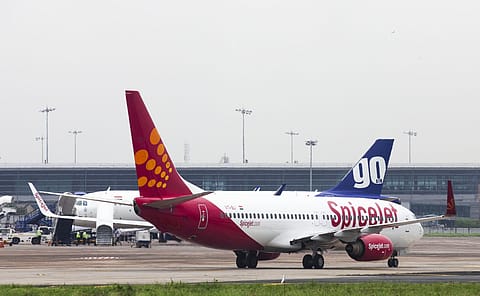
IndiGo, SpiceJet shares tumble up to 7% on March 2 | Credits: Fortune India
IndiGo, SpiceJet shares skid up to 7% as crude oil prices jump on U.S.-Iran tensions
Aviation stocks, including IndiGo and SpiceJet, plummeted as crude oil prices surged due to U.S.-Iran tensions. The spike in oil prices raises concerns over increased fuel costs, impacting airline profitability. The geopolitical unrest threatens oil supply through the Strait of Hormuz, potentially pushing prices above $100 per barrel, affecting global markets and airline operations.
This summary is AI-generated, and Fortune India is not responsible for its content or any associated copyright issues.
InterGlobe Aviation shares fell as much as 7.5% to ₹4,460.90 on the BSE, while SpiceJet shares declined over 7% to ₹14.91.
THIS STORY FEATURES
IndiGo, SpiceJet shares tumble up to 7% on March 2 | Credits: Fortune India
Shares of aviation companies saw sharp selling pressure on Monday, in line with the broader market slump, as crude oil prices spiked following escalating geopolitical tensions in West Asia. The surge in oil has reignited concerns over rising fuel costs and profitability for airlines, where aviation turbine fuel (ATF) accounts for a significant portion of operating expenses.
InterGlobe Aviation, which operates IndiGo, fell as much as 7.5% to ₹4,460.90 on the BSE. The country’s most valued airline stock saw strong trading activity, with around 2.6 lakh shares changing hands in the first two hours of trade. Its market capitalisation slipped to about ₹1.79 lakh crore.
Meanwhile, SpiceJet declined over 7% to ₹14.91 on the BSE. More than 1 crore shares were traded during the session, and its market capitalisation dropped to around ₹2,332 crore.
The weakness in aviation stocks followed a sharp rally in crude oil prices. A sustained rally in crude would push up ATF prices, squeeze margins and potentially force airlines to raise fares, a move that could dampen passenger demand if prolonged.


Brent crude prices jump 8%
Brent crude was trading around $76.30–$76.36 per barrel as of March 2, after surging more than 8% intraday to highs above $82 before trimming gains. The spike came after joint military strikes by the United States and Israel against Iran, triggering fears of supply disruptions in the Strait of Hormuz, a vital chokepoint that handles roughly 20% of global oil shipments.
Higher oil and gas prices now appear increasingly likely if tanker flows through the Strait remain disrupted. According to Wood Mackenzie, a closure of the waterway could threaten up to 15% of global oil supply and nearly 20% of global LNG supply. Oil prices could potentially exceed $100 per barrel if transit flows are not restored quickly.
Following the attacks on Iranian government, military and nuclear facilities, Iran reportedly warned shipping away from the Strait, while insurers withdrew coverage, effectively halting tanker traffic. This creates a dual supply shock: not only are current exports through the Strait affected, but much of OPEC’s spare capacity — typically used to stabilise the market — becomes inaccessible while the route remains blocked.
Alan Gelder, Senior Vice President of Refining, Chemicals and Oil Markets at Wood Mackenzie, said the key question is when export flows will resume. While tanker rates and insurance costs are expected to rise sharply, he noted that the bigger impact on prices would stem from a prolonged disruption of oil flows. In an optimistic scenario, exports could normalise within weeks, but until then, oil prices remain skewed to the upside. He compared the situation to the early phase of the Russia-Ukraine conflict, when fears of supply losses pushed oil above $125 per barrel.
Although OPEC+ has announced plans to gradually unwind voluntary production cuts — with eight member countries set to increase output by 206,000 barrels per day in April — analysts warn the move may offer little relief if flows through the Strait of Hormuz remain blocked. Alternative export routes exist but cannot fully offset the loss of volumes transiting the waterway.
Beyond oil, gas markets face similar vulnerabilities. Around 81 million tonnes (110 bcm) of LNG moved through the Strait in 2025, accounting for nearly a fifth of global LNG supply, largely from Qatar. A prolonged halt could tighten global gas markets, particularly in Europe and Asia, where storage levels remain below comfortable levels.
(DISCLAIMER: The views and opinions expressed by investment experts on fortuneindia.com are either their own or of their organisations, but not necessarily that of fortuneindia.com and its editorial team. Readers are advised to consult certified experts before taking investment decisions.)
Follow Fortune India
NEXT STORY