
India spends ₹22-23 lakh crore on fossil fuel imports; biofuels key to self-reliance, says Nitin Gadkari
ADVERTISEMENT
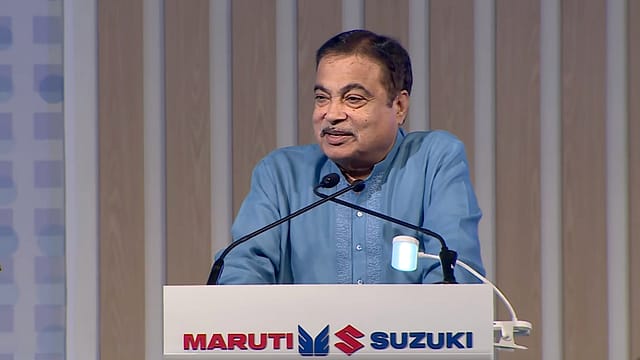
India needs to accelerate the adoption of alternative fuels and biofuels to curb air pollution and reduce its dependence on imported fossil fuels, Union Road Transport and Highways Minister Nitin Gadkari said on Thursday, underscoring the economic and environmental case for cleaner mobility solutions.
Speaking at the unveil of Maruti Suzuki's WagonR Flex Fuel at the 'India Goes Flex' event in New Delhi, Gadkari said reducing fossil fuel imports was critical to India's goal of becoming self-reliant in energy while supporting long-term economic growth.
"India spends around ₹22-23 lakh crore on importing fossil fuels. Our Prime Minister has spoken about building an Atmanirbhar Bharat. If we want to achieve that goal, we must reduce imports and increase exports," Gadkari said.
Transport sector at centre of pollution challenge
The minister said air pollution has emerged as a major public health concern and highlighted the role of the transport sector in addressing the problem.
"Air pollution is causing serious health problems for us, and therefore protecting ecology and the environment must be our highest priority," he said.
According to Gadkari, the transport sector accounts for a significant share of the country's pollution burden.
"Nearly 40% of air pollution is linked to the transport sector, which falls under our ministry's responsibility. This is a matter of great concern for me. Therefore, our target is to reduce air pollution," he said.
Calling the launch of the flex-fuel vehicle an important milestone, Gadkari added, "Today marks an important step towards reducing pollution."
Biofuels seen as strategic solution
Gadkari said alternative fuels and biofuels would play a key role in reducing India's exposure to imported energy while supporting the transition to cleaner transportation.
"If we want to reduce imports, we need to work extensively on alternative fuels and biofuels," he said.
The event was also attended by Petroleum and Natural Gas Minister Hardeep Singh Puri, who described flex-fuel vehicles as a "win-win" for India, saying they could help reduce crude oil imports, lower emissions and strengthen rural incomes through greater ethanol consumptio
The minister's remarks come as the government steps up efforts to promote ethanol-based mobility through flex-fuel vehicles capable of running on higher ethanol blends. Policymakers view biofuels as a means to improve energy security, lower emissions and create additional demand for agricultural feedstocks.
Auto industry growth boosts economic contribution
Gadkari also highlighted the transformation of India's automobile industry over the past decade, describing it as a major contributor to economic activity, employment and tax revenues.
"When our government came to power, the size of this industry was around ₹12 lakh crore. Today, it has grown to about ₹23 lakh crore," he said.
The minister noted that India has emerged as the world's third-largest automobile industry after moving up from seventh position globally.
"This industry has provided employment to 4.5 crore young people. It is also the industry that contributes the highest revenue to both the state governments and the Government of India through GST. Therefore, our growth is closely linked with the growth of this industry," Gadkari said.
The launch of Maruti Suzuki's flex-fuel vehicle comes amid a broader push by policymakers and automakers to diversify fuel options, as India seeks to balance energy security, affordability and decarbonisation goals