
Maruti Suzuki unveils India's maiden flex-fuel car amid ethanol mobility push
ADVERTISEMENT
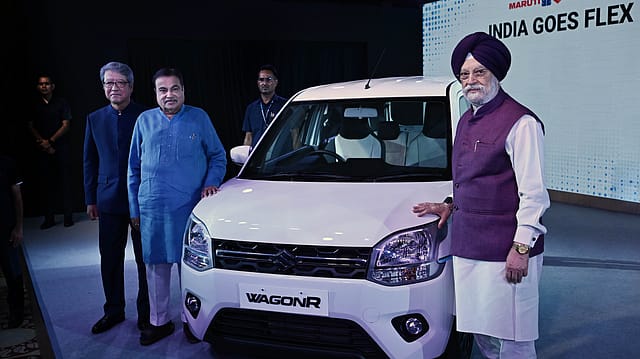
Maruti Suzuki India on Thursday unveiled the WagonR Flex Fuel, becoming the first passenger vehicle manufacturer in the country to showcase a car capable of operating on ethanol blends ranging from E20 to E100, as the industry explores alternative fuel technologies to reduce dependence on conventional fossil fuels.
The unveiling comes as policymakers intensify efforts to promote biofuels as part of a broader strategy to reduce crude oil imports, strengthen energy security and lower transport-sector emissions. Ethanol-based mobility is also being positioned as a means to create additional demand for agricultural feedstocks and support rural incomes.
Flex-fuel joins Maruti's multi-technology roadmap
The WagonR Flex Fuel has been engineered to operate on varying ethanol-petrol blends through an advanced engine management system capable of adapting to fuel compositions ranging from E20 to E100.
Maruti Suzuki said the vehicle forms part of its broader strategy to pursue multiple technology pathways for reducing emissions while addressing India's energy security concerns.
"At Maruti Suzuki, we are committed to offer cars with multiple technologies and fuels. The company is introducing BEVs, hybrids, CNG/CBG and ethanol flex-fuel vehicles to meet India's twin goals of reducing oil import and carbon emissions," Managing Director and CEO Hisashi Takeuchi said.
Takeuchi acknowledged that India's ethanol ecosystem remains at a relatively early stage and said wider adoption would require the development of supporting infrastructure and fuel availability.
"The ecosystem for ethanol as a fuel in India is in its early stages, and as a market leader, we think it is our responsibility to contribute to make 'India Go Flex'," he said.
Industry sees long-term potential in ethanol mobility
According to Takeuchi, widespread adoption of flex-fuel technology could create benefits that extend beyond the automobile industry.
"Once it reaches mainstream adoption, Flex-Fuel Vehicles have the potential to cut oil imports, carbon emissions, and local air pollution while enhancing domestic value addition and farmer incomes," he said.
The comments come as industry participants and policymakers seek to expand the ecosystem for ethanol-based fuels through higher blending levels and broader fuel availability.
Policy backing for alternative fuels
Road Transport and Highways Minister Nitin Gadkari, who attended the event, said biofuels could help reduce India's dependence on imported crude oil while strengthening the rural economy through higher ethanol demand.
Petroleum and Natural Gas Minister Hardeep Singh Puri said flex-fuel vehicles could support efforts to lower crude oil import dependence, reduce emissions and create new economic opportunities in rural India.
The unveiling comes as automakers evaluate multiple technology pathways for reducing emissions while maintaining affordability in the mass-market segment. While electric vehicles remain central to long-term decarbonisation plans, flex-fuel technology is increasingly being positioned as a complementary solution in a market that continues to depend heavily on liquid fuels.