
Fuel price rise among world's lowest; 5,000 flex-fuel outlets planned by 2027: Hardeep Singh Puri
ADVERTISEMENT
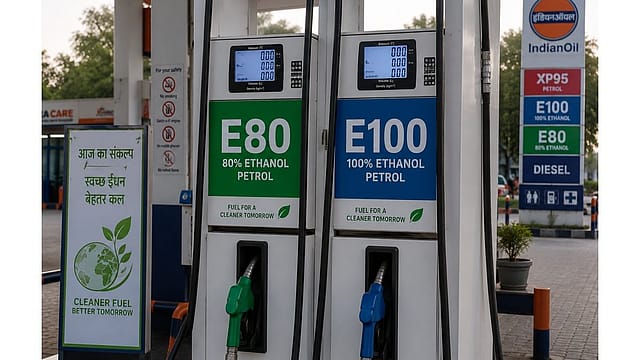
Union Minister Petroleum and Natural Gas Minister Hardeep Singh Puri on Thursday said the government plans to expand the country's flex-fuel ecosystem to around 5,000 retail outlets by 2027, as it seeks to accelerate ethanol-based mobility and reduce dependence on imported crude oil.
Speaking at the unveil of Maruti Suzuki's WagonR Flex Fuel at the 'India Goes Flex' event in New Delhi, Puri also highlighted India's fuel price performance amid global geopolitical disruptions, saying domestic petrol and diesel prices have remained relatively stable compared with most countries.
"In my calculation, India comes after Japan as the country which has the lowest increase in fuel prices amongst all the 193 countries in the world," Puri said.
Flex-fuel infrastructure rollout gathers pace
The minister said the next phase of the government's biofuel strategy will focus on creating a nationwide retail network capable of supplying higher ethanol blends as vehicle manufacturers bring flex-fuel models to market.
"In the beginning, we will have over 50 to 100 dispensing stations in Delhi-NCR, Mumbai, Pune and Ahmedabad. These will expand to 500 by December this year and approximately 5,000 outlets across major cities by the end of next year," he said.
The announcement comes amid growing industry interest in flex-fuel technology. Maruti Suzuki on Thursday unveiled the WagonR Flex Fuel, which can run on 100% ethanol, while Hero MotoCorp recently introduced flex-fuel versions of its Splendor and HF Deluxe motorcycles capable of operating on ethanol blends ranging from E20 to E85.
The event was also attended by Union Road Transport and Highways Minister Nitin Gadkari, who said India spends around ₹22-23 lakh crore annually on fossil fuel imports and that wider adoption of alternative fuels and biofuels is essential to reduce import dependence, curb emissions and support the country's self-reliance goals.
Ethanol demand seen rising with vehicle adoption
India achieved 20% ethanol blending in petrol ahead of its original target and is now looking to create additional demand for biofuels through flex-fuel vehicles capable of running on petrol as well as ethanol blends such as E85.
The minister said widespread adoption of flex-fuel vehicles could significantly boost ethanol consumption while creating additional income opportunities for farmers.
According to government estimates, if half of all new two-wheeler and passenger vehicle sales eventually shift to flex-fuel technology, it could generate demand for more than 300 crore litres of additional ethanol, raise farm incomes and reduce carbon emissions.
The infrastructure expansion plan also follows the government's move to promote E85 fuel, which Puri said earlier this week would be priced "significantly below" regular petrol to encourage consumer adoption.
Automakers' entry seen as turning point
Puri said the development of a robust flex-fuel ecosystem had previously been constrained by the limited availability of compatible vehicles despite the existence of fuel infrastructure.
"The balance between fuel availability and vehicle availability is now beginning to fall into place," he said.
Referring to the entry of Maruti Suzuki and Hero MotoCorp into the segment, Puri described the development as a significant milestone for ethanol adoption in the transport sector and a "new chapter" in India's broader energy transition journey.