
Maruti Suzuki inaugurates ₹35,000-crore Kharkhoda manufacturing facility; project to generate over 21,000 jobs
ADVERTISEMENT
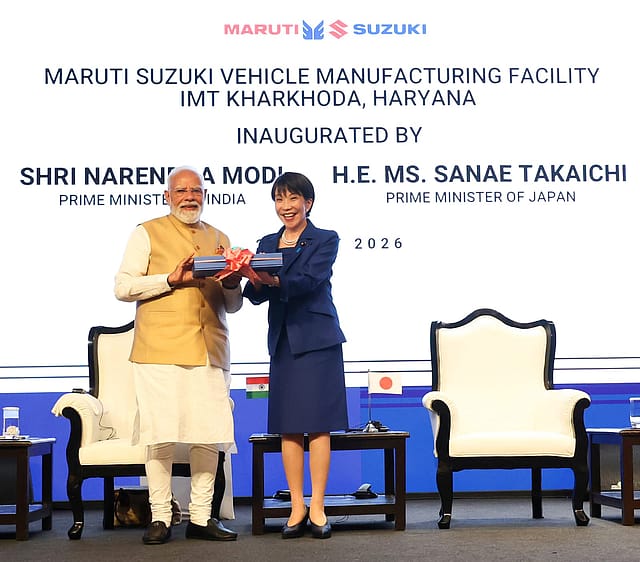
Maruti Suzuki India on Thursday inaugurated its Kharkhoda vehicle manufacturing facility in Haryana, a ₹35,000-crore manufacturing project that is expected to generate over 21,000 jobs while expanding the automaker's production ecosystem in India.
The 800-acre facility was remotely inaugurated by Prime Minister Narendra Modi and Japanese Prime Minister Sanae Takaichi during the India-Japan Joint Economic Forum in New Delhi. Besides the vehicle manufacturing plant, the project includes an integrated supplier park and reflects the continuing expansion of Maruti Suzuki's manufacturing base in the country.
Investment to strengthen manufacturing ecosystem
The Kharkhoda facility currently has an installed annual production capacity of 500,000 vehicles. Maruti Suzuki said the project, including its supplier ecosystem, entails a planned investment of ₹35,000 crore and is expected to create over 21,000 direct and indirect employment opportunities.
Speaking at the inauguration, Toshihiro Suzuki, Representative Director & President, Suzuki Motor Corporation, said the project underscores the growing industrial partnership between India and Japan.
"The facility is a testament to the success of the India-Japan partnership and the 'Make in India' initiative. With the favourable policy environment under Prime Minister Modi's leadership, Suzuki is accelerating investments, employment, exports and technologies towards the Viksit Bharat journey," he said.
Industry 5.0 technologies and renewable energy
The Kharkhoda plant has been developed around Suzuki's Smart Factory concept, integrating digital manufacturing systems and Industry 5.0 technologies, including human-aware collaborative robots (COBOTS), to improve productivity, quality and operational efficiency.
The facility meets 100% of its electricity requirement through a combination of solar power and green energy procurement. It currently has an installed solar capacity of 20 MWp, which Maruti Suzuki plans to expand to 70 MWp by 2030. The plant also houses a 10-tonnes-per-day biogas unit, a 1 MWh battery energy storage system and a zero liquid discharge facility that recycles all wastewater. An in-plant railway siding is also being developed to improve logistics efficiency and reduce fuel consumption during vehicle transportation.
India's export role gains prominence
Suzuki said India has become increasingly important to the group's global manufacturing network. The company's first battery electric vehicle, the e VITARA, is being manufactured exclusively at Maruti Suzuki's Gujarat plant for exports to 100 countries. The company also said exports of India-made vehicles have made Suzuki the largest car importer in Japan, underscoring India's growing role as a manufacturing and export base for the Japanese automaker.
The Kharkhoda facility currently has an installed annual production capacity of 500,000 vehicles. Maruti Suzuki has outlined plans to expand the site in phases to 10 lakh units annually, which would make it one of the largest vehicle manufacturing facilities in Suzuki Motor Corporation's global production network.