
PM Modi’s fuel-saving push accelerates EV shift as auto Industry reassesses ICEV future
ADVERTISEMENT
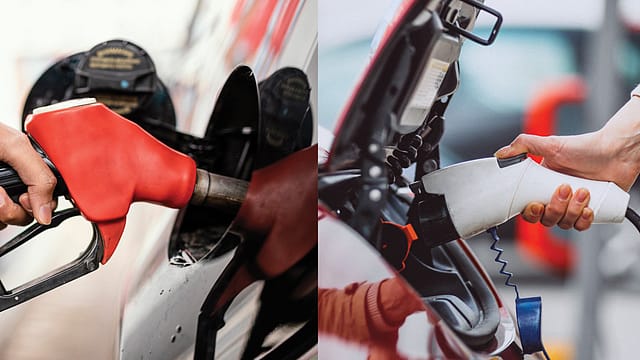
Prime Minister Narendra Modi’s recent call for fuel conservation and austerity measures amid the escalating West Asia crisis is triggering fresh debate within India’s automobile industry on the long-term future of Internal Combustion Engine Vehicles (ICEVs) and the pace at which electric mobility could move mainstream.
In his May 10 address, the Prime Minister urged citizens and industries to adopt responsible fuel-consumption practices as geopolitical tensions and supply disruptions raise concerns over global energy security. The appeal carries added significance for India, which imports more than 85 per cent of its crude oil requirements and remains vulnerable to oil-price volatility during geopolitical conflicts.
The development comes at a time when Electric Vehicle (EV) adoption is gathering pace across segments. According to Vahan and industry data, total EV retail sales across passenger vehicles, two-wheelers, three-wheelers and commercial vehicles rose 41 per cent year-on-year to over 2.39 lakh units in April 2026. Electric passenger vehicle sales surged 75 per cent year-on-year to 23,506 units, after crossing the 22,000-unit mark in March.
Fuel costs, energy security drive EV narrative
“The transportation sector is at a pivotal juncture, where energy security, cost efficiency, and sustainability are redefining long-term operating models,” industry executives said, highlighting how crude oil volatility continues to pressure logistics costs and fleet economics.
Anurag Mehrotra, Managing Director, JSW MG Motor India, said the Prime Minister’s appeal could accelerate consumer adoption of EVs.
“We appreciate the Honorable PM’s appeal encouraging citizens to make conscious choices that boost savings and reduce FOREX outflow,” Mehrotra said. “The auto industry remains optimistic about a rapid shift towards EVs, a technology that is cost effective for the consumer, supports India’s sustainability goals and helps reduce crude oil imports.”
Mahindra Group CEO & MD Anish Shah had similarly stated that the current environment presents India with an opportunity to accelerate investments in electrification, renewable energy and sustainable mobility solutions.
Dealers seek policy continuity, faster charging rollout
Automobile retailers said customer conversations are increasingly shifting towards fuel efficiency and lower running costs, although ICE vehicles continue to dominate overall volumes.
“India's automobile retailers will play their part — counselling customers towards the most fuel-efficient and electric options at the point of sale,” said Saharsh Damani, CEO of FADA, while also calling for faster public charging rollout and continuity in EV incentive policies.
Tata Motors Passenger Vehicles said the “real opportunity” for EV growth lies in the sub-₹12 lakh segment, which contributes nearly 65 per cent of India’s passenger vehicle sales but still has relatively low EV penetration.
“The Hon’ble Prime Minister’s recent statement reiterates the significance of EVs in strengthening India’s energy security by reducing dependence on expensive oil imports,” the company said.
Logistics, shared mobility firms step up electrification
The logistics sector is also recalibrating operating models as fuel costs remain volatile.
“Electrification has evolved from a sustainability goal into a strategic tool for cost stability, operational efficiency, and competitiveness,” said Vineet Agarwal, Managing Director, Transport Corporation of India Ltd (TCI).
Omega Seiki Mobility (OSM) Founder Uday Narang described EV adoption as “a strategic step towards true energy independence for India,” while Cityflo CEO and Co-founder Jerin Venad said every commuter shifting from personal vehicles to shared mobility saves nearly 1.8 litres of fuel per trip.
Industry executives believe ICE vehicles will continue to coexist with EVs and hybrids for several years. However, rising geopolitical uncertainty, oil-price volatility and stronger policy signalling around energy security are increasingly pushing automakers, dealers and fleet operators to prepare for a faster transition towards electrified mobility.