
‘Startup founders are emerging as our fastest-growing customer base,’ says BMW Group India President & CEO Hardeep Singh Brar
ADVERTISEMENT
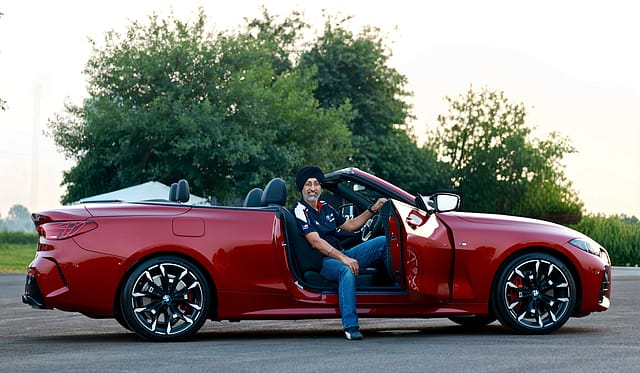
BMW Group India is witnessing a changing profile of luxury car buyers, with startup founders emerging as an important customer segment alongside a growing base of repeat customers. In an exclusive interaction with Avishek Banerjee from Fortune India, Hardeep Singh Brar, President & CEO, BMW Group India, spoke about the company's evolving customer base, product strategy, premium EV adoption, pricing outlook and growth plans for the remainder of the calendar year.
Q. BMW Group India has reported a strong H1 CY2026 performance. What were the key growth drivers during the first six months of the year?
The first half was driven by five key factors. The biggest was our product offensive. We launched several new models during the period, and the response has been extremely encouraging across our portfolio.
The second growth driver has been electric mobility. Our EV contribution has increased from 21% of overall sales to 26%, reflecting rising customer acceptance of premium electric vehicles.
The third factor is our expansion into tier-II and tier-III markets, an initiative that began last year. We are now seeing a growing number of customers from these cities entering the luxury car segment.
Another important contributor has been our focus on strengthening the BMW brand through curated customer engagement programmes and experiential events. These initiatives have helped us build deeper relationships with customers.
Finally, our customer experience continues to be a major differentiator. Taken together, these factors have helped us deliver strong growth during the first half of CY2026.
Q. Has the strong sales momentum also brought a new set of customers into the BMW ecosystem?
Yes. One of the most interesting trends we are witnessing is the growing participation of startup founders and entrepreneurs. Many successful startup owners are now choosing BMW as their preferred luxury automobile brand.
At the same time, our existing customer base continues to remain extremely loyal. Nearly one-fourth of our sales now come from repeat buyers. Many BMW owners are returning to purchase another BMW, reflecting the confidence they have in both our products and the ownership experience.
Q. Electric mobility has become an increasingly important part of India’s luxury car market. What percentage of BMW Group India’s total sales did EVs contribute in H1 CY2026, and how do you expect that share to evolve by the end of the year?
The first half was driven by five key factors. The biggest was our product offensive. We launched several new models during the period, and the response has been extremely encouraging across our portfolio.
The second growth driver has been electric mobility. Our EV sales grew by 78% year-on-year in the first half of CY2026, with electric vehicles contributing 26% of our overall sales, up from 21% a year ago. This reflects the growing acceptance of premium electric vehicles among Indian customers.
The third factor is our expansion into Tier-II and Tier-III markets, an initiative that began last year. We are now seeing a growing number of customers from these cities entering the luxury car segment.
Another important contributor has been our focus on strengthening the BMW brand through curated customer engagement programmes and experiential events. These initiatives have helped us build deeper relationships with customers.
Finally, our customer experience continues to be a major differentiator. A strong Net Promoter Score has resulted in positive word-of-mouth among existing BMW owners, which is translating into repeat business as well as new customer acquisitions.
This combination of first-time luxury buyers and loyal repeat customers is creating a healthy demand mix for us.
Taken together, these factors have helped us deliver strong growth during the first half of CY2026.
Electric Vehicles (EVs) contributed 26% of our total sales during the first half of the year. More importantly, our order book is now approaching a 30% EV mix. The biggest factor going forward will be product availability and supply. If we receive adequate allocations, EVs could contribute around 30% of our second-half sales.
That would enable us to close CY2026 with EVs accounting for nearly 28% of our total sales. Looking beyond this year, we are confident that electric vehicles will contribute more than 30% of our overall sales by the end of CY2027.
Q. Without revealing specific product details, could you give us a sense of the launches lined up for the second half of CY2026?
The first half witnessed 11 product launches, largely centred around our internal combustion engine portfolio.
We also entered the convertible segment with products such as the MINI Convertible and the BMW M440i Convertible, which replaced the Z4. The response has exceeded our expectations and both models have already been sold out.
The second half will be even more exciting. Unlike the first half, which was dominated by ICE products, the upcoming pipeline will include a healthy mix of electric vehicles, sedans and SUVs. We believe these launches will further strengthen our market position.
Q. What is BMW Group India's overall sales target for CY2026? Given the current momentum, are you confident of surpassing last year's performance?
We have recorded 17% growth during the first half of the year and intend to maintain strong double-digit growth through the remainder of CY2026.
For the BMW and MINI brands combined, 20,000 units is the minimum benchmark we are targeting this calendar year. To achieve that, we are relying on multiple growth levers. We have planned 25 product launches this year, are continuing to expand our retail footprint, and remain focused on delivering a best-in-class brand and ownership experience.
We believe these initiatives will help sustain our growth momentum.
Q. Looking ahead to the second half of CY2026, what do you see as the biggest growth drivers for BMW Group India?
The second half will be driven by a combination of new product launches, electric mobility and our continued focus on long-wheelbase models and SUVs, which continue to resonate strongly with Indian luxury car buyers.
We are also strengthening our customer value proposition through innovative ownership programmes. For MINI customers, for instance, we offer a three-year assured buyback value of 66%, among the highest in the industry, while the four-year buyback value stands at 59%.
Long-wheelbase vehicles have emerged as a key pillar of our business and today account for 52% of our overall portfolio. We expect this segment to remain a significant contributor to our future growth.
Q. India's luxury car market has become increasingly competitive. How is BMW positioning itself to gain market share in this evolving landscape?
The same strengths that have helped us grow over the past few years will continue to define our strategy. These include a strong product portfolio, an expanding retail network, a differentiated customer experience and our leadership in electric mobility.
Having said that, we are already leading the luxury car market during the first half of CY2026. According to Vahan data, we are ahead of our nearest competitor by around 500 units, and our objective is to further strengthen that lead in the coming months.
Q. BMW has steadily expanded its electric vehicle portfolio in India. How has customer acceptance of premium EVs evolved over the past year, and what are the biggest challenges to wider adoption?
The overall EV penetration in the Indian automobile industry is currently around 6%, while the luxury vehicle segment has already reached nearly 14%.
BMW has been a major contributor to this transition. EVs account for 26% of our own sales and we command around 38% of the luxury EV market. If BMW is excluded, EV penetration in the remaining luxury segment drops to around 7-8%, which is broadly comparable with the mass-market industry.
Several factors are driving customer acceptance. The first is price parity. Buyers are willing to pay only a marginal premium for an electric vehicle. Once the price difference between an EV and a comparable petrol model remains within roughly 10%, customers become far more comfortable making the switch.
The second is the significant improvement in driving range. All our current electric models offer more than 500 km on a single charge, while our future EVs are expected to deliver between 700 km and 800 km. This has substantially reduced range anxiety.
Charging infrastructure has also improved considerably. The rapid expansion of 120 kW fast chargers along highways means vehicles can now be recharged in well under an hour, making long-distance travel much more practical.
Another important consideration is resale value. Through our 360-degree ownership programmes and assured buyback initiatives, customers have greater confidence in the long-term value of their electric vehicles. This has played an important role in accelerating premium EV adoption.
Q. The premium vehicle segment has remained resilient despite macroeconomic uncertainties, including geopolitical tensions in West Asia. What customer trends are you witnessing?
The recent geopolitical developments in West Asia have created some uncertainty, particularly because fuel prices have increased by around ₹7-8 per litre. Naturally, that has influenced consumer sentiment.
At the same time, it has also reinforced the value proposition of electric vehicles. Electricity tariffs remain relatively stable and predictable, making EV ownership far more economical. An electric BMW typically costs around ₹2 per kilometre to run, whereas a comparable internal combustion engine (ICE) vehicle costs approximately ₹10-12 per kilometre. That is a significant difference in running costs.
We are also witnessing a gradual shift from diesel vehicles to EVs. Policy measures, such as restrictions on older diesel vehicles in Delhi, have made some customers conscious about the long-term residual value of diesel cars. Combined with lower operating costs and improving charging infrastructure, these factors are encouraging more buyers to transition to electric mobility.
Q. BMW India has already implemented multiple price hikes this year. Should customers expect another round before the end of CY2026, or will the company absorb higher input costs?
It will continue to be a balanced approach. Since last year, the Indian rupee has depreciated significantly against the euro. Broadly speaking, every ₹1 depreciation against the euro increases our costs by nearly 1%. However, we cannot pass on the entire increase because the market is highly sensitive to pricing.
Last year, we increased prices by around 5-6%. This year, we have already implemented an overall increase of about 4% through three price revisions during the first seven months.
Depending on currency movements, we expect to undertake another couple of price revisions during the remainder of the year to partly offset the impact of higher costs.
The encouraging development is that the rupee has recovered from its earlier lows against the euro. We hope this trend continues. If not, further price corrections may become necessary.
Q. India is moving closer to concluding a free trade agreement with the European Union. How could that influence BMW India's product strategy, pricing and future investment plans?
The proposed India-EU Free Trade Agreement is certainly a step in the right direction. As indicated by Commerce and Industry Minister Piyush Goyal, we expect it to come into effect by the end of the first quarter or the beginning of the second quarter next year.
For BMW India, the impact on local manufacturing will be limited because around 95% of our product portfolio is already produced in India. The biggest advantage will be for our completely built-up units (CBUs), which account for roughly 5% of the portfolio, as lower import duties could make those products more competitive.
The duty benefits for electric vehicles will come later, while the final import quota under the agreement is yet to be clarified. Once there is greater clarity on these aspects, we will be in a better position to evaluate opportunities for importing more models from Europe.
Q. Finally, what would be your key recommendation to policymakers to further accelerate the growth of India's luxury automobile market?
The Central government has taken several positive steps to promote electric mobility and the overall automotive sector.
My request is primarily to the state governments. Greater alignment in registration charges and road tax policies would help create a more uniform ecosystem for customers across the country. While most states have adopted a progressive approach, a few have moved in a different direction.
A more consistent policy framework across states would further encourage the adoption of premium electric vehicles and support the long-term growth of India's luxury automobile market.