
British Council–SPARK partnership targets 1 lakh women entrepreneurs to bridge India’s ‘missing middle’
ADVERTISEMENT
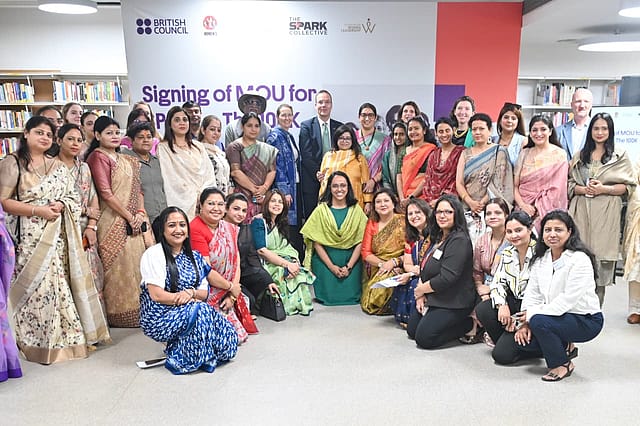
The British Council has partnered with SPARK – The 100K Collective to support 1 lakh women entrepreneurs across India, targeting a critical but underserved segment—the “missing middle” of small businesses struggling to scale.
The initiative, backed by Smriti Irani’s Alliance for Global Good - Gender Equity and Equality, aims to move beyond early-stage entrepreneurship and focus on growth-stage enterprises that lack access to networks, skills, and market linkages.
Under the partnership, the British Council will deliver training in English, communication, and digital capabilities—skills increasingly seen as essential for accessing formal markets, building partnerships, and integrating into global supply chains.
The programme will be implemented across 300 locations, with a broader ecosystem approach that includes governance, compliance, marketing, and visibility support.
Bridging the scale gap
While India has seen a surge in women-led micro-enterprises, relatively few transition into scalable businesses. Limited access to formal systems and capability gaps often prevent these enterprises from expanding beyond a certain threshold.
SPARK’s design reflects a shift in policy thinking—from enabling entrepreneurship at the grassroots to building capacity for scale.
Irani framed the initiative as a collaborative model to drive structural change. “Advancing gender equity requires collaboration across sectors. With better access to skills, resources, and networks, women entrepreneurs can scale sustainably and play a larger role in India’s economic future,” she said.
Skills as economic infrastructure
For the British Council, the partnership extends its mandate into economic participation.
Chief executive Scott McDonald said the focus is on building capabilities that directly impact business growth. “Education, skills, and connections drive opportunity. Through this collaboration, we aim to help women entrepreneurs strengthen communication, expand networks, and grow with confidence,” he said.
Senior UK officials present at the signing underscored the strategic importance of the initiative.
Lindy Cameron highlighted the role of language skills in market access. “Programmes like SPARK equip women with the communication skills needed to grow and participate more actively in global supply chains,” she said.
Susan Acland-Hood pointed to the broader implications. “Language and communication can unlock access to markets and opportunity. Initiatives like this can have impact not just in India, but globally,” she said.
A template for partnerships
The agreement reflects a growing emphasis on public-private and cross-border collaborations to deepen women’s participation in the economy.
As India looks to expand its MSME base and integrate more businesses into formal and export ecosystems, enabling women-led enterprises to scale is emerging as a key lever.
The British Council–SPARK partnership, if executed effectively, could offer a replicable model—one that combines skilling, institutional backing, and market access to convert entrepreneurial intent into sustained economic contribution.