
Coal gasification scheme: Coal India, BHEL, Jindal Steel and others in focus after Cabinet approves ₹37,500 crore push
ADVERTISEMENT
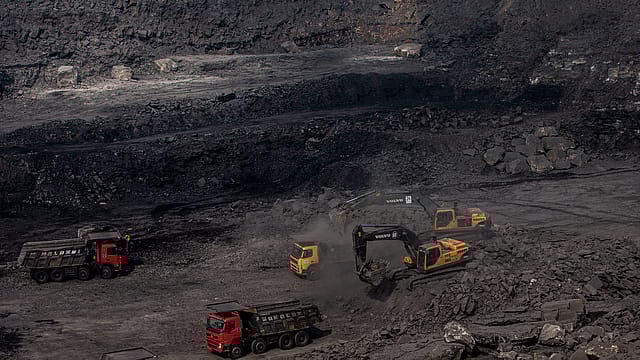
The Union Cabinet on Wednesday approved a ₹37,500 crore scheme to promote surface coal and lignite gasification projects, putting a slew of public sector and private companies squarely in the spotlight. The scheme targets gasification of 75 million tonnes of coal and lignite, aims to mobilise ₹2.5–3 lakh crore in investment, and is designed to cut India's dependence on imports of LNG, urea, ammonia and methanol — a bill that stood at ₹2.77 lakh crore in FY25 alone.
Coal India
Coal India likely stands to benefit the most. The state-owned miner is already a JV partner in three major gasification projects under implementation — with BHEL for coal-to-ammonium nitrate at Lakhanpur (Odisha), with GAIL for coal-to-synthetic natural gas at Sonapur Bazari (West Bengal), and with SAIL for syngas-based steelmaking at Durgapur. The government's decision to extend coal linkage tenure to 30 years under the gasification sub-sector directly de-risks these investments and opens the door for CIL to aggressively scale up under the new scheme.
BHEL
BHEL is positioned as the primary domestic engineering and execution partner for coal gasification projects. The company secured a ₹5,400 crore order from Bharat Coal Gasification and Chemicals Limited (BCGCL) in January 2026 for the Lakhanpur plant — one of the largest coal gasification orders in India's history. With the new scheme explicitly encouraging indigenous technologies and discouraging reliance on foreign EPC contractors, BHEL's competitive advantage only strengthens. Across 25 targeted projects, the equipment and construction pipeline for BHEL could be substantial.
GAIL and NLCIL — gas and lignite angles
GAIL 's involvement through the CIL-GAIL JV for synthetic natural gas production makes it a key downstream beneficiary. With LNG prices elevated and over 50% of India's LNG imported, domestic syngas production eases supply chain risk for GAIL's distribution network. NLC India (NLCIL), which operates large lignite mines in Tamil Nadu, is the natural play on the lignite gasification side — India holds ~47 billion tonnes of lignite reserves, one of the largest globally, and NLCIL is best placed to develop lignite-to-methanol and lignite-to-syngas projects.
Jindal Steel Ltd
Among private players, Jindal Steel Ltd has the clearest head start. It operates India's only commercial coal gasification unit at Angul, Odisha — integrated into its direct reduced iron production process — and was selected under the previous ₹8,500 crore scheme. Jindal Steel's operational experience gives it a significant edge in any competitive bidding under the new scheme.
Fertiliser companies
Companies such as RCF , GSFC and Deepak Fertilisers , which currently depend heavily on imported LNG and ammonia as feedstock, stand to benefit indirectly as domestic syngas availability grows. India currently imports nearly 100% of its ammonia requirement — any meaningful domestic production of syngas-derived ammonia will compress input costs for the sector over time.
The scheme caps incentives at ₹5,000 crore per project and ₹12,000 crore per entity group, ensuring participation is spread across multiple players rather than concentrated in one or two conglomerates. With NTPC also said to be exploring coal gasification entry, the list of participants is likely to grow as project selection gets underway.