
Design, data, and ‘Dil Abhi Bhara Nahi’: How Indriya is reimagining India’s jewellery playbook
ADVERTISEMENT
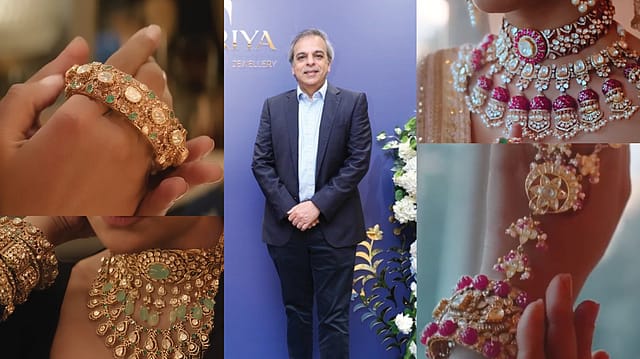
When the Aditya Birla Group announced its entry into the jewellery business, the question wasn’t about intent—it was about timing. Could a new brand disrupt a category dominated by legacy players with decades of trust?
Less than two years later, Indriya, Aditya Birla Jewellery, is offering a decisive answer.
With over 50 stores across India—hitting the milestone with its third Bengaluru outlet—the brand has emerged as one of the fastest-scaling players in the organised jewellery retail space. But for CEO Sandeep Kohli, scale is only a byproduct. The real ambition is to fundamentally reframe how Indians experience jewellery.
“We are not reimagining jewellery,” Kohli tells Fortune India. “We are reimagining the jewellery experience.”
Why is Indriya calling itself a ‘latest mover’ in a legacy-heavy market?
Indriya launched in July 2024, entering a market where most national brands were built decades ago. Kohli sees that as an opportunity, not a constraint.
“There has been no large jewellery brand born in the 2020s,” he says. “We have the latest mover advantage—we understand today’s consumers without needing to adapt to them.”
The timing is critical. Despite its size, India’s jewellery market remains only 35–40% organised, leaving significant room for disruption through design, trust, and experience.
From four stores to fifty—and counting: How fast is Indriya scaling?
Indriya began with four pilot stores across distinct markets—Indore, Karol Bagh in Delhi, Dwarka, and Jaipur—each with differentiated formats and assortments.
Today, the network spans metros and high-growth cities including Mumbai, Delhi, Hyderabad, Pune, Bengaluru, Ahmedabad, Jaipur, Patna, Indore, and Lucknow, alongside emerging markets like Hisar, Gaya, Guntur, and Kolhapur.
“This milestone reflects disciplined execution, strong consumer trust, and a clear brand vision,” says Dilip Gaur, Director, Indriya. “We are building a nationally admired jewellery brand backed by the Aditya Birla Group’s legacy.”
Kohli adds that the pace of expansion remains aggressive, with plans to double the store count to 100 in the near term.
Can jewellery move beyond investment to become a ‘beauty product’?
At the heart of Indriya’s strategy is a sharp repositioning: jewellery as a beauty product, not merely an investment.
“Earlier, people bought gold by weight. Today, they buy for design, for self-expression,” Kohli explains.
This shift is shaping consumer behaviour across age groups, especially younger buyers who see jewellery as identity and empowerment rather than just inheritance.
It also informs Indriya’s brand philosophy—captured in its evocative communication anchored in intimate, personal moments.
“In our campaigns, the woman isn’t seeking validation from the world,” Kohli says. “She’s admiring herself. That’s the emotion we are building.”
Is design the biggest competitive edge in modern jewellery retail?
Unlike traditional players that rely heavily on vendor-led designs, Indriya develops 50–60% of its portfolio in-house.
“That’s where freshness comes from,” Kohli says.
The brand is also innovating on functionality—filing patents around comfort-driven features such as ergonomic clasps and lightweight structures—reflecting a deeper shift towards wearable luxury.
As gold prices rise, this design focus becomes even more critical.
“Consumers are buying fewer grams. So they expect better design and higher value from what they buy,” he adds.
Why are tier-II and III cities central to Indriya’s growth story?
While legacy jewellers built their dominance in metros, Indriya is aggressively expanding into smaller cities.
“Aspiration in tier-II and III markets is growing faster than metros,” Kohli says. “Thanks to digital exposure, consumers everywhere are aware of global trends.”
But the approach isn’t uniform expansion.
“We don’t want to be a national brand present in a city. We want to be a city’s brand that happens to be national.”
This translates into localised assortments, culturally nuanced designs, and store experiences tailored to community preferences.
How is Indriya reinventing the jewellery store experience?
Indriya’s physical stores are central to its differentiation strategy.
The brand has introduced tablet-assisted browsing, bridal lounges for private styling, and transparent karigar rooms where customers can watch gold evaluation in real time.
“It’s a category built on trust,” Kohli says. “We are making that trust visible.”
Internally, stores are referred to as “theatres”—spaces designed not just for transactions but for community engagement and immersive experiences.
What does ‘the bride of your dreams’ mean in business terms?
Wedding jewellery remains the category’s largest driver, accounting for nearly 60–70% of purchases. But Indriya is steering away from generic narratives like “Brides of India.”
Instead, it focuses on individuality.
“A bride in Kolkata is different from one in Rajasthan or Maharashtra,” Kohli says. “We want to help her become the bride of her dreams.”
This philosophy underpins collections such as Rajshri, Rajvi, and Antara—crafted for specific cultural aesthetics while maintaining a cohesive brand identity.
Can digital buzz translate into real-world jewellery sales?
Indriya has also built a strong digital presence, crossing 1 million Instagram followers within two years, with engagement levels significantly higher than industry peers.
But Kohli is clear-eyed about the channel’s role.
“Discovery happens online. Purchase happens offline,” he says.
The emphasis, therefore, is on storytelling-driven content rather than transactional pushes.
How is Indriya navigating volatile gold prices?
With gold prices fluctuating amid global uncertainties, consumer sensitivity to timing has increased.
Indriya has responded with innovations such as a double gold rate protection scheme, allowing customers to lock in prices while retaining flexibility.
“People may delay slightly, but they don’t exit the category,” Kohli notes. “Occasion-led demand ensures continuity.”
What role do fashion collaborations play in building a luxury narrative?
Strategic collaborations—such as its showcase with designer Amit Aggarwal at Lakmé Fashion Week and participation in global platforms—are helping Indriya shape its luxury narrative.
These partnerships blend traditional craftsmanship with contemporary design, positioning the brand at the intersection of heritage and modernity.
“It’s about building awareness and communicating our design language,” Kohli says.
What’s next for Indriya’s growth journey?
As Indriya scales, its ambition extends beyond store count.
“Every store we open has to be better than the last,” Kohli says. “That’s the culture we are building.”
Backed by the Aditya Birla Group’s legacy of trust and governance, Indriya is betting on a new consumer mindset—one that values design, experience, and emotional resonance as much as gold itself.
If its early momentum is any indication, India’s next iconic jewellery brand may not be built over decades—but designed for the present.
And still evolving.
“Dil abhi bhara nahi,” Kohli says with a smile.